Blackberry Juice Concentrate
Bulk blackberry juice concentrate for beverages, dairy, bakery, confectionery, fruit preparations and fermented products, with conventional and organic sourcing options subject to current availability.
Concentrated dark-berry flavor, acidity and natural color.
Blackberries are fruits of the Rubus genus and consist of many small drupelets surrounding a central core. Commercial fruit can come from different cultivars and growing regions, producing natural variation in sweetness, acidity, aroma and pigment concentration.
Ripe blackberries have a characteristic sweet-tart berry flavor with dark purple to nearly black coloration. Their juice contains naturally occurring organic acids, sugars and anthocyanin pigments, which become more concentrated as water is removed during juice-concentrate production.
Blackberry juice concentrate is generally produced by pressing ripe fruit, separating unwanted solids as required and concentrating the juice under controlled conditions. Compared with single-strength juice, the resulting ingredient is more compact to transport and provides greater fruit solids and flavor intensity per unit weight.
- Commercial 65° Brix grades are widely available
- Characteristic rich, sweet-tart blackberry flavor
- Dark purple to almost black concentrated appearance
- Clarified, filtered or different turbidity grades may be available
- Conventional and certified organic options are commercially available
- Frozen and aseptic formats vary by supplier
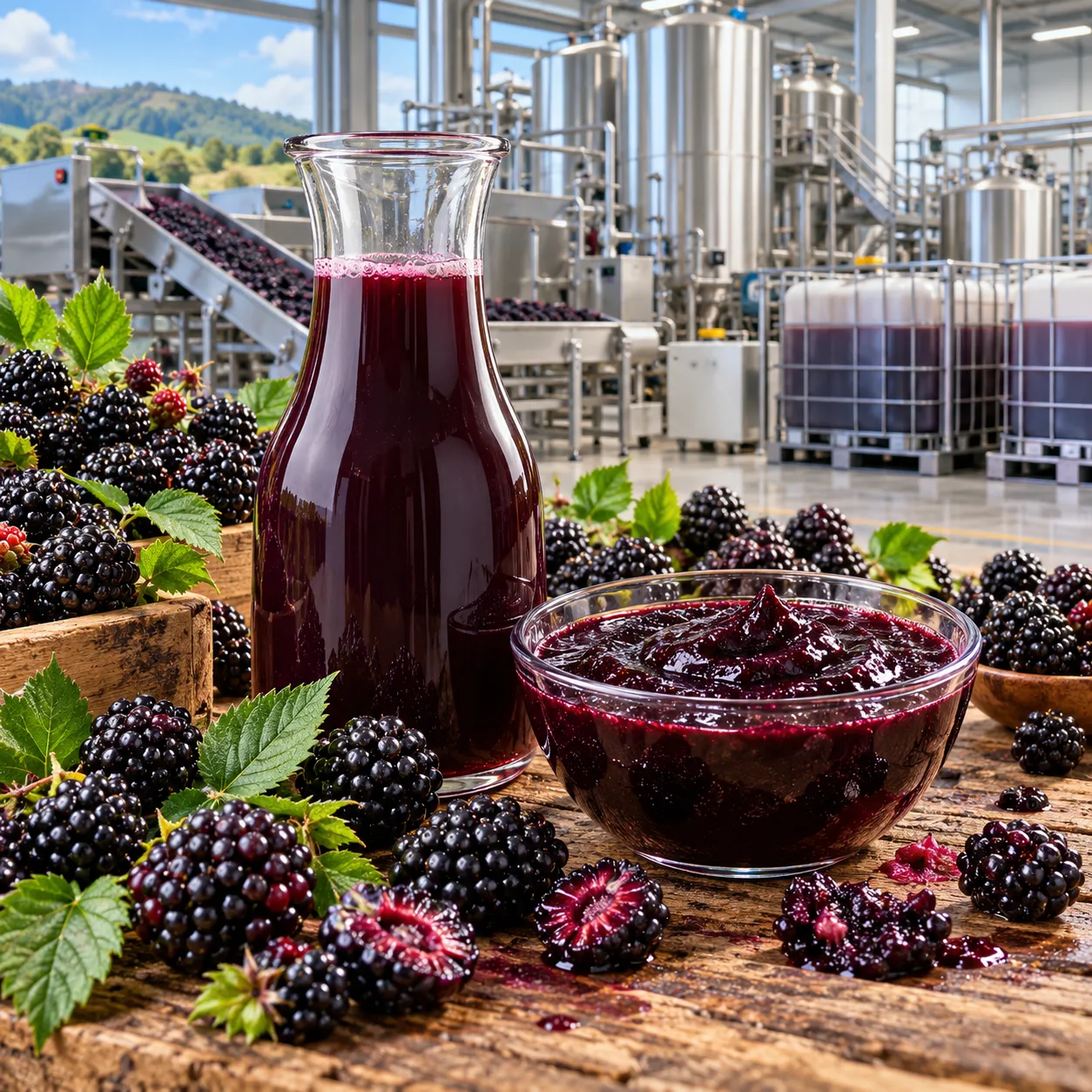
Commercial specifications buyers should review.
Blackberry concentrate should be purchased against a defined technical specification. Cultivar, origin, harvest maturity, processing method and crop year can all influence acidity, color and sensory strength even when products are supplied at the same Brix.
Soluble Solids / °Brix
Commercial blackberry juice concentrate is commonly supplied at 65° Brix, often with a tolerance of approximately ±0.5 to ±1.0° depending on supplier. Brix is a primary purchasing parameter and is used when calculating dilution, finished-product solids and formulation yield.
pH & Titratable Acidity
Commercial specifications can show pH broadly within the acidic range, often about 2.5–4.0. Titratable acidity can vary considerably with crop and fruit source, so both pH and acidity should be reviewed where tartness, preservation or formulation balance are important.
Color
Blackberry concentrate normally has a deep purple to purple-black appearance. Its color comes largely from anthocyanin pigments concentrated in the fruit. Actual hue and intensity depend on fruit source, concentration, pH and process history.
Flavor & Aroma
A suitable commercial concentrate should have full blackberry flavor with a natural sweet-tart character and should be free from fermented, metallic, scorched, caramelized or other objectionable notes.
Clarity & Insoluble Solids
Clarified concentrates can offer good clarity and relatively low insoluble solids, which is useful in beverages and syrups. Confirm turbidity and insoluble-solids limits where filtration, sediment or transparent appearance is important.
Specific Gravity & Viscosity
A 65° Brix concentrate is dense and considerably more viscous than single-strength juice. Specific-gravity data are useful for converting between weight and volume, while viscosity affects pumping and metering at cold temperatures.
Microbiological Limits
Commercial specifications typically include controls for total plate count, yeast and mold. Actual acceptance criteria should be confirmed against the supplier specification and the requirements of the finished-product process.
Reconstitution
A typical 65° Brix blackberry concentrate may be reconstituted to approximately 10° Brix single-strength juice using roughly one part concentrate to 7.2 parts water. Use the supplier's actual dilution guidance where juice-equivalent calculations are required.
Specification note: The figures above are representative commercial reference points rather than universal standards. Always formulate and purchase against the supplier's current specification and lot-specific certificate of analysis.
Where blackberry juice concentrate is used.
Juices, Smoothies & Beverage Bases
Blackberry concentrate can provide deep berry flavor, acidity, fruit solids and dark natural color in juices, smoothies, mixed-fruit beverages, lemonades and concentrated drink bases. It pairs well with apple, grape, blueberry, raspberry, cherry, cranberry and citrus.
Sparkling Drinks & Mocktails
The combination of tart berry flavor and dark color makes blackberry useful in premium sparkling beverages, mocktails and mixers. Clarified concentrate can be selected where lower sediment or cleaner visual appearance is required.
Brewing, Cider, Wine & Mead
Blackberry concentrate is used by brewers and fermentation producers to add fruit sugars, acidity, color and berry aroma to beer, cider, wine-style beverages and mead. Addition timing should be tested because fermentation can substantially change sweetness and aroma.
Yogurt & Cultured Dairy
Blackberry concentrate can intensify flavor and color in yogurt fruit preparations, drinking yogurt, cultured dairy and plant-based alternatives. Acidity and pigment behavior should be evaluated with the final protein system and product pH.
Jams, Jellies & Fruit Preparations
Blackberry concentrate can strengthen berry flavor and color in jams, jellies, compotes, fruit swirls and preparations. It can be combined with puree or whole-fruit pieces when manufacturers want both intense flavor and visible fruit texture.
Sauces, Syrups & Toppings
Dessert sauces, breakfast syrups, fruit toppings, glazes and culinary sauces can use blackberry concentrate as a concentrated fruit component. Brix and acidity should be considered together with sugar, starch or hydrocolloid systems.
Bakery & Fillings
Applications include bakery fillings, cake layers, pastry fillings, glazes, cereal bars, granola products and baked fruit preparations. Heat can reduce fresh aroma and alter berry pigments, so color and flavor should be checked after the full baking process.
Confectionery & Fruit Snacks
Gummies, chews, fruit snacks, fondant fillings and other confectionery products can use blackberry concentrate for authentic berry flavor and dark fruit coloration. Its natural sugars and acidity should be included in solids and texture calculations.
Ice Cream & Frozen Desserts
Blackberry concentrate is suitable for sorbets, ice cream, frozen yogurt, fruit variegates and other frozen desserts. Its sugar and acid contribution should be balanced with the complete freezing system to control texture and flavor intensity.
Bars, Nutrition & Specialty Foods
Fruit bars, nutrition products and specialty foods can use blackberry concentrate where concentrated berry identity is desired without adding the water associated with single-strength juice. Any nutritional or functional claims should be established separately for the finished product.
Protect blackberry flavor and natural color.
Manage Heat Exposure
Blackberry anthocyanin pigments and delicate aroma components can degrade during prolonged or severe heating. Evaluate color and flavor after the actual pasteurization, baking, hot-fill or other thermal process rather than only in the unprocessed formulation.
Control Product pH
Anthocyanin color is strongly influenced by pH. Blackberry tends to retain more stable red-purple tones in acidic foods, while higher-pH environments can produce substantial shifts in color and lower pigment stability.
Limit Oxygen & Light
Oxygen and light can accelerate color and flavor deterioration during processing and storage. Package selection, headspace management and storage conditions should be considered where blackberry color is an important product attribute.
Plan Cold Handling
Frozen or chilled 65° Brix concentrate can be very viscous. Establish appropriate thawing, tempering, pumping and metering procedures using the supplier's handling recommendations before commercial production.
When blackberry concentrate is being used both for flavor and color, the finished product should be assessed throughout shelf life. The incoming concentrate may have an intense purple-black appearance, but the final hue can change after dilution, acid adjustment, heating and storage.
Compare specification, performance and delivered cost.
Blackberry concentrate can vary between suppliers in acidity, color, flavor strength, clarity, origin and crop characteristics. Two products with the same 65° Brix designation may therefore perform differently in the finished formulation.
Information to include in a sourcing request
- Blackberry juice concentrate and target Brix or existing specification
- Clarified, filtered or specific turbidity requirement if relevant
- Critical pH, acidity or color requirements
- Conventional or certified organic requirement
- Preferred origin or cultivar requirement where applicable
- Initial sample or production-trial quantity
- Commercial order size and estimated annual usage
- Preferred packaging and storage format
- Required food-safety and certification documents
- Delivery destination and requested timing
Commercial pack formats vary by supplier. Current market examples include smaller pails, bag-in-box systems, lined drums and larger IBC formats. High-volume options may also be available depending on processor and program.
Blackberries are agricultural raw materials, so crop conditions, origin and harvest can influence flavor, acidity, color, price and availability. Confirm the current specification, origin, pack size, minimum order quantity and certification status when requesting a quotation.
Protect quality from supplier to production.
Frozen Storage
Many conventional blackberry concentrate programs specify frozen storage. Commercial examples can provide multi-year shelf life when unopened and maintained at the specified frozen temperature. Aseptic products may have different storage requirements.
Lot Certificate of Analysis
The COA should be reviewed against the agreed purchasing specification. Relevant parameters may include Brix, pH, acidity, color, microbiological results and other product-specific measurements.
Origin & Traceability
Request country-of-origin and lot-traceability information where required by the buyer, customer program or supply-risk strategy. Crop origin can also contribute to differences in flavor and acidity.
Organic & Other Certifications
For organic projects, obtain current certification that covers the supplied product and production facility. Kosher, Halal, GMO-status, allergen and recognized food-safety documentation may also be requested where relevant.
See how ingredient format affects formulation.
Spoonable Yogurt
Using Juice Concentrates in Spoonable Yogurt: Formulation Guide
Juice ConcentratesChocolate Fillings
Chocolate Fillings with Juice Concentrates: Sourcing & Process Considerations
Juice ConcentratesCereal & Granola
Using Juice Concentrates in Cereal & Granola: Formulation Guide
Questions blackberry concentrate buyers often ask
What is blackberry juice concentrate?
Blackberry juice concentrate is produced by pressing blackberry fruit and removing part of the water from the extracted juice. The result is a high-solids ingredient with concentrated blackberry flavor, acidity and dark natural color.
What Brix is commercial blackberry juice concentrate?
Commercial blackberry juice concentrate is commonly supplied around 65° Brix. Supplier specifications frequently allow a small tolerance around that target, so formulation should use the actual technical specification and lot certificate of analysis.
What pH is typical for blackberry juice concentrate?
Commercial specifications can commonly fall within approximately pH 2.5–4.0, depending on crop, origin and processor. Titratable acidity can also vary substantially and should be reviewed separately.
What is bulk blackberry juice concentrate used for?
Major applications include juices, smoothies, sparkling beverages, beer, cider, wine-style beverages, mead, yogurt, fruit preparations, jams, sauces, bakery fillings, gummies, confectionery, ice cream, frozen desserts and fruit or nutrition bars.
Does blackberry concentrate provide natural color?
Yes. Blackberries contain anthocyanin pigments that produce deep red-purple to purple-black tones. Their appearance is affected by pH, heat, oxygen and storage conditions, so color stability should be validated in the finished product.
Is organic blackberry juice concentrate available?
Yes, certified organic 65° Brix blackberry juice concentrate is commercially available from some suppliers. Availability can vary by crop and origin, so request current organic certification for the specific product being offered.
What commercial pack sizes are available?
Depending on the supplier, blackberry concentrate may be supplied in pails, bag-in-box systems, drums, IBCs or other bulk formats. Net weight, storage condition and minimum order quantity should be confirmed with the current quotation.
What should I include in a quote request?
Provide the target Brix or existing specification, approximate quantity, annual volume, conventional or organic status, preferred packaging, storage capability, destination, required certifications and requested delivery timing.