Blood Orange Juice Concentrate
Distinctive red-orange citrus concentrate for beverages, dairy, bakery, confectionery, frozen desserts, sauces and fermentation, with conventional and organic bulk formats subject to current availability.
Sweet orange character with distinctive red pigmentation.
Blood oranges are pigmented varieties of sweet orange (Citrus × sinensis) recognized for red to crimson flesh and a sweet-tart citrus profile. Unlike ordinary blond oranges, their color is associated with naturally occurring anthocyanin pigments.
Commercial juice concentrate removes part of the natural water from blood orange juice, increasing soluble solids, acidity and flavor intensity while reducing transportation and storage volume. The result provides citrus flavor together with a visually distinctive red-orange character.
- Produced from naturally pigmented sweet orange cultivars
- Commercial concentrate commonly available around 50 °Brix
- Distinctive red-orange to deep ruby color
- Sweet-tart citrus flavor with characteristic blood orange aroma
- Conventional and certified organic options may be available
- Frozen, aseptic and other industrial formats may be offered
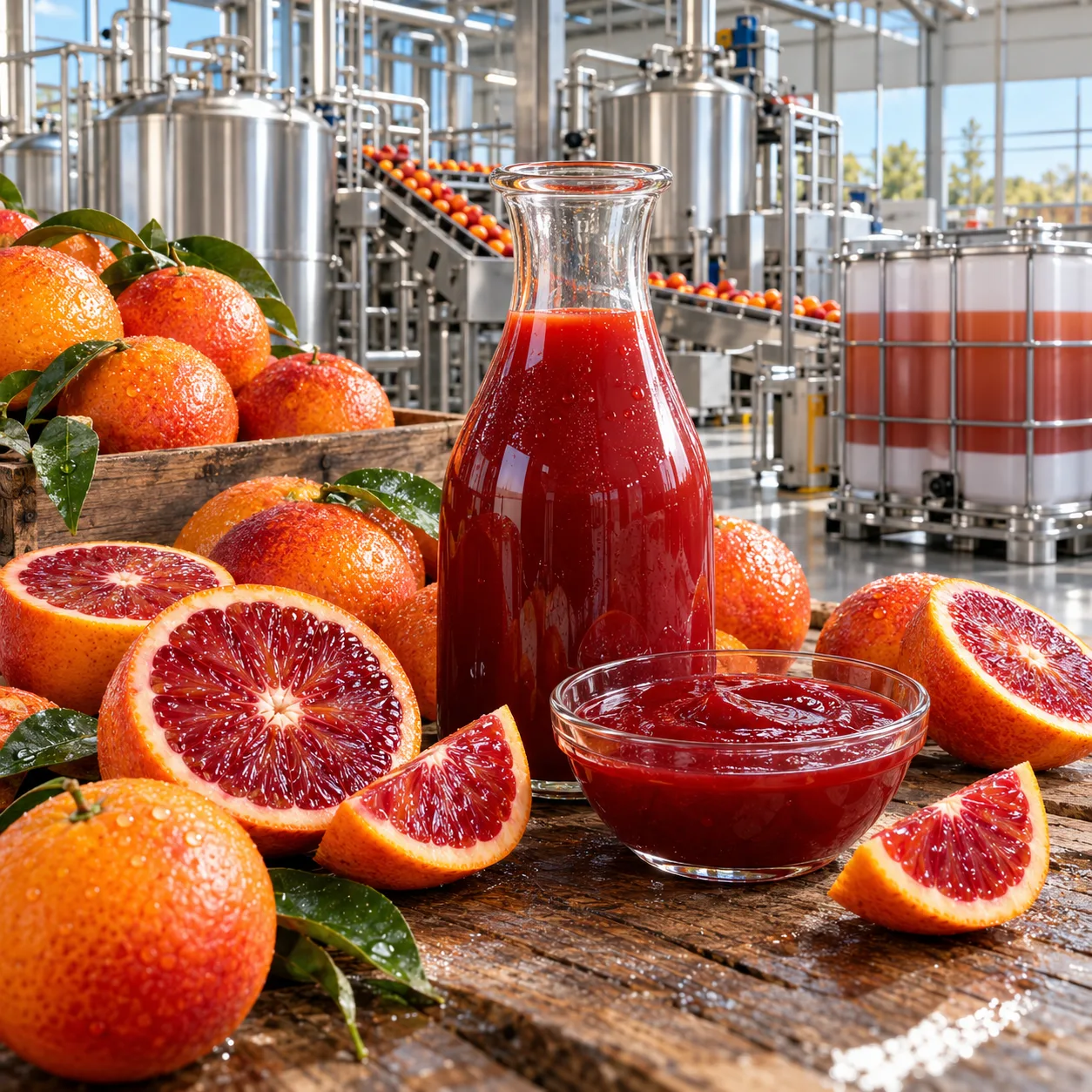
Moro, Tarocco and Sanguinello provide distinctive citrus profiles.
Moro
Moro is typically the most deeply pigmented of the major blood orange cultivars. Its flesh can develop intense ruby to dark red coloration together with pronounced citrus aroma and a relatively robust sweet-tart profile.
Tarocco
Tarocco is widely associated with Italian blood orange production. Depending on clone, maturity and growing conditions, pigmentation can range from lightly streaked orange-red to strongly red flesh.
Sanguinello
Sanguinello develops characteristic red pigmentation with balanced sweetness and acidity. As with other blood orange cultivars, color intensity changes with maturity and growing conditions.
Blood orange color can vary considerably by cultivar, crop, maturity and origin. If finished-product color is critical, approve the commercial ingredient against an agreed specification and representative sample.
Key parameters for commercial qualification.
Published commercial blood orange concentrate specifications provide useful reference points, but exact values vary by processor, cultivar and crop. Supplier specifications and lot-specific Certificates of Analysis should always determine final acceptance.
Physical & Chemical Parameters
- Soluble solids commonly centered around 50 °Brix
- Titratable acidity normally expressed as citric acid
- pH controlled according to processor and crop specification
- Specific gravity appropriate to the stated concentration
- Characteristic red-orange to ruby appearance
- Typical blood orange aroma without fermented or scorched notes
Microbiological & Quality Parameters
Commercial specifications normally include limits for total plate count, yeast and mold together with other applicable food-safety requirements. A published industrial product, for example, limits total plate count to 5,000 and yeast and mold to 500 each.
Buyers may also specify pulp level, clarity, color, sensory profile, foreign material, pesticide residues and other parameters according to the intended application.
These figures are sourcing references, not guaranteed values for every blood orange concentrate. Confirm the exact Brix, acidity, microbiological limits and sensory requirements against the product being offered.
Concentrated citrus requires careful water and acid balance.
Reconstitution
A commercial 50 °Brix blood orange concentrate may be reconstituted toward approximately 11.8 °Brix single-strength juice with roughly one part concentrate and four parts water by weight.
A published commercial reference specifies approximately 1 part concentrate to 3.98 parts water. Actual formulation should use the measured incoming Brix and required finished-product target.
Acidity & Flavor Balance
Blood orange concentrate contributes substantial natural citric acidity. This can provide freshness in beverages and fruit systems but must be included when calculating the overall acid balance of dairy, gummy, sauce and other sensitive formulations.
Pilot testing should evaluate sweetness, acidity, bitterness, citrus aroma and red-orange color together rather than adjusting Brix alone.
Where blood orange concentrate is used commercially.
Juices, Soft Drinks & Functional Beverages
Blood orange concentrate can provide citrus flavor, acidity and distinctive red-orange color in juice drinks, lemonades, carbonated beverages, sparkling waters, energy drinks, sports beverages and functional drink formulations.
It may be used as the primary citrus identity or blended with orange, lemon, grapefruit, berry, pomegranate and other fruit ingredients.
Brewing, Wine & Fermentation
Breweries and fermented beverage manufacturers can use blood orange concentrate in beer, hard seltzer, cider, fruit wine and other fermentation systems to provide fermentable fruit solids, citrus acidity, flavor and color.
Final aroma and color should be evaluated after fermentation because processing can change the original fruit profile.
Yogurt & Dairy Products
Blood orange can be used in yogurt fruit preparations, cultured drinks, dairy desserts and plant-based alternatives where a distinctive citrus profile and visually differentiated fruit color are desired.
Its relatively high acidity requires careful evaluation in protein-based products to maintain the intended texture and stability.
Ice Cream, Sorbet & Frozen Desserts
Blood orange is particularly suited to sorbet, gelato, ice cream, frozen yogurt, popsicles and other frozen desserts because its acidity remains perceptible in sweet formulations.
Concentrate also introduces soluble solids that should be included in calculations for sugar balance and freezing behavior.
Bakery, Fillings & Fruit Preparations
Applications include bakery fillings, pastries, cakes, glazes, marmalade-style preparations, fruit fillings and layered desserts.
The strong citrus acidity can balance high-sugar formulations, while the blood orange profile provides differentiation from standard orange.
Gummies & Confectionery
Blood orange concentrate can provide natural fruit character in gummies, chews, jellies, hard candies, chocolate fillings and other confectionery products.
Brix and acidity should be balanced with the selected gelling system because citrus acid can influence pectin, gelatin and finished texture.
Sauces, Syrups & Dressings
Blood orange works in dessert sauces, syrups, glazes, salad dressings, vinaigrettes and fruit-based sauces where sweetness and citrus acidity are both useful.
It pairs well with balsamic vinegar, olive oil, herbs, chili, ginger, honey-style flavor profiles and savory seasonings.
Marinades & Culinary Products
The combination of acidity, sweetness and citrus aroma can be used in marinades, cooking sauces and culinary glazes for meat, poultry, seafood and plant-based dishes.
Inclusion level should be adjusted around the complete salt, acid, sugar and spice system of the finished formulation.
Packaging depends on processing and annual volume.
Frozen Concentrate
Frozen blood orange concentrate is commercially available and is often supplied in pails or industrial drums. This format requires continuous frozen storage until the material is prepared for production.
Aseptic Supply
Aseptic formats may also be offered by selected processors. Packaging can include sterile bags within cartons or drums depending on supplier and processing program.
Bulk Pack Sizes
Commercial configurations may include polyethylene pails, bag-in-box systems, steel drums and larger bulk containers. Pack size should be matched to normal batch consumption and storage capability.
Define color, acidity and flavor as well as Brix.
Technical Requirements
- Required °Brix and allowable tolerance
- Titratable acidity as citric acid
- Target pH where required
- Color and pigmentation expectations
- Pulp or clarity requirements
- Flavor and aroma profile
- Microbiological limits
- Reconstitution or single-strength target
Commercial Requirements
- Conventional or certified organic status
- Preferred cultivar or origin where important
- Trial quantity and expected annual volume
- Pail, bag-in-box, drum or bulk preference
- Frozen or aseptic handling requirement
- Delivery destination in the United States
- Required shipment timing
- Certification and documentation requirements
Blood orange is a seasonal specialty citrus crop. Color intensity, availability and pricing can vary by cultivar, crop year and origin. Recurring manufacturing programs should define acceptable specification ranges and forecast volume early.
Documents commonly reviewed by industrial buyers.
Technical Documentation
- Current product specification
- Lot-specific Certificate of Analysis
- Microbiological specification
- Ingredient declaration
- Allergen statement
- Storage and shelf-life information
- Packaging specification
Certification & Supply Documents
- Organic certificate when applicable
- Food-safety certification information
- Kosher or other requested certification
- GMO status where required
- Country-of-origin information
- Traceability and lot identification
- Commercial quotation and delivery terms
See how juice concentrates perform in finished products.
Marinades
Using Juice Concentrates in Marinades: Formulation Guide
Juice ConcentratesPlant-Based Yogurt
Plant-Based Yogurt with Juice Concentrates: Sourcing & Process Considerations
Juice ConcentratesFermentation Bases
Using Juice Concentrates in Fermentation Bases: Formulation Guide
Blood orange concentrate sourcing questions
What is blood orange juice concentrate?
Blood orange juice concentrate is produced from juice extracted from naturally pigmented sweet oranges and concentrated by removing part of the water. It retains characteristic citrus acidity, blood orange flavor and red-orange color while providing substantially higher soluble solids than single-strength juice.
What makes blood orange different from standard orange?
Blood oranges such as Moro, Tarocco and Sanguinello develop naturally red or crimson flesh due to anthocyanin pigments. They combine familiar sweet-orange character with distinctive pigmentation and cultivar-specific differences in aroma, sweetness and acidity.
What is the typical concentrate Brix?
Commercial blood orange juice concentrate is available around 50 °Brix. A published industrial specification lists approximately 49–51.7 °Brix. Confirm the actual concentration and tolerance for the specific lot being offered.
What is the typical acidity?
A published commercial 50 °Brix specification lists titratable acidity of approximately 3.9–6.4% expressed as citric acid. Natural variation occurs between cultivar, maturity and crop, so purchasing should be based on the current supplier specification.
How is blood orange concentrate reconstituted?
A commercial 50 °Brix concentrate can be reconstituted toward approximately 11.8 °Brix using roughly one part concentrate to 3.98 parts water. Actual production dilution should be calculated using the incoming lot Brix and required finished-product specification.
What is bulk blood orange concentrate used for?
Major applications include juices, carbonated drinks, functional beverages, brewing and fermentation, yogurt, frozen desserts, bakery fillings, confectionery, syrups, sauces, dressings, marinades and other fruit preparations.
Is organic blood orange concentrate available?
Certified organic blood orange juice concentrate is commercially available from some processors, including 50 °Brix grades. Availability varies by harvest, origin and supplier program, so current certification should be confirmed before purchase.
What information should I provide for a quote?
Provide the required Brix, conventional or organic status, approximate quantity, preferred packaging, destination and delivery timing, together with any requirements for acidity, pH, color, pulp, microbiology, cultivar, origin or certification.