Corn Puree
Smooth sweet corn puree for commercial soups, sauces, prepared foods, plant-based products, baby foods, bakery and foodservice applications, with bulk and organic sourcing options subject to current availability.
Sweet corn flavor with natural body and starch.
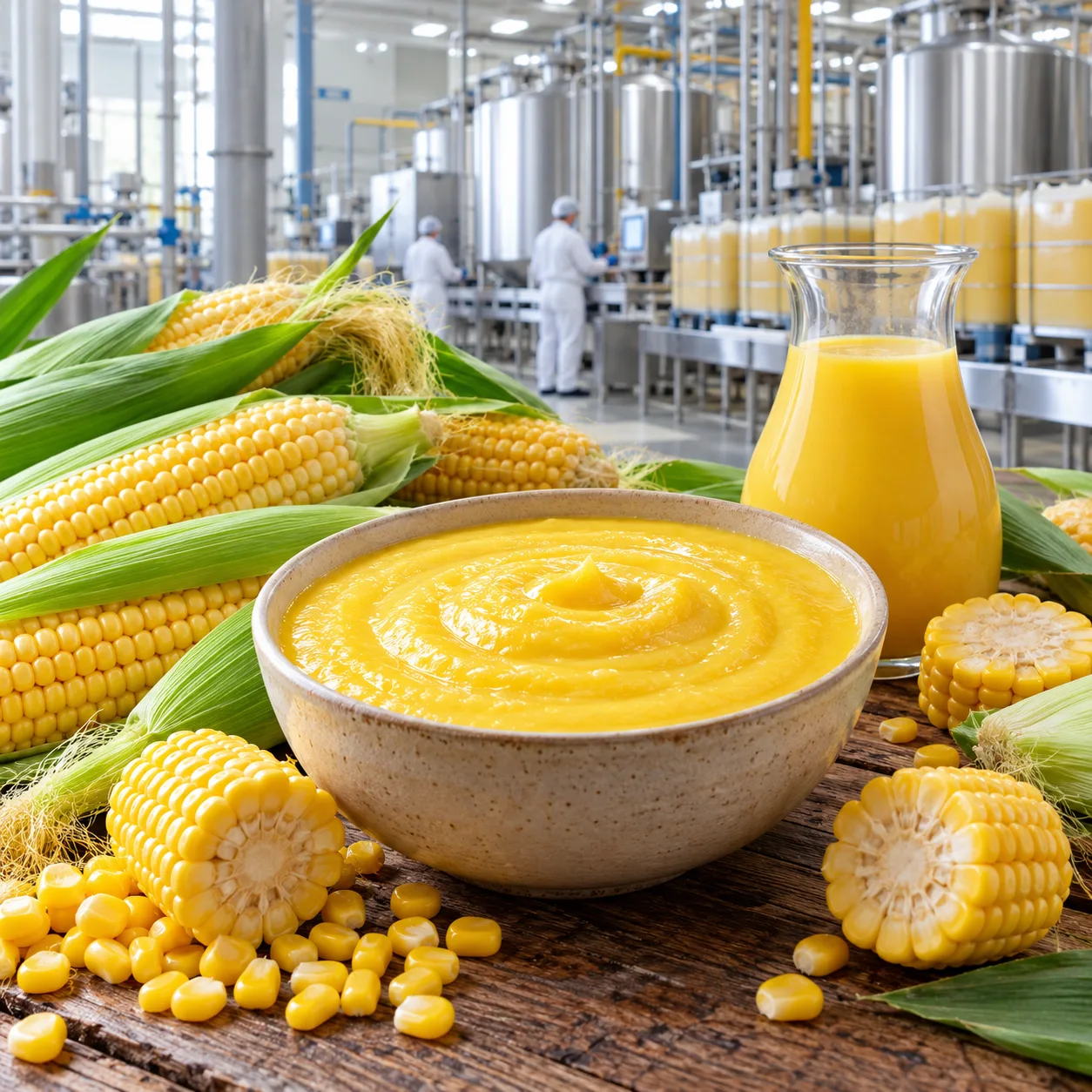
Corn puree is produced from processed corn kernels, typically sweet corn selected for a mild naturally sweet flavor, yellow color and soft starchy texture.
Unlike clarified vegetable juice, puree retains suspended corn solids and natural starch. This gives the ingredient a creamy body that can contribute directly to viscosity, mouthfeel and opacity in finished foods.
Its profile is generally mild and savory-sweet rather than acidic, making corn puree suitable for products where formulators want recognizable corn flavor without whole kernels or coarse particulate.
- Characteristic sweet corn flavor and yellow color
- Natural starch and suspended vegetable solids
- Smooth or semi-smooth consistency depending on refinement
- Conventional and organic options may be available
- Aseptic or frozen formats may be available
- Commercial specifications vary by variety and processor
Representative commercial characteristics
Corn puree specifications depend on corn variety, maturity, solids content, refinement and processing method. The values below are useful commercial references rather than universal standards.
Corn puree is materially different from acidic fruit purees such as cranberry, raspberry or passion fruit. Its comparatively high pH and starch-rich composition mean that processing, storage and finished-product stability must be evaluated specifically for the intended product.
Parameters that matter when sourcing corn puree
Corn puree purchasing should consider both chemical composition and physical behavior because starch content, particle size and thermal processing can materially affect how the ingredient pumps, mixes and thickens.
- Brix: provides an indication of soluble solids and can help compare consistency between suppliers and production lots.
- pH: corn is generally a low-acid ingredient, so pH is particularly important when defining processing and finished-product requirements.
- Titratable acidity: normally much lower than acidic fruit purees and useful as an additional lot-consistency parameter.
- Viscosity / consistency: affects pumping, blending, depositing and the thickness contributed to soups, sauces and fillings.
- Screen size / particle size: determines whether the puree is very smooth or retains more noticeable corn particulate.
- Color: commercial sweet corn puree should typically have a characteristic yellow to golden appearance appropriate to the corn variety and processing method.
- Flavor: should provide clean sweet-corn character without objectionable fermented, burnt, excessively cooked or stale notes.
- Microbiological specification: should be reviewed in combination with the commercial process and intended finished product.
- Ingredient statement: confirm whether the offered material is 100% corn puree or contains water, acidulants or other declared ingredients.
- Origin and crop: useful where variety, season or growing region influence sweetness, color or consistency.
Where corn puree is used
Soups, Chowders & Bisques
Corn puree is well suited to sweet corn soup, corn chowder, vegetable bisques and creamy soup bases. It contributes recognizable corn flavor while adding body without requiring visible whole kernels.
Natural corn starch and suspended solids can contribute viscosity, so final consistency should be checked after the complete heating process.
Sauces, Dips & Spreads
Corn puree can be incorporated into cheese-style sauces, vegetable dips, salsa-style products, savory spreads, sandwich sauces and dipping sauces.
It pairs particularly well with chili, roasted pepper, tomato, onion, garlic, cheese flavors, herbs and smoky seasonings.
Prepared Meals & Side Dishes
Commercial prepared-food manufacturers can use corn puree in casseroles, vegetable sides, grain dishes, fillings and ready meals where uniform corn flavor and texture are desired.
Puree can also provide a binding or creamy phase in products that include whole corn kernels or other vegetables.
Baby & Toddler Foods
Smooth corn puree can be incorporated into vegetable blends, grain-and-vegetable meals and other age-appropriate formulations where the ingredient meets the manufacturer's quality, regulatory and process requirements.
Refinement, consistency, microbiological specifications and supplier documentation are especially important for this application.
Plant-Based Foods
Corn puree can provide mild sweetness, vegetable solids and creamy texture in plant-based soups, sauces, dips, fillings and prepared meal systems.
It can be combined with legumes, grains, vegetables or plant proteins to soften flavor and improve body.
Bakery & Savory Batters
Corn puree can contribute moisture and sweet-corn flavor to cornbread, muffins, savory cakes, pancakes, waffles and filled bakery products.
Because puree adds both water and solids, flour, starch and liquid balance should be adjusted during pilot formulation.
Savory Fillings
Corn puree can form part of fillings for empanadas, pastries, tortillas, dumplings and other prepared foods, often in combination with cheese, vegetables, herbs or spices.
Higher-viscosity formulations may require additional starch or other structure-building ingredients depending on the production process.
Snacks & Foodservice
Applications can include corn dips, snack fillings, foodservice sauces, vegetable bases and menu components where smooth corn flavor is preferable to intact kernels.
Bulk puree can help reduce washing, cooking, cutting and milling steps compared with processing raw corn in-house.
Corn behaves differently from acidic fruit puree.
Starch and viscosity
Corn naturally contains starch, so viscosity may increase during heating. A puree that pumps easily before cooking can become noticeably thicker after retort, hot-fill cooking or other thermal processing.
Pilot evaluation should therefore reproduce the actual heating, shear and cooling conditions expected in commercial production.
Sweetness and flavor
Sweet corn puree provides mild inherent sweetness but does not have the high sugar concentration of fruit concentrate. Salt, dairy ingredients, peppers, tomato, herbs and savory spices can significantly change its perceived sweetness.
Particle size
Fine-screened puree can suit sauces, soups and baby-food-style products, while a somewhat coarser product may provide more recognizable vegetable texture. Screen specification should be matched to pumps, valves and filling equipment.
Heat flavor
Extended or aggressive heating can shift fresh sweet-corn character toward a more cooked profile. Formulators should evaluate flavor after the complete commercial thermal process rather than only tasting the ingredient before processing.
Low-acid processing requires product-specific control.
Corn puree commonly has a substantially higher natural pH than acidic fruit purees. A representative commercial specification may be around pH 6.0–7.0.
For shelf-stable products, the appropriate thermal or aseptic process depends on the complete formulation, equilibrium pH, water activity, container, filling system and manufacturing method.
Adding acid or combining corn puree with acidic ingredients does not by itself establish a safe commercial process. Where applicable, the finished formulation and process should be evaluated and validated by the manufacturer and qualified process specialists in accordance with the relevant regulatory requirements.
Refrigerated and frozen products have different processing and distribution considerations, so the intended storage system should be defined before ingredient qualification.
Aseptic, frozen and bulk supply
Commercial corn puree may be offered in aseptic or frozen formats depending on producer, formulation and processing system.
Representative bulk packaging can include aseptic bags in approximately 180–200 kg drums, smaller bag formats and larger IBC-style bulk containers. Other suppliers may use different net weights or pack configurations.
Storage requirements should be confirmed for the exact item. Some commercial corn purees are supplied frozen, while certain properly processed aseptic products may use a different storage and distribution system.
When comparing offers, consider Brix, net pack weight, viscosity, usable yield, processing method, freight, storage requirements, minimum order quantity and documentation rather than comparing price per kilogram alone.
Specify the requirement before comparing offers.
For the most useful commercial response, include:
- Application: soup, sauce, baby food, bakery, prepared meal, dip or another use.
- Approximate quantity: sample, trial, initial order and estimated annual demand.
- Brix: specify a target if the formulation already requires one.
- Consistency: include viscosity, Bostwick or desired texture where relevant.
- Screen size: specify refinement or particle-size requirements if important.
- Packaging: drum, bag-in-box, tote or another preferred format.
- Storage: identify frozen, refrigerated or other plant capabilities.
- Certification: conventional, organic, Kosher or other required documentation.
- Destination: delivery city, state or country.
- Timing: sample date, pilot run, product launch or recurring purchasing schedule.
Commercial note: Corn variety, maturity, origin and processing method can affect sweetness, Brix, color, viscosity and flavor. Product availability and technical values should be confirmed against the current supplier specification, certificate of analysis and quotation.
Explore broader puree formulation concepts.
Questions corn puree buyers often ask
What is corn puree?
Corn puree is processed corn, typically sweet corn, reduced to a smooth or semi-smooth consistency while retaining natural starch, suspended solids and characteristic corn flavor.
What Brix is typical for corn puree?
Representative commercial corn puree specifications may be around 14–18° Brix, although other products can be produced at different solids levels. The current supplier specification should be used for purchasing.
What pH is typical for corn puree?
Corn is generally a low-acid food ingredient. Representative commercial specifications may show a pH around 6.0–7.0, but the exact value varies by raw material and processing method.
What is bulk corn puree used for?
Major applications include soups, chowders, sauces, dips, prepared meals, baby foods, plant-based products, bakery products, savory fillings, snacks and foodservice preparations.
Does corn puree contribute thickness?
Yes. Corn contains natural starch and suspended solids, so puree can contribute body and may thicken further during heating. Commercial trials should reproduce the actual thermal process.
Is corn puree suitable for shelf-stable foods?
It can be used in shelf-stable products when the complete formulation, packaging and manufacturing process are appropriately designed and validated. Corn's natural pH is generally in the low-acid range, so shelf stability should not be assumed from the ingredient or package alone.
Is organic corn puree available?
Organic availability can vary by crop, origin and supplier. Request current organic certification and product-specific documentation before purchase.
Are aseptic and frozen corn puree available?
Commercial products may be offered aseptically or frozen depending on supplier and specification. Confirm the exact processing method, storage temperature and handling instructions before purchase.
What commercial packaging is common?
Representative formats include aseptic bags in roughly 180–200 kg drums, smaller bags and larger bulk containers. Exact pack weights and minimum orders vary by supplier.
What specifications should I request?
Review Brix, pH, acidity, viscosity or consistency, screen size, color, microbiological limits, ingredient statement, origin, processing method, packaging and storage requirements.