Elderberry Juice Concentrate
High-strength elderberry juice concentrate for commercial food and beverage manufacturing, providing deep red-purple color, tart berry character and concentrated fruit solids in a compact industrial ingredient.
A deeply colored berry with distinctive tart fruit character.
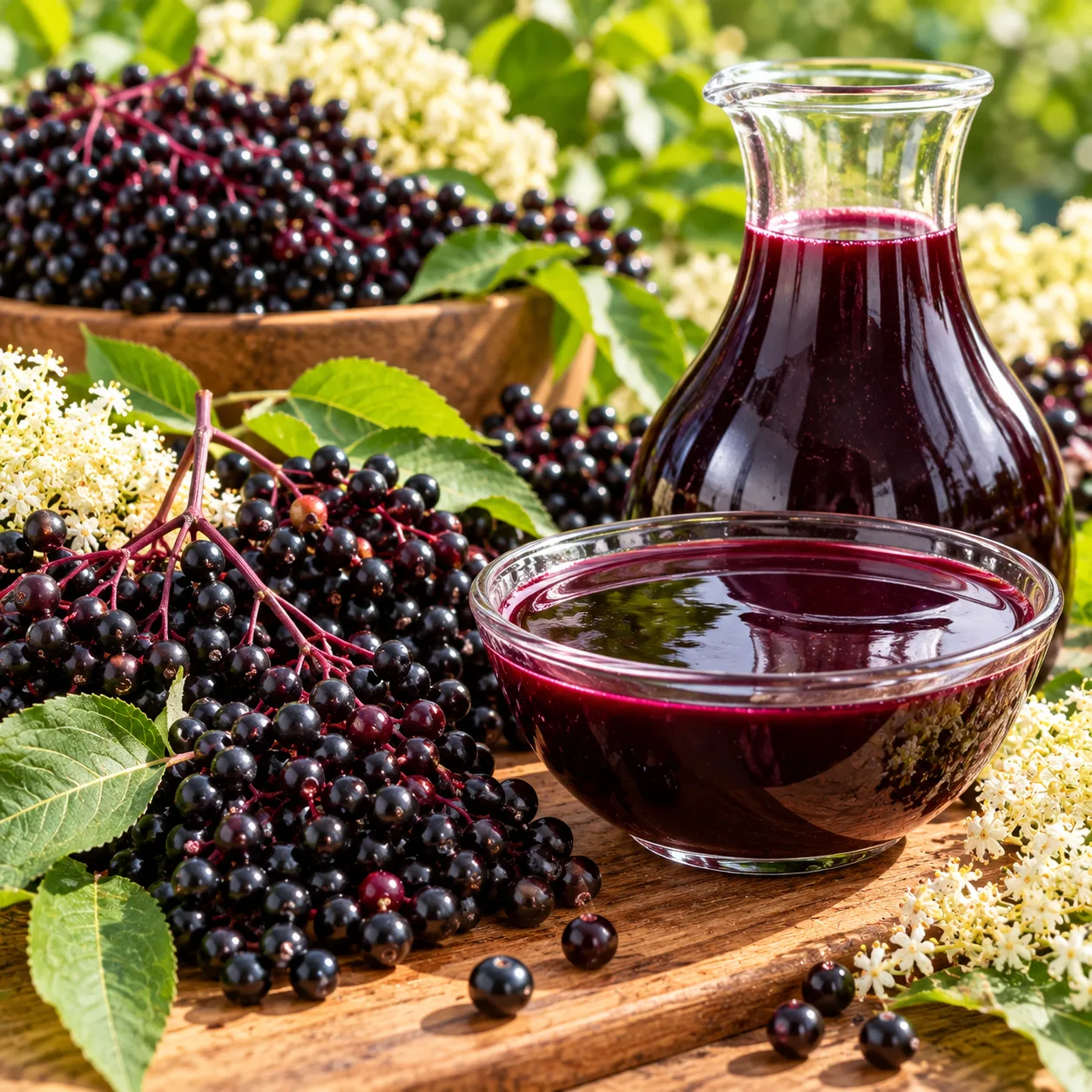
Elderberries are small berries produced in broad clusters by shrubs and small trees of the genus Sambucus. European black elderberry (Sambucus nigra) is an important commercial species, although other elderberry types may also be processed depending on origin.
Fully ripe berries are dark purple to almost black and have a tart, earthy berry flavor. Their intense natural pigmentation comes largely from anthocyanins, which also make elderberry useful when manufacturers want both fruit character and a strong red-purple color contribution.
Commercial concentrate is produced from ripe processed berries by juice extraction, screening or clarification as required, and removal of water under controlled concentration conditions. Industrial products are commonly standardized around 65 °Brix.
- Dark purple to nearly black ripe berry color
- Tart, rich and slightly earthy berry flavor
- Strong natural red-purple color contribution
- High-solids concentrate suitable for efficient transport and storage
- Conventional and certified-organic grades may be available
- Frozen pail and industrial drum formats are widely used
Key parameters for industrial qualification.
Elderberry concentrate specifications vary by species, crop, origin and processor. High-strength commercial products are commonly standardized near 65 °Brix, while lower-Brix concentrates may also be available.
Soluble Solids / °Brix
A widely used commercial specification is approximately 65 °Brix, with representative tolerances around ±1–2 °Brix. Lower-strength products such as approximately 45 °Brix concentrate also exist.
pH & Titratable Acidity
Representative 65 °Brix commercial products commonly fall around pH 3.4–4.8. Titratable acidity can be several percent at concentrate strength and may be reported as malic or citric acid depending on supplier.
Single-Strength Reference
Approximately 11 °Brix is commonly used as a single-strength reference. Representative 65 °Brix concentrate may be reconstituted using about one part concentrate to 6.46 parts water.
Color Strength
Color can be controlled through spectrophotometric measurements at visible wavelengths associated with elderberry's red-purple pigments. Buyers using the concentrate for visible color contribution should define an appropriate color specification.
Flavor & Appearance
Concentrate should have a deep red-purple to dark berry appearance and clean characteristic elderberry flavor without fermented, scorched, caramelized or other objectionable notes.
Microbiological Criteria
Commercial specifications normally establish maximum total plate count, yeast and mold levels. Representative products may target total counts below approximately 1,000–2,000 CFU per gram or milliliter.
These values are indicative commercial references only. Confirm Brix, pH, titratable acidity, color strength, microbiological limits and sensory requirements against the current supplier specification and lot-specific certificate of analysis.
Define concentration, color requirements and storage before comparing offers.
65 °Brix vs. Lower-Brix Grades
Approximately 65 °Brix is a common high-strength commercial format, while lower-strength elderberry concentrates may also be offered. Buyers should compare actual solids, acidity and dosage rather than assuming all elderberry concentrates are equivalent.
Packaging
Industrial formats commonly include polyethylene pails and lined open-top steel drums. Exact fill weight, drum capacity, liner system and minimum order quantity vary by supplier.
Frozen Storage
Frozen storage around 0°F / -18°C is widely recommended for conventional high-Brix concentrate to protect fruit color and flavor. Refrigerated holding after thawing is typically much shorter.
Shelf Life
Representative commercial programs specify up to approximately 36 months when concentrate remains unopened and properly frozen. Other supplier programs may specify shorter periods.
Documentation
Commercial qualification may require a technical specification, certificate of analysis, nutritional information, allergen statement, country-of-origin declaration, microbiological results, traceability records and applicable organic or food-safety certifications.
Origin & Crop
Elderberry species, growing region, harvest maturity and crop conditions influence color, acidity and flavor. Manufacturers requiring consistent performance may qualify specific origins or approved processor programs.
Major uses for elderberry juice concentrate.
Juices & Beverage Blends
Elderberry concentrate can provide dark berry flavor and color in juice drinks, lemonades, multi-fruit blends and premium beverages. It pairs well with apple, grape, blackcurrant, blueberry and cherry.
Functional & Wellness Beverages
Elderberry has strong recognition in functional beverage concepts and is used in fruit shots, wellness-style drinks and botanical beverage systems where concentrated berry flavor and color are desired.
Syrups & Liquid Preparations
High-Brix concentrate is well suited to elderberry syrups, beverage concentrates, fruit bases and other liquid preparations where a compact source of fruit solids and flavor is required.
Gummies & Confectionery
Gummies, fruit chews, jellies and confectionery centers can use elderberry concentrate for authentic dark berry flavor and a strong natural red-purple color contribution.
Dairy & Plant-Based Products
Elderberry concentrate can be incorporated into yogurt preparations, cultured beverages, dairy desserts and plant-based alternatives, typically through a formulated fruit preparation.
Bakery & Fruit Fillings
Applications include cake fillings, pastry preparations, cereal bars and baked snacks where elderberry adds dark fruit character and can complement stronger berry blends.
Fruit Preparations & Spreads
The concentrate can strengthen flavor, sweetness and color in jams, spreads, toppings and mixed-fruit preparations used in bakery, dairy and foodservice manufacturing.
Brewing & Fermentation
Elderberry concentrate can contribute fermentable sugars, dark berry flavor and color to fruit beer, mead, cider blends, fruit wine and other specialty fermented beverages.
Sauces & Savory Applications
Elderberry can be used in dark fruit sauces, glazes and savory-sweet preparations, particularly alongside balsamic vinegar, spices, game meats, poultry or roasted foods.
Ice Cream & Frozen Desserts
Applications include sorbet, ice cream, frozen yogurt and plant-based frozen desserts where concentrated elderberry flavor and purple-red coloration can remain noticeable after freezing.
Plan around acidity, pigmentation and high soluble solids.
Reconstitution
Representative 65 °Brix concentrate can be diluted toward approximately 11 °Brix single strength using about one part concentrate to 6.46 parts water. Final calculations should use the actual incoming Brix.
Color & pH
Elderberry anthocyanin color is influenced by formulation pH. Acidic systems generally favor stronger red to purple hues, while finished color should always be validated in the actual formulation.
Crystallization
High-solids elderberry concentrate can form natural sugar crystals under refrigerated or frozen conditions. Controlled warming with agitation may help return crystals to solution before pumping or dosing.
Heat, Oxygen & Light
Natural berry pigments and aroma can change with heat, oxygen and prolonged storage. Finished flavor and color should therefore be evaluated after the intended pasteurization, hot-fill or other process.
Build a complete elderberry concentrate inquiry.
Define the concentrate
Specify target Brix, pH or acidity, color requirements, flavor profile and applicable microbiological criteria together with any application- specific analytical targets.
Select the supply format
Indicate conventional or organic status, preferred pail or drum format, storage requirements and any origin, certification or traceability restrictions.
Provide volume & destination
Include estimated shipment or annual volume, delivery destination, required timing and whether material is needed for samples, pilot trials or continuing commercial production.
Compare suppliers against the complete requirement.
Elderberries are agricultural raw materials and natural variation occurs between species, crops and origins. Technical specifications, certifications, packaging, storage requirements, availability and commercial terms should be confirmed against the current supplier specification and quotation.
See how juice concentrates perform in commercial formulations.
Bakery Fillings
Bakery Fillings with Juice Concentrates: Sourcing & Process Considerations
Juice ConcentratesMarinades
Using Juice Concentrates in Marinades: Formulation Guide
Juice ConcentratesPlant-Based Yogurt
Plant-Based Yogurt with Juice Concentrates: Sourcing & Process Considerations
Questions elderberry concentrate buyers often ask
What is bulk elderberry juice concentrate used for?
Commercial applications include juices and beverage blends, functional beverages, syrups, gummies and confectionery, dairy and plant-based products, bakery fillings, fruit preparations, brewing and fermentation, sauces and frozen desserts.
What Brix is typical for elderberry juice concentrate?
Commercial elderberry juice concentrate is commonly supplied around 65 degrees Brix, although lower-concentration grades also exist. Exact purchasing limits should be confirmed against the current supplier specification.
What pH is typical for elderberry concentrate?
Representative commercial 65 degrees Brix elderberry concentrates commonly fall around pH 3.4 to 4.8. Exact values vary with fruit origin, crop and processor.
What is the typical single-strength reference for elderberry juice?
A common commercial reference is approximately 11 degrees Brix at single strength. A 65 degrees Brix concentrate may be reconstituted at about one part concentrate to 6.46 parts water, subject to the actual supplier specification.
Why does elderberry concentrate have such a dark color?
Ripe elderberries naturally contain anthocyanin pigments that produce deep red-purple to nearly black fruit color. The concentrate can therefore make a strong color contribution to finished foods and beverages.
Can elderberry juice concentrate crystallize during storage?
Yes. High-solids elderberry concentrate can form natural sugar crystals during refrigerated or frozen storage. Controlled warming with agitation may be recommended by the supplier to return the concentrate to a uniform liquid before use.
Is organic elderberry juice concentrate available?
Organic elderberry juice concentrate is available from some suppliers. Buyers should request current organic certification and confirm the specific origin, processing program and product specification.
What information should I provide for a quote?
Provide target Brix, conventional or organic status, approximate quantity, required color or application, packaging preference, destination, timing and any acidity, microbiological, certification or documentation requirements.