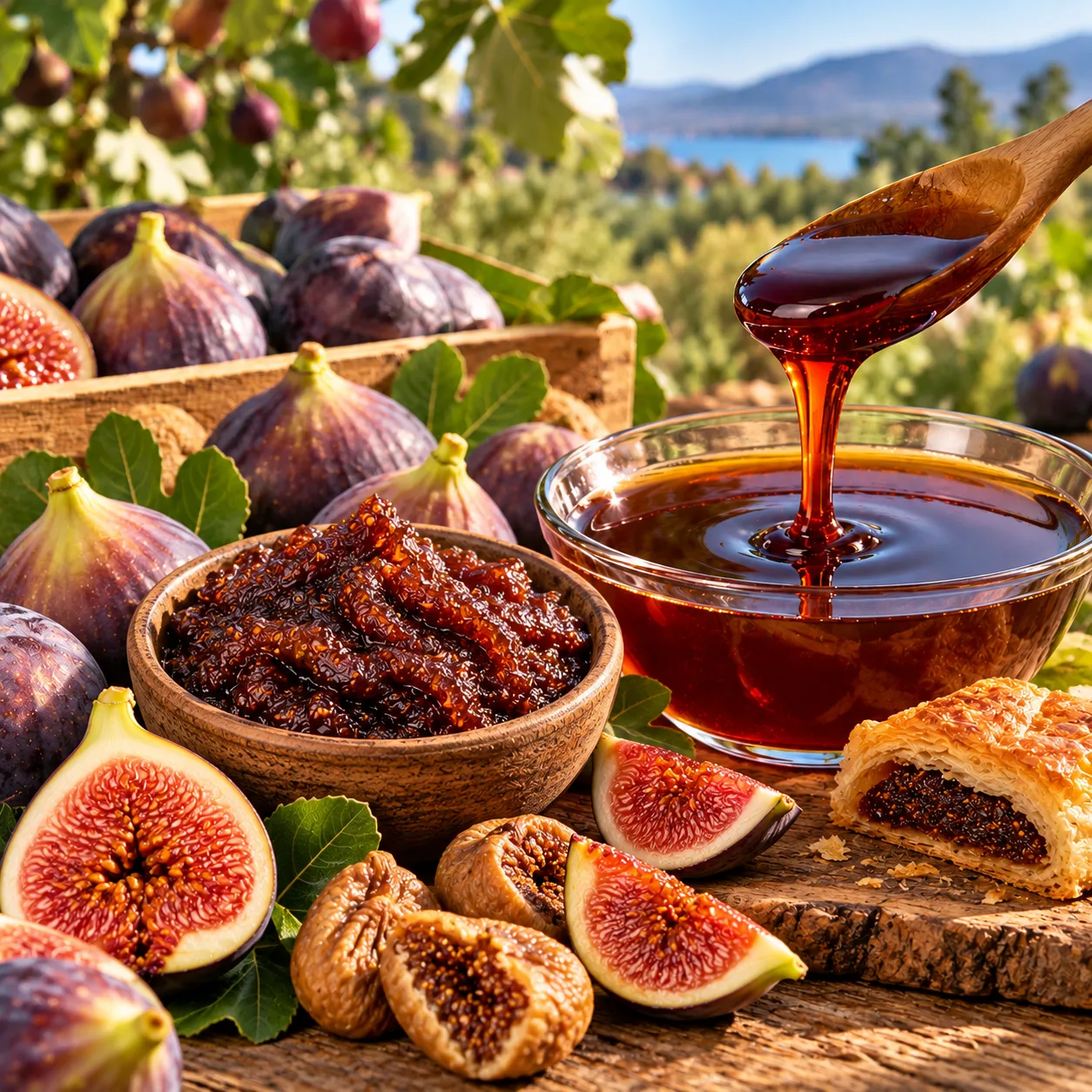
Fig Paste
High-solids fig paste for commercial food manufacturing, providing concentrated natural sweetness, dense fruit body, characteristic fig flavor and excellent binding performance for bakery, snack and confectionery applications.
A naturally sweet Mediterranean fruit transformed into a dense industrial paste.
The common fig (Ficus carica) is one of the oldest cultivated fruit crops of the Mediterranean region. Botanically, the structure commonly called a fig is a syconium: a fleshy enclosure containing many tiny individual flowers and fruitlets, which create the familiar fine seeds and distinctive texture.
Fresh figs are soft and highly perishable, while drying removes a large portion of their water and concentrates natural sugars, flavor and fruit solids. For this reason, commercial fig paste is most commonly produced from dried figs rather than from fresh-fruit puree.
Industrial production generally includes sorting, removal of stems and foreign material, mycotoxin inspection, washing and controlled grinding or mincing. Depending on customer requirements, the paste may retain natural seeds or undergo additional refining for a smoother texture.
- Rich sweet fig flavor with mild honey and caramel notes
- Dense brown to amber-brown paste with high natural fruit solids
- Fine characteristic seeds may be retained or reduced by processing
- Natural binding and moisture-retention functionality
- Conventional and certified-organic grades may be available
- Fine-ground, standard, bakery and seedless grades may be offered
Key parameters for industrial qualification.
Unlike single-strength fruit puree, dried fig paste is a high-solids ingredient. Moisture, soluble solids, water activity, texture, seed level and contaminant controls are therefore particularly important when comparing commercial products.
Soluble Solids / °Brix
Representative dried fig paste is commonly around 70–75 °Brix. Brix varies with raw-fruit moisture and processing and is useful for comparing sweetness, solids concentration and formulation behavior.
Moisture
Commercial dried fig paste commonly contains approximately 18–24% moisture, with some supplier specifications permitting maximum values near 25%. Lower moisture generally produces a firmer, denser paste.
Water Activity
Representative industrial specifications may target water activity around 0.50–0.65. Water activity influences microbial stability, moisture migration and texture in bars, fillings and baked products.
Texture & Particle Size
Grades may range from coarse paste with clearly perceptible seeds to fine-ground or seedless styles. Grinder plate, screen size and finished particle distribution should be matched to extrusion, depositing and filling equipment.
Color & Sensory Profile
Typical appearance ranges from medium brown to dark amber-brown. Flavor should be naturally sweet, fruity and characteristic of dried figs without fermented, rancid, burnt or otherwise objectionable notes.
Microbiological & Contaminant Controls
Supplier specifications should address yeast, mold, indicator organisms and applicable pathogens. Dried figs also require careful controls for aflatoxins and other relevant contaminants during raw-material selection.
These values are indicative commercial references only. Confirm moisture, Brix, water activity, particle size, seed level, microbiological limits, mycotoxin limits and sensory requirements against the current supplier specification and lot-specific certificate of analysis.
Define the grade, texture and packaging before comparing offers.
Seeded vs. Seedless
Standard fig paste normally retains the numerous fine natural seeds, providing characteristic texture. Seedless or more highly refined grades are useful in applications requiring a smoother bite or more uniform extrusion.
Fine vs. Coarse Grind
Fine-ground paste is generally preferred for smooth bakery fillings, nutrition bars and delicate confectionery, while coarser grades can provide a more rustic fruit identity in specialty foods.
Packaging
Commercial programs may include approximately 5–20 kg food-grade cartons or pails, 25 kg containers and industrial drums around 200 kg. Larger bulk configurations may also be available by supplier.
Storage & Shelf Life
High-solids fig paste is commonly stored in a cool, dry environment under supplier-defined conditions. Representative commercial shelf lives are approximately 12–18 months, depending on moisture, package and processing.
Documentation
Commercial qualification may require a technical specification, certificate of analysis, microbiological results, pesticide statement, allergen declaration, origin documentation, aflatoxin and ochratoxin testing, traceability records and applicable organic or food-safety certificates.
Origin & Crop
Mediterranean regions are important sources of dried figs, with Türkiye's Aegean region being a major commercial origin. Variety, harvest conditions, drying and storage history influence color, moisture, flavor and finished-paste consistency.
Major uses for fig paste.
Fig Bars & Filled Cookies
One of the largest industrial uses for fig paste is as the fruit filling in fig bars, biscuits and soft cookies. Its dense texture provides good depositing and extrusion characteristics while retaining moisture during baking.
Bakery & Pastry Fillings
Fig paste is used in pastries, cakes, breads, muffins, tarts and laminated products where it contributes natural sweetness, moisture retention and a rich fruit filling.
Nutrition, Energy & Protein Bars
The paste functions as both a fruit ingredient and binder in nutrition bars, energy bars and protein snacks. Its natural sugars help bind dry components while reducing reliance on separate glucose or sugar syrups.
Granola & Cereal Bars
Fig paste can bind oats, grains, nuts, seeds and dried fruit while contributing sweetness and chewiness. High solids are particularly useful in low-moisture bar systems.
Confectionery & Fruit Snacks
Applications include fruit rolls, fruit leather, soft chews, confectionery centers and layered snacks where fig paste contributes dense fruit solids and naturally sweet flavor.
Jams, Spreads & Fruit Preparations
Fig paste can serve as a high-solids fruit base for spreads, preserve-style products and mixed-fruit preparations, with water, acid and other ingredients adjusted to the required consistency.
Dairy & Plant-Based Products
Fig paste can be incorporated into yogurt preparations, cultured products and plant-based desserts, usually after dilution or blending into a formulated fruit preparation with controlled viscosity.
Sauces, Glazes & Chutneys
The paste adds natural sweetness, body and dark fruit character to sauces, chutneys, barbecue glazes and savory-sweet preparations, particularly with balsamic, spices, cheese and roasted meats.
Meat & Charcuterie Accompaniments
Fig-based sauces, fillings and glazes are used with charcuterie, poultry and specialty meat products where concentrated fruit sweetness balances salt, smoke and savory flavors.
Breakfast & Specialty Foods
Applications include oatmeal preparations, breakfast fillings, specialty cereals, fruit-and-nut mixtures and Mediterranean-style products requiring concentrated fig flavor and fruit solids.
Manage moisture, texture and natural sugar concentration.
Moisture Migration
Fig paste can exchange moisture with surrounding dough, cereal or confectionery components. Water activity and paste moisture should therefore be evaluated alongside the finished product to maintain softness without creating undesirable stickiness.
Natural Sweetening
High natural sugar content allows fig paste to contribute substantial sweetness as well as fruit solids. Formulators should include its Brix and moisture contribution when adjusting added sugars and syrups.
Extrusion & Depositing
Paste firmness changes with moisture and temperature. Fine-ground material with controlled moisture is generally easier to pump, extrude or deposit consistently on high-speed bakery and bar lines.
Heat & Browning
Natural sugars can promote browning and caramelized flavor during baking. Finished color and flavor should therefore be validated under the actual oven, extrusion or thermal process used in production.
Build a complete fig paste inquiry.
Define the paste
Specify seeded or seedless grade, required grind, target moisture, Brix, water activity, color, texture and microbiological or contaminant requirements where applicable.
Select the supply format
Indicate conventional or organic status and the preferred carton, pail, drum or larger industrial packaging format together with any ingredient or processing restrictions.
Provide volume & destination
Include estimated shipment or annual volume, delivery destination, required timing and whether material is needed for samples, pilot trials or continuing commercial production.
Compare suppliers against the complete requirement.
Fig paste is an agricultural dried-fruit ingredient and natural variation occurs between crops, varieties and origins. Moisture, Brix, color, seed content, water activity, contaminant limits, certifications, packaging and commercial terms should be confirmed against the current supplier specification and quotation.
See how fruit ingredients perform in commercial formulations.
Questions fig paste buyers often ask
What is bulk fig paste used for?
Commercial applications include fig bars and cookies, bakery fillings, nutrition and cereal bars, fruit snacks, confectionery, spreads, sauces, glazes, dairy products, plant-based foods and specialty savory products.
What Brix is typical for dried fig paste?
Representative commercial dried fig paste is commonly around 70 to 75 degrees Brix. Exact values depend on raw-fruit moisture, processing and any customer-specific adjustment.
What moisture level is typical for fig paste?
Commercial dried fig paste commonly contains roughly 18 to 24 percent moisture, with some specifications allowing up to approximately 25 percent. Lower moisture generally produces a firmer paste.
What water activity is typical for dried fig paste?
Representative industrial specifications may target water activity around 0.50 to 0.65. Water activity is an important parameter for texture, storage stability and microbiological control.
What is the difference between seeded and seedless fig paste?
Standard fig paste retains the characteristic small fig seeds and provides a slightly crunchy texture, while seedless or more finely refined grades are selected when manufacturers want a smoother finished product.
Why are aflatoxin controls important when sourcing fig paste?
Dried figs require careful raw-material inspection and mycotoxin control. Commercial buyers should confirm supplier testing and current limits for aflatoxins and other relevant contaminants as part of product qualification.
Is organic fig paste available?
Organic fig paste is commercially available from some suppliers, particularly from Mediterranean producing regions. Buyers should request current organic certification and confirm the complete ingredient and processing specification.
What information should I provide for a quote?
Provide the required fig paste grade, seeded or seedless preference, conventional or organic status, approximate quantity, target moisture, Brix or texture where relevant, packaging requirement, destination, timing and required certifications or documentation.