Grapefruit Juice Concentrate
Grapefruit juice concentrate for commercial food and beverage manufacturing, delivering characteristic citrus aroma, pronounced acidity, refreshing bitterness and concentrated grapefruit flavor in a transport-efficient format.
A distinctive citrus fruit combining acidity, aroma and bitterness.
Grapefruit (Citrus × paradisi) is a large citrus fruit traditionally associated with pomelo and sweet-orange ancestry. Commercial fruit is generally grouped into white, pink and red types according to flesh color, with each offering somewhat different color, sweetness, acidity and bitterness.
Grapefruit flavor is more complex and bitter than orange or mandarin. Characteristic bitterness is associated with naturally occurring citrus compounds including naringin and limonoids, while volatile citrus compounds provide the fresh aromatic top notes.
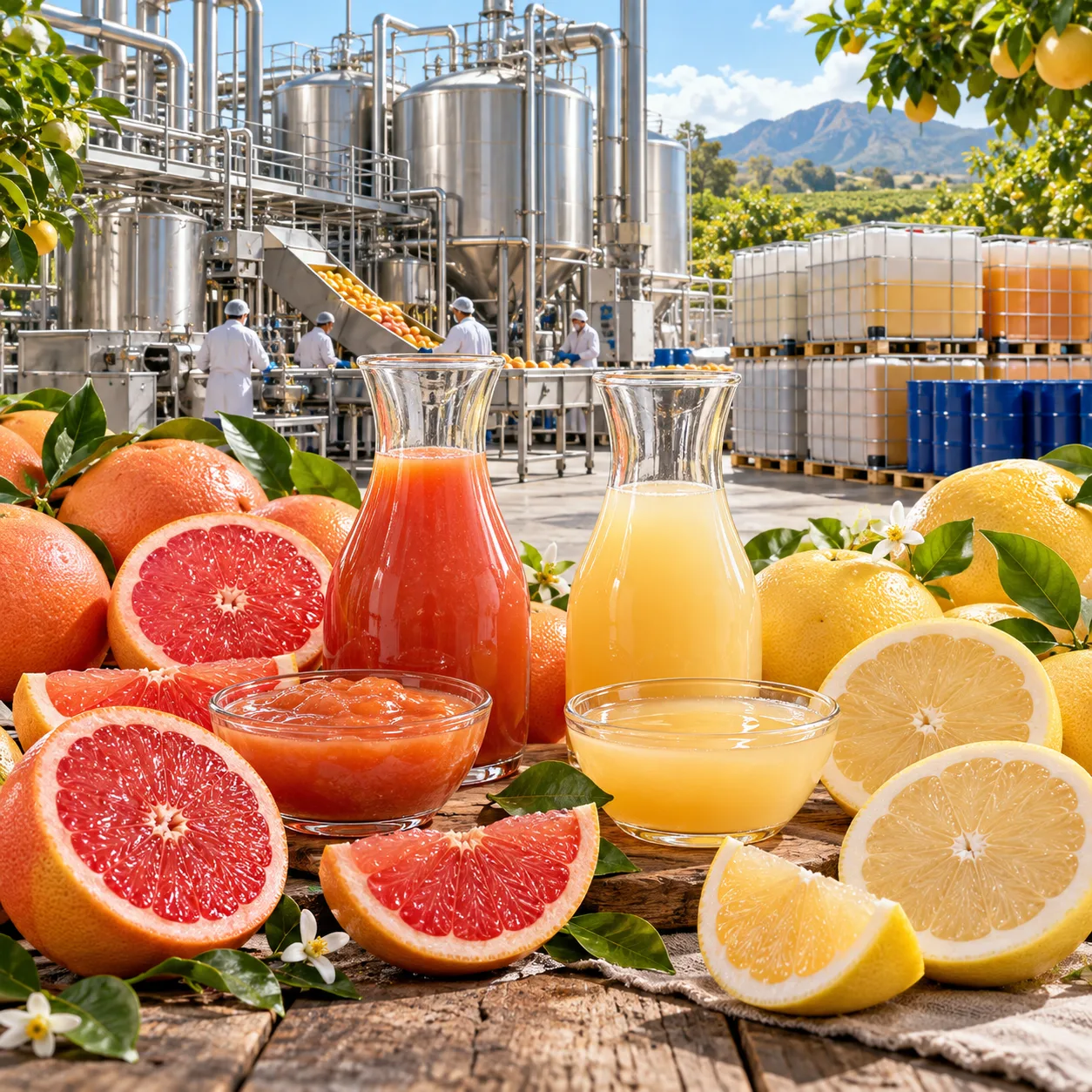
Commercial concentrate is produced by extracting juice from sound ripe fruit, screening or clarifying it to the required pulp level and removing part of the natural water under controlled evaporation. The finished concentrate may retain pulp or be clarified depending on the intended application.
- Characteristic sweet-tart grapefruit flavor with refreshing bitterness
- White, pink and red fruit varieties are commercially processed
- Color ranges from pale yellow to pink and reddish tones
- Clarified and pulpy concentrate styles may be available
- Conventional and certified-organic programs depend on crop and origin
- Frozen bulk storage is common for high-strength concentrate
Key parameters for commercial qualification.
Grapefruit concentrate specifications vary according to white, pink or red grapefruit type, geographic origin, pulp level, clarification and processor. High-strength commercial material is commonly identified as approximately 58 °Brix concentrate.
Soluble Solids / °Brix
Commercial grapefruit juice concentrate is commonly supplied at approximately 58 °Brix. Supplier specifications may report direct Brix, acid-corrected Brix or both because grapefruit's substantial acidity affects refractometer readings.
pH & Titratable Acidity
Representative commercial concentrates commonly fall around pH 3.0–4.0. Titratable acidity may be roughly 4.5–8% as citric acid, with pink, red and white grapefruit products showing different supplier targets.
Brix / Acid Ratio
The Brix-to-acid ratio is an important indicator of grapefruit flavor balance. Representative commercial specifications may use ratios around 7–14.5 depending on grapefruit type, crop and concentration method.
Single-Strength Reference
Approximately 10 °Brix is commonly used as a commercial single-strength reference. Representative 58 °Brix concentrate may be reconstituted using about one part concentrate to 6.12 parts water.
Pulp, Clarity & Color
Clarified grades may be controlled for optical clarity, while standard pink or red grapefruit concentrate can retain measurable centrifuged pulp. Color should be typical of the selected white, pink or red grapefruit grade.
Microbiological Criteria
Commercial specifications generally establish maximum total plate count, yeast and mold levels. Exact limits depend on supplier, packaging, processing conditions and intended downstream use.
These ranges are indicative commercial references only. Confirm direct and acid-corrected Brix, pH, acidity, Brix/acid ratio, pulp or clarity, microbiological limits and sensory requirements against the current supplier specification and lot-specific certificate of analysis.
Define fruit type, pulp level and supply format before comparing offers.
White, Pink & Red Grades
White grapefruit concentrate is generally pale yellow, while pink and red products retain stronger pink-to-red coloration. Acidity, bitterness, sweetness and pulp specifications can also vary between these grades.
Clarified vs. Pulpy
Clarified concentrate is useful in beverage systems requiring lower haze and suspended solids. Pulpy grapefruit concentrate retains more fruit material and can provide greater body and traditional juice identity.
Packaging
Industrial formats commonly include five-gallon pails and lined approximately 52-gallon steel drums. Exact net weights, liners, closures and minimum order quantities depend on the supplier program.
Storage & Shelf Life
Frozen storage around 0°F / -18°C is widely recommended to preserve grapefruit flavor and color. Representative supplier programs quote approximately one to three years of frozen shelf life, while refrigerated holding after thawing may be limited to about one week.
Documentation
Commercial approval may require a current technical specification, certificate of analysis, nutritional information, allergen statement, country-of-origin declaration, microbiological data, traceability records and applicable organic or food-safety certifications.
Origin & Crop
Grapefruit cultivar, growing region, maturity and crop conditions influence Brix, acidity, bitterness, color and juice yield. Manufacturers requiring consistent performance may qualify several approved origins or processors.
Major uses for grapefruit juice concentrate.
Juices & Citrus Blends
Grapefruit concentrate is used in 100% juice systems, citrus blends, juice drinks, breakfast beverages and mixed-fruit products where its acidity and bitterness provide contrast to sweeter juices.
Carbonated & Sparkling Beverages
Grapefruit is widely suited to sparkling citrus drinks, sodas, flavored waters, spritz-style products and mixers because its aroma, acidity and bitterness remain distinctive after dilution and carbonation.
Functional & Wellness Drinks
The ingredient can be incorporated into functional beverages, hydration products, fruit shots and botanical beverage systems where a recognizable citrus profile and pronounced acidity are desired.
Cocktail & Mocktail Bases
Grapefruit concentrate is useful in cocktail mixers, mocktails, foodservice beverage bases and bar syrups where concentrated citrus flavor reduces the need to process fresh grapefruit.
Brewing & Fermentation
Applications include citrus beers, hard seltzers, cider blends, mead, kombucha-style beverages and other fermented products. Grapefruit contributes fermentable fruit solids, acidity and aroma.
Syrups & Fruit Preparations
Concentrate can be used in beverage syrups, toppings, fruit preparations and foodservice bases where manufacturers need concentrated citrus flavor, acidity and soluble solids without adding substantial water.
Sauces, Dressings & Marinades
Grapefruit's acidity and slight bitterness can complement salad dressings, vinaigrettes, marinades, seafood sauces and savory-sweet glazes, particularly with herbs, ginger, chili and other citrus flavors.
Confectionery & Gummies
Gummies, jellies, hard candies, fruit chews and other confectionery products can use grapefruit concentrate for authentic citrus acidity and a more complex flavor than sweeter orange-based systems.
Bakery & Dessert Applications
The concentrate can provide citrus flavor in creams, glazes, fillings, cakes and pastry systems. Its bitterness can work especially well alongside chocolate, vanilla and sweet cream flavors.
Sorbet & Frozen Desserts
Grapefruit concentrate performs well in sorbet, frozen fruit bars, granita, frozen yogurt and other desserts where sharp citrus flavor provides refreshing contrast to sweetness.
Balance acidity, bitterness, pulp and citrus aroma.
Reconstitution
Representative 58 °Brix concentrate can be diluted toward approximately 10 °Brix single strength using about one part concentrate to 6.12 parts water. Final calculations should always use the actual incoming Brix.
Bitterness Management
Grapefruit naturally contains bitter flavonoids and limonoids. Inclusion rate, sweetness, acidity and blending with orange, apple, white grape or other fruits can be adjusted to achieve the desired balance.
Pulp & Beverage Appearance
Pulpy grades contribute body but can increase settling or haze. Clarified concentrate may be preferable for transparent drinks, carbonated beverages and products requiring cleaner visual appearance.
Aroma & Thermal Processing
Volatile grapefruit aroma compounds can be reduced by excessive heat and oxygen exposure. Finished flavor should be validated after the actual pasteurization, hot-fill or other commercial process.
Build a complete grapefruit concentrate inquiry.
Define the concentrate
Specify white, pink or red grapefruit, target Brix, acidity or Brix/acid ratio, clarified or pulpy format, color and applicable microbiological requirements.
Select the supply format
Indicate frozen or aseptic requirements and identify the preferred pail, lined drum or other industrial packaging configuration.
Provide volume & destination
Include conventional or organic status, estimated shipment or annual volume, delivery destination, required timing and whether material is needed for samples, pilot work or continuing production.
Compare suppliers against the complete requirement.
Grapefruit is an agricultural ingredient and natural variation occurs between cultivars, crops and origins. Technical specifications, certifications, packaging, storage requirements, availability and commercial terms should be confirmed against the current supplier specification and quotation.
See how juice concentrates perform in commercial formulations.
Plant-Based Beverages
Plant-Based Beverages with Juice Concentrates: Sourcing & Process Considerations
Juice ConcentratesFruit Vinegar
Using Juice Concentrates in Fruit Vinegar: Formulation Guide
Juice ConcentratesMead
Mead with Juice Concentrates: Sourcing & Process Considerations
Questions grapefruit concentrate buyers often ask
What is bulk grapefruit juice concentrate used for?
Commercial applications include juices and citrus blends, carbonated and functional beverages, cocktail and mocktail bases, brewing and fermentation, syrups, sauces, dressings, confectionery, bakery products and frozen desserts.
What Brix is typical for grapefruit juice concentrate?
Commercial grapefruit juice concentrate is commonly supplied around 58 degrees Brix, although direct and acid-corrected Brix specifications can differ. Exact purchasing limits should be confirmed against the supplier specification.
What pH and acidity are typical for grapefruit concentrate?
Representative commercial concentrates commonly fall around pH 3.0 to 4.0, with titratable acidity often roughly 4.5 to 8 percent as citric acid depending on grapefruit type, origin and processor.
What is the typical single-strength reference for grapefruit juice?
A common commercial reference is approximately 10 degrees Brix at single strength. Representative 58 degree Brix concentrate may be reconstituted using about one part concentrate to 6.12 parts water, subject to the actual supplier specification.
What is the difference between white, pink and red grapefruit concentrate?
White grapefruit concentrate is generally pale in color, while pink and red grapefruit grades retain pink to reddish tones. Flavor, bitterness, acidity, pulp and color intensity vary by cultivar, maturity, origin and processing.
What is the difference between clarified and pulpy grapefruit concentrate?
Clarified concentrate has more suspended pulp removed and is useful in cleaner beverage systems, while pulpy concentrate retains more fruit solids and can provide greater body and grapefruit identity. Buyers should specify the required clarity or pulp level.
Is organic grapefruit juice concentrate available?
Organic grapefruit concentrate may be available depending on crop, origin and supplier program. Buyers should request current organic certification and product-specific documentation.
How is grapefruit concentrate typically packed and stored?
Commercial formats commonly include pails and lined steel drums. Frozen storage around 0 degrees Fahrenheit or minus 18 degrees Celsius is widely recommended for conventional concentrate to protect flavor and color, although aseptic programs may have different storage requirements.