Lemon Puree
Tart, aromatic lemon puree for beverages, bakery, dairy, confectionery, frozen desserts, sauces and foodservice applications, with conventional, organic, aseptic and frozen options subject to availability.
High natural acidity with pulp, citrus aroma and recognizable lemon character.
Lemon (Citrus limon) is an acidic citrus fruit valued for its bright aroma, pale-yellow juice, high citric acidity and aromatic peel oil. Commercial cultivars include Eureka, Lisbon and other regional types, with crop and origin influencing juice yield, acidity and aroma.
Lemon puree differs from clarified lemon juice because it retains suspended fruit material. Depending on the processor, the product may contain juice and pulp only or may be produced as a whole-lemon puree containing controlled amounts of peel-derived material and natural lemon oil.
- Botanical species: Citrus limon
- Strong natural citric acidity
- Cloudy pale-yellow to yellow appearance
- Juice-and-pulp or whole-lemon styles may be available
- Frozen and aseptic commercial formats are available
- Conventional and certified organic programs may be available
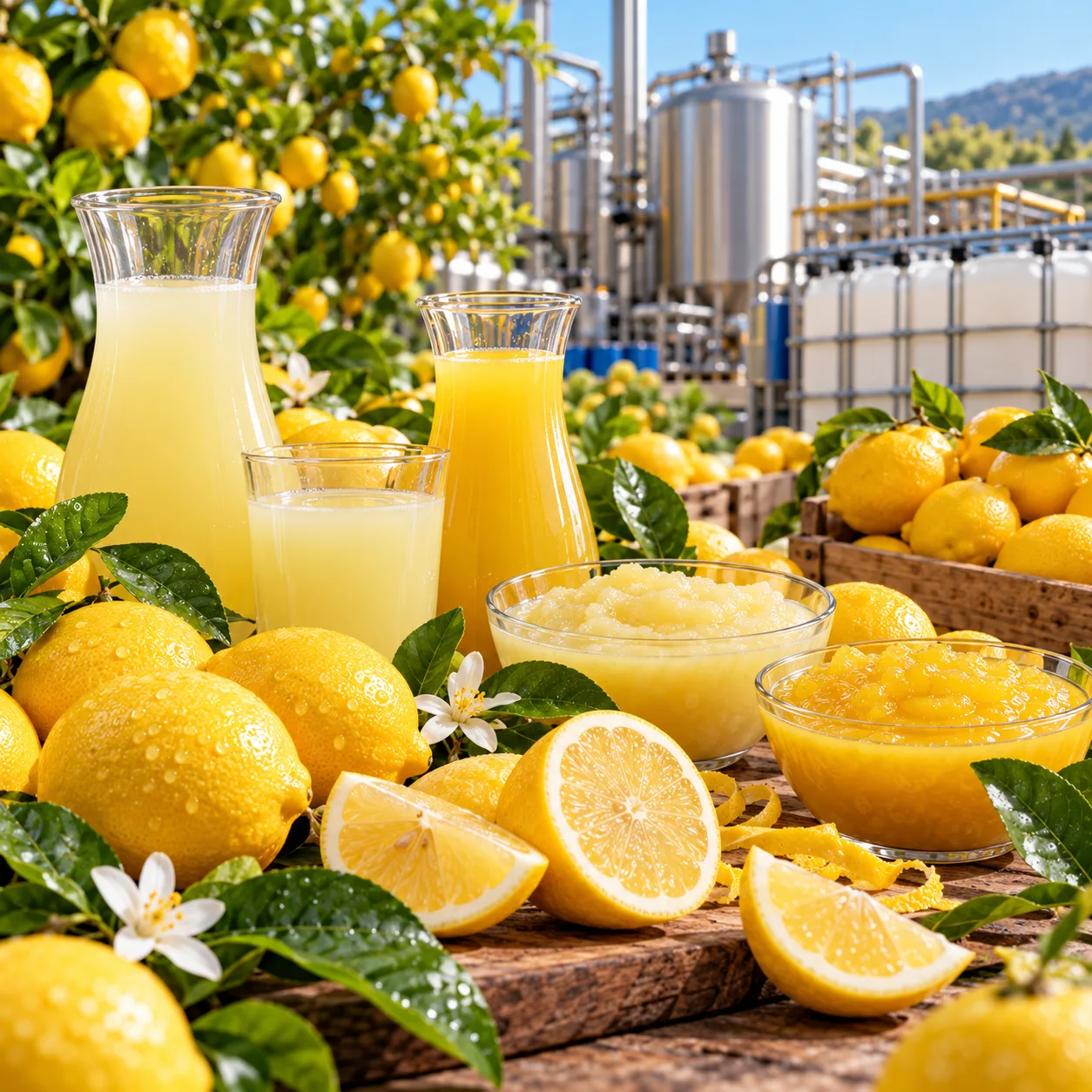
Juice, pulp and peel oil each influence the finished ingredient.
Juice & Acidity
Lemon juice is naturally high in citric acid, giving puree its sharp sour profile and making small dosage changes noticeable in finished products.
Acidity should therefore be treated as a formulation parameter, not only as a sensory characteristic.
Pulp & Fruit Cells
Suspended lemon pulp and fruit cells add cloud, body and a more whole-fruit appearance than clarified juice.
Pulp level can affect mouthfeel, sediment, pumping and visual appearance in beverages and sauces.
Peel Oil & Bitterness
The lemon peel contains highly aromatic essential oil. Controlled peel inclusion can strengthen citrus aroma, especially in whole-lemon puree.
Excess peel or albedo contribution can also increase bitterness, so the ingredient definition should be confirmed before formulation.
“Lemon puree” is not always a standardized composition. Confirm whether the quoted product is juice-and-pulp puree, whole-lemon puree, comminuted lemon or a formulated puree containing concentrate, pulp cells or lemon oil.
Acidity, pulp and sensory profile matter as much as Brix.
Published specifications vary according to processing style. The following values are useful commercial references for unsweetened lemon puree and whole-lemon puree rather than universal limits.
Physical & Chemical Parameters
- Soluble solids measured as °Brix
- pH and titratable acidity as citric acid
- Pulp or centrifugable-solids percentage
- Bostwick consistency where applicable
- Recoverable lemon-oil content for whole-fruit styles
- Cloudy pale-yellow characteristic appearance
- Fresh lemon aroma without fermented or oxidized notes
Published Commercial Examples
Frozen 100% lemon puree specifications include approximately 7–10 °Brix, acidity around 5.0–6.2% as citric acid and pulp around 6–15%, with recoverable peel oil also controlled in some programs.
A current whole-lemon puree specification lists at least 7 °Brix, pH 2.0–3.4, acidity around 2.0–3.9% and Bostwick consistency of approximately 2–18 cm/30 seconds.
Product style strongly affects the analytical profile. The current supplier specification and lot-specific Certificate of Analysis should always take precedence over general reference ranges.
Standard puree and whole-lemon puree are not interchangeable.
Juice & Pulp Puree
This style emphasizes lemon juice and fruit cells with limited peel contribution. It provides strong acidity and fresh lemon flavor while generally minimizing peel-derived bitterness.
It is useful in beverages, dairy, frozen desserts, bakery and formulations where a clean acidic lemon profile is desired.
Whole-Lemon Puree
Whole-lemon puree incorporates more of the edible fruit structure and may contain measurable peel oil, giving a broader and more aromatic citrus profile.
It can be especially useful in culinary sauces, brewing, bakery and beverages where peel-like aroma is desirable, but bitterness should be evaluated during trials.
Where lemon puree is used commercially.
Lemonades & Beverage Bases
Lemon puree can add acidity, aroma, natural cloud and pulp to lemonades, citrus drinks, juice blends and beverage bases.
Dosage should be based on both acidity and peel-oil intensity, particularly when using whole-lemon puree.
Brewing & Fermented Beverages
Applications include sour beers, radlers, hard seltzers, cider, kombucha, mead and other fermented beverages requiring authentic lemon flavor.
Lemon acidity can materially affect fermentation balance and final pH, so addition timing and dosage should be tested at pilot scale.
Yogurt & Dairy Products
Lemon puree is used in yogurt preparations, cheesecake-style dairy products, cultured desserts and selected drinking-yogurt systems.
Its high acidity requires careful addition to protein systems to avoid unwanted curdling or destabilization.
Plant-Based Products
Lemon works in plant-based yogurts, desserts and beverages where citrus acidity and aroma complement coconut, oat, almond and other bases.
Protein stability and emulsion performance should be validated after the final heat and storage process.
Bakery, Cakes & Pastries
Lemon puree can provide natural citrus flavor in cakes, muffins, cheesecakes, pastries, tart fillings, glazes and dessert layers.
Whole-lemon styles can provide stronger zest-like aroma, while juice-and-pulp puree offers a cleaner acidic profile.
Confectionery
Applications include gummies, fruit chews, jellies, fondant, confectionery fillings and other products where strong acidity and recognizable lemon flavor are desired.
Citric acidity from the puree should be included in the complete acid and gelling calculation.
Ice Cream, Gelato & Sorbet
Lemon puree works well in sorbet, gelato, ice cream, frozen yogurt, ice pops and other frozen desserts.
Acidity, sugar content and fruit solids should be balanced with the finished freezing point and desired texture.
Sauces, Dressings & Marinades
Lemon puree can provide fruit acidity and citrus aroma in dressings, marinades, dipping sauces, seafood sauces, glazes and savory condiments.
Whole-lemon puree can be particularly useful where a zest-like flavor is desired without handling fresh peel.
Jams, Curds & Fruit Preparations
Lemon puree can be incorporated into lemon curd-style preparations, jams, preserves, dessert toppings and multi-fruit preparations.
Its high acidity can also help balance sweeter fruit systems.
Foodservice & Central Kitchens
Foodservice users can apply lemon puree in beverages, desserts, sauces, marinades and culinary bases without the labor and yield variability associated with squeezing fresh lemons.
Smaller pail or bag-in-box packs can be practical where full industrial drums exceed normal consumption.
Control acidity, bitterness and pulp for consistent performance.
Acid Balance
Lemon puree can supply a substantial portion of a formula's total acidity. Always measure the incoming lot rather than assuming acidity solely from the use level.
Peel Bitterness
Whole-fruit products can carry desirable lemon-oil aroma together with peel bitterness. Sensory trials are especially important at higher use levels.
Pulp & Sediment
Pulp contributes natural cloud and body but can also affect sedimentation, pumping and filling. Define the desired pulp level for the finished application.
Formats for pilot production through industrial manufacturing.
Pails & Smaller Packs
Frozen lemon puree is commercially supplied in smaller industrial packs such as approximately 18 kg pails and 20 kg containers.
These formats can suit product development, foodservice and lower-volume manufacturing.
Bag-in-Box
Aseptic lemon puree is available in bag-in-box formats. Published commercial examples include approximately 42 lb / 19 kg packs.
Confirm the ingredient statement because some commercial aseptic products are formulated from puree concentrate, pulp cells and oil.
Industrial Drums
Bulk frozen or aseptic puree is commonly supplied in lined steel drums. Published examples include approximately 196 kg frozen drums and roughly 425 lb / 193 kg aseptic drums.
Larger bulk systems may be available for established volume programs.
Storage depends on the exact product and process. Frozen puree requires cold-chain storage, while validated aseptic products may use different unopened storage conditions. Follow the supplier's specific storage, shelf-life and post-opening instructions.
Define puree style before comparing offers.
Technical Requirements
- Juice-and-pulp or whole-lemon puree
- Required °Brix range
- pH and titratable acidity
- Pulp or centrifugable-solids requirement
- Bostwick consistency where applicable
- Lemon-oil or peel-content requirement
- Color and sensory expectations
- Microbiological acceptance criteria
Commercial Requirements
- Conventional or certified organic grade
- 100% lemon or formulated puree requirement
- Preferred origin if required
- Trial quantity and annual-volume forecast
- Pail, bag-in-box or drum preference
- Frozen or aseptic receiving capability
- Delivery destination and required timing
- Certification and documentation requirements
Compare ingredient statements carefully. A 100% lemon puree, whole-lemon puree and a formulated commercial puree containing concentrate, pulp cells and lemon oil can deliver very different acidity, aroma, bitterness and use rates.
Documents commonly reviewed during supplier approval.
Technical Documentation
- Current product specification
- Lot-specific Certificate of Analysis
- Complete ingredient declaration
- Pulp and lemon-oil specification where relevant
- Microbiological specification
- Storage and shelf-life information
- Packaging and handling specification
Certification & Supply Documents
- Organic certificate when applicable
- Food-safety certification information
- Kosher or Halal documentation when requested
- GMO status where required
- Country-of-origin information
- Traceability and lot identification
- Commercial quotation and delivery terms
See how lemon puree can perform in finished products.
Lemon puree sourcing questions
What is commercial lemon puree?
Commercial lemon puree contains lemon juice and fruit solids and, depending on processing style, may also contain controlled peel-derived material and natural lemon oil. Confirm the exact ingredient statement because commercial definitions vary.
What is the typical Brix of lemon puree?
Published 100% lemon puree specifications commonly fall around 6–10 °Brix. Whole-lemon and formulated puree products may have different values, so purchasing should use the supplier's current specification.
What are typical pH and acidity values?
Lemon puree is highly acidic. Published products commonly fall around pH 2.0–3.4. Standard unsweetened puree specifications often show approximately 4–6% acidity as citric acid, although whole-lemon and other styles can differ.
What is the difference between lemon puree and whole-lemon puree?
Standard puree may focus mainly on lemon juice and pulp. Whole-lemon puree includes more peel-derived material, providing stronger citrus oil and zest character together with potentially greater bitterness.
What is bulk lemon puree used for?
Major applications include lemonades, beverage bases, brewing, yogurt, plant-based products, bakery fillings, cakes, confectionery, ice cream, sorbet, sauces, dressings, marinades, jams, syrups and foodservice products.
Why is lemon-oil content important?
Natural oil from lemon peel contributes strong fresh citrus aroma. In whole-lemon puree it can be a useful specification because too little oil may produce weak aroma, while excessive peel contribution can increase bitterness.
Is organic lemon puree available?
Certified organic lemon puree may be available from selected processors. Request current organic certification and confirm whether it covers the exact puree style being purchased.
How is commercial lemon puree packaged?
Commercial formats include approximately 18–20 kg pails or bag-in-box packs and industrial drums around 190–200 kg. Exact net weight depends on supplier and whether the product is frozen or aseptic.
What information should I provide for a quote?
Specify juice-and-pulp or whole-lemon puree, conventional or organic grade, approximate volume, preferred packaging, destination and delivery timing, together with requirements for Brix, pH, acidity, pulp, consistency, peel oil, microbiology, origin and certification.