Mango NFC Juice
Single-strength mango juice with natural tropical aroma, yellow-orange color and characteristic fruit body for beverages, smoothies, dairy, desserts, confectionery and commercial food applications.
Single-strength mango with more natural body than most fruit juices.
Mango (Mangifera indica) is a stone fruit consisting of aromatic flesh surrounding a large central seed. Ripe mango flesh ranges from pale yellow to deep orange and can vary substantially in sweetness, acidity, fiber, aroma and viscosity according to cultivar.
NFC mango is produced directly from ripe fruit without the evaporation-and-reconstitution step used for concentrate. Because mango flesh is naturally pulpy, commercial NFC is frequently supplied as a refined juice-puree or single-strength pulp rather than as a thin, transparent juice.
- Botanical species: Mangifera indica
- Yellow to orange characteristic fruit color
- Sweet tropical flavor with cultivar-dependent acidity
- Commercial NFC commonly around 12–16 °Brix
- Fine-pulp, refined and lower-fiber styles may be available
- Conventional and organic sourcing programs vary by origin
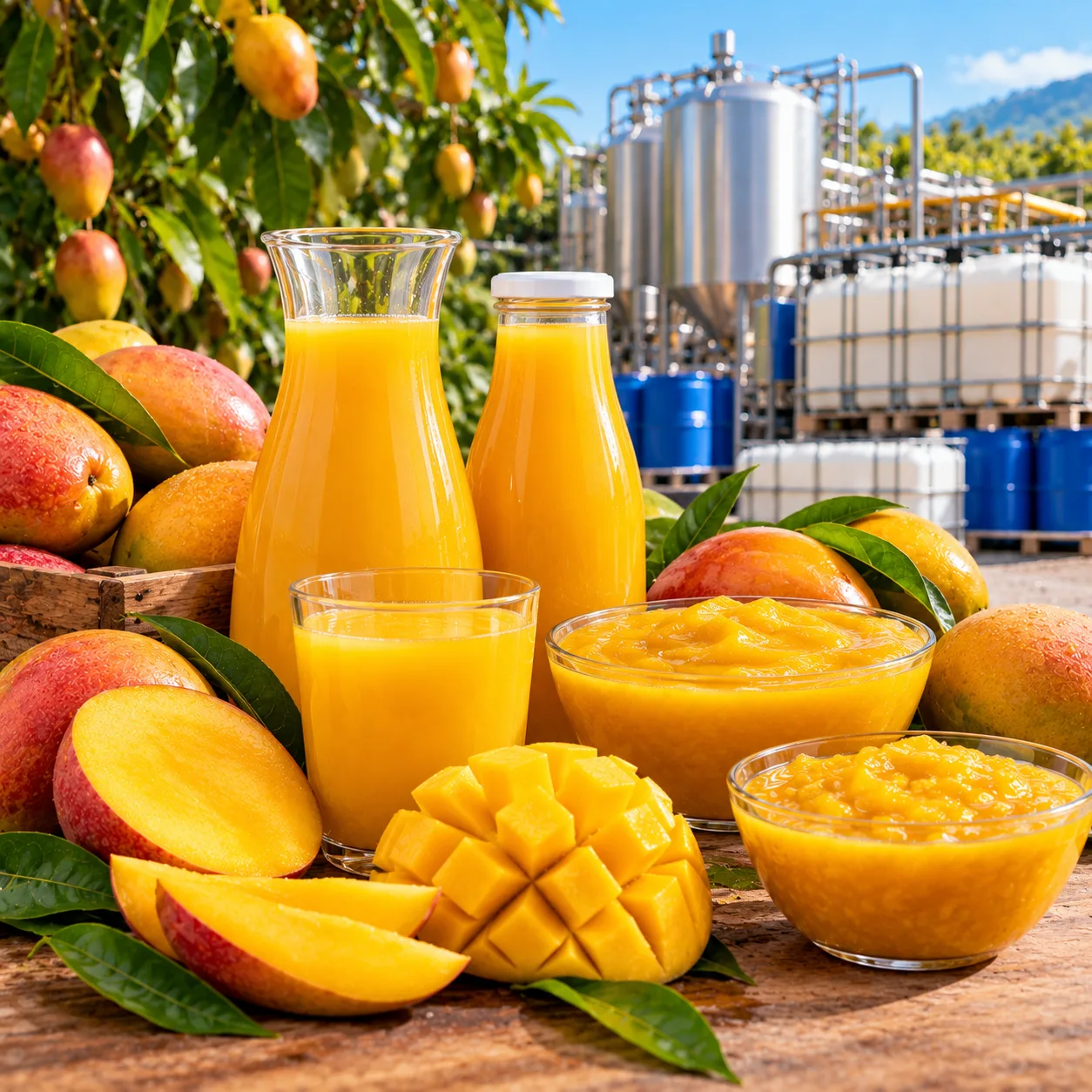
Cultivar strongly influences aroma, color, fiber and processing behavior.
Alphonso & Kesar
Alphonso is valued for intense aroma, orange-yellow color and rich premium mango flavor. Kesar also provides strong color and a distinctive sweet aromatic profile.
These varieties are especially relevant where mango character is more important than lowest ingredient cost.
Totapuri
Totapuri is one of India's major industrial processing mangoes. It generally provides a lighter yellow color, moderate sweetness, useful acidity and dependable processing yield.
It is widely used in high-volume beverage, nectar, puree and concentrate programs.
Kent & Keitt
Kent and Keitt are important commercial varieties with good flesh yield and relatively smooth texture when properly refined.
Current NFC programs use these cultivars for aseptic single-strength mango pulp in the approximately 14–16 °Brix range.
Mango cultivars are not technically interchangeable. Variety can materially affect Brix, acidity, fiber, viscosity, carotenoid color and aromatic intensity, even when products are all sold as mango NFC.
Brix, pH, acidity and texture should be evaluated together.
Industrial mango NFC specifications commonly control soluble solids, pH, titratable acidity, color, particle size or fiber, consistency, flavor and microbiological quality.
Typical Purchasing Parameters
- Direct soluble solids measured as °Brix
- pH and titratable acidity
- Declared acidity basis
- Particle size / refining screen
- Fiber and coarse-particle limits
- Consistency or viscosity where relevant
- Yellow-orange color specification
- Characteristic mango flavor and aroma
Published Commercial Examples
One current NFC mango program specifies approximately 14–16 °Brix, pH 3.7–4.1 and acidity not above 0.8%.
Another commercial mango NFC program lists approximately 12–14 °Brix and 0.4–0.7% acidity, while a Kent/Keitt single-strength product specifies 14–16 °Brix and pH 3.4–4.2.
These figures are commercial examples rather than universal limits. Current supplier specifications and lot-specific Certificates of Analysis should govern purchasing and production acceptance.
FDA uses 13.0 °Brix for mango juice.
U.S. Regulatory Reference
U.S. FDA regulations use 13.0 °Brix as the minimum single-strength reference when calculating the percentage of mango juice in a beverage made from concentrate.
The value provides a standardized basis for reconstitution and juice-content calculations.
Natural NFC Variation
Directly expressed NFC is considered 100% juice without requiring concentration and reconstitution.
Natural mango solids can therefore vary above or below the regulatory reference according to cultivar and ripeness, with current NFC programs commonly around 12–16 °Brix.
Physical specification matters more with mango than with many other fruits.
Refined Mango NFC
Industrial refining removes skin, seed material and coarse fibers while retaining fine fruit tissue.
The resulting product remains naturally thicker than clear apple or grape juice and is well suited to juice and nectar systems.
NFC Mango Pulp / Puree
Some processors describe their single-strength product as NFC mango pulp or puree rather than juice because more natural fruit tissue remains in the ingredient.
These products are especially useful where body and authentic mango texture are desirable.
Clarified Mango Juice
More highly clarified mango ingredients can be produced where lower viscosity or improved beverage clarity is needed.
Clarified formats should be specified separately because they differ substantially from conventional pulpy mango NFC.
When requesting a quotation, do not rely on the word “juice” alone. Specify desired particle size, fiber, viscosity or consistency and whether a pulpy, refined or clarified format is required.
Carotenoid color and tropical aroma are sensitive to processing.
Natural Color
Mango's yellow-to-orange appearance is associated with naturally occurring carotenoid pigments.
Cultivar differences can produce noticeably different color intensity before processing even at similar soluble solids.
Heat Treatment
Pasteurization and sterilization protect commercial stability, but excessive heating can reduce fresh mango aroma and alter color.
Premium products should be evaluated after the actual production heat treatment rather than only from the incoming ingredient.
Oxygen & Storage
Oxygen exposure can contribute to flavor deterioration and color change during storage.
Deaeration, closed processing and appropriate bulk packaging can help maintain the intended sensory profile.
Where mango NFC juice is used commercially.
Mango Juice, Nectar & Fruit Drinks
Mango NFC can serve as the main fruit ingredient in mango juice, nectar and high-fruit beverages where recognizable tropical flavor and natural body are required.
Use level depends on the desired viscosity, sweetness, acidity and applicable product standard.
Tropical Juice Blends
Mango combines naturally with pineapple, passion fruit, orange, guava, peach, banana and other tropical or stone-fruit ingredients.
Totapuri can provide an economical beverage base, while more aromatic varieties can be used to intensify premium mango character.
Smoothies & Functional Beverages
Mango's natural body makes NFC particularly useful in smoothies and thick functional beverages.
It can soften sharp botanical, vegetable or protein flavors while contributing fruit solids and tropical aroma.
Yogurt & Dairy Products
Mango is widely used in drinking yogurt, stirred yogurt, cultured dairy beverages, fruit preparations and dairy desserts.
The finished system should be checked for acidity, protein stability and the required particle size.
Plant-Based Beverages
Mango NFC works in oat, coconut, almond and other plant-based beverages and yogurt alternatives.
Its natural yellow-orange color and body are especially useful in tropical and smoothie-style formulations.
Baby & Toddler Foods
Refined mango is used in fruit blends, pouches and other baby- and toddler-food formulations where smooth texture is required.
Products intended for these applications should meet the project's specific pesticide, contaminant and microbiological criteria.
Ice Cream & Frozen Desserts
Mango NFC is suitable for ice cream, frozen yogurt, sorbet, gelato, ice pops and granita-style products.
Juice Brix and natural fruit solids should be included when balancing sweetness and freezing behavior.
Gummies & Confectionery
Applications include gummies, fruit chews, jellies and confectionery centers requiring genuine mango character.
Concentrate may be more efficient when high fruit solids are required with minimal added water.
Fruit Bars, Bakery & Fillings
Mango NFC can contribute flavor and fruit solids to snack bars, bakery fillings, cakes, dessert preparations and glazes.
Puree may be preferred when a thicker fruit structure is required.
Sauces, Chutneys & Culinary Products
Mango works in chutneys, tropical sauces, salad dressings, marinades, glazes and sweet-savory preparations.
It pairs particularly well with chili, ginger, lime, herbs and spice-forward formulations.
Fermented & Alcoholic Beverages
Mango NFC can be used in beer, hard seltzer, kombucha, fruit wine, mead and other fermented beverages.
Incoming Brix and pulp content should be considered when setting fermentation and filtration parameters.
Foodservice & Catering
Mango NFC supports smoothies, beverages, desserts, sauces and tropical menu applications without ripening, peeling, destoning and pulping fresh mangoes on site.
Bag-in-box formats can be useful where industrial drums exceed normal throughput.
Select the format according to texture, solids and logistics.
Mango NFC
NFC remains near natural single strength and preserves the fruit's normal water-to-solids relationship.
Commercial products commonly range around 12–16 °Brix.
Mango Puree Concentrate
Mango puree concentrate typically removes substantial water while retaining fruit body.
Industrial mango puree concentrates are commonly supplied around 28–30 °Brix, providing greater solids per pound.
Clarified Mango Juice Concentrate
Clarified mango juice concentrate can be produced at much higher soluble-solids levels, including commercial grades around 65 °Brix.
It provides high freight efficiency but substantially less natural mango body than pulpy NFC.
Aseptic drums are a common industrial mango format.
Bag-in-Box
Commercial mango NFC and juice-puree products may be available in approximately 5–20 liter bag-in-box formats for development, foodservice and smaller manufacturing programs.
Frozen Drums
Frozen bag-in-drum products are commercially available in approximately 180–200 kg net-weight formats.
These programs require appropriate frozen storage and controlled thawing before use.
Aseptic Drums
Aseptic bag-in-drum is a common mango format, with current commercial programs around 200–220 kg per drum.
One current Kent/Keitt NFC program uses 220 kg aseptic drums and specifies unopened ambient storage.
Shelf life and storage requirements are supplier-specific. Selected aseptic programs specify approximately 18–24 months unopened at ambient conditions, while frozen products require cold storage. Follow the exact offered product specification.
Specify variety and physical texture before comparing offers.
Technical Requirements
- True single-strength / NFC format
- Preferred cultivar or acceptable varietal blend
- Target Brix and crop tolerance
- pH and titratable acidity
- Refining screen / particle specification
- Fiber and coarse-particle limits
- Consistency or viscosity requirement
- Color and sensory acceptance criteria
Commercial Requirements
- Conventional or certified organic grade
- Preferred origin and crop season
- Trial quantity and annual-volume forecast
- Bag-in-box, frozen drum or aseptic drum
- Ambient or frozen storage capability
- Delivery destination in the United States
- Required shipment timing
- Certification and documentation requirements
Mango products with identical Brix can perform very differently because cultivar, fiber, particle size, viscosity, aroma and color can vary substantially. Compare the complete technical specification, not soluble solids alone.
Documents commonly reviewed during supplier approval.
Technical Documentation
- Current product specification
- Lot-specific Certificate of Analysis
- Complete ingredient declaration
- Particle / screen or consistency specification
- Microbiological acceptance limits
- Storage and shelf-life instructions
- Packaging and handling specification
Certification & Supply Documents
- Organic certificate when applicable
- Food-safety certification information
- Baby-food documentation where required
- Kosher or Halal documentation when requested
- Country-of-origin information
- Traceability and lot identification
- Commercial quotation and delivery terms
See how ingredient format affects formulation.
Gummies & Chews
Gummies & Chews with Juice Concentrates: Sourcing & Process Considerations
Juice ConcentratesFruit Bars
Using Juice Concentrates in Fruit Bars: Formulation Guide
Juice ConcentratesHotel & Catering
Hotel & Catering with Juice Concentrates: Sourcing & Process Considerations
Mango NFC juice sourcing questions
What is mango NFC juice?
NFC means not from concentrate. Mango NFC is a single-strength ingredient made directly from ripe mango without first evaporating water and later reconstituting it. Because mango is naturally pulpy, the commercial product may also be described as refined NFC pulp or juice-puree.
What is the typical Brix?
Current commercial mango NFC examples commonly fall around 12–16 °Brix. Natural values depend on cultivar, fruit maturity, origin and processing method.
What is the FDA single-strength reference?
FDA uses 13.0 °Brix as the minimum single-strength reference when calculating the percentage of mango juice in products manufactured from concentrate.
What are typical pH and acidity values?
Published commercial examples commonly show pH around 3.4–4.2 and acidity around 0.4–0.8%, typically expressed as citric acid.
Which mango varieties are commonly used?
Totapuri is a major industrial processing mango. Alphonso and Kesar are valued for premium aroma and color, while Kent and Keitt are used in smooth, relatively low-fiber NFC pulp programs.
Why is mango NFC thicker than many other juices?
Ripe mango contains substantial fine fruit tissue and natural pulp. Even after refining, NFC mango normally has more body than clarified apple, grape or citrus juice.
What is bulk mango NFC used for?
Major applications include mango juice and nectar, tropical blends, smoothies, functional beverages, yogurt, plant-based products, baby food, frozen desserts, gummies, fruit bars, bakery fillings, sauces, chutneys and foodservice products.
How does mango NFC differ from mango puree?
The distinction depends partly on the processor. A juice-oriented NFC may be more finely refined or contain fewer suspended solids, while puree normally retains more fruit tissue and body. Particle size and consistency should be specified.
Is organic mango NFC available?
Certified organic mango NFC may be available from selected processors. Request current certification covering the exact variety, origin, processor and product being offered.
How is commercial mango NFC packaged?
Commercial formats include bag-in-box, frozen drums around 180–200 kg and aseptic bag-in-drum products around 200–220 kg. Exact packaging depends on the processor and required storage system.