Pomegranate NFC Juice
Single-strength pomegranate juice with characteristic ruby-red color, pronounced sweet-tart flavor and natural fruit astringency for beverages, fermentation, dairy, frozen desserts, sauces and commercial food applications.
Ruby-red juice with a distinctive sweet, tart and lightly astringent profile.
Pomegranate (Punica granatum) is a round fruit with a leathery rind surrounding hundreds of individual arils. Each aril contains a seed enclosed in a juicy translucent-to-deep-red pulp sac. It is the aril juice that provides the characteristic flavor and color associated with commercial pomegranate beverages.
NFC pomegranate juice is extracted directly from ripe fruit and supplied without the evaporation-and-reconstitution step used for concentrate. Depending on extraction and finishing, commercial NFC can be supplied as naturally cloudy juice or clarified juice with much lower suspended solids.
- Botanical species: Punica granatum
- Ruby red to deep garnet characteristic appearance
- Sweet-tart flavor with natural tannic / astringent notes
- Commercial NFC commonly around 12–18 °Brix
- Clear and cloudy processing styles are available
- Conventional and certified organic programs may be available
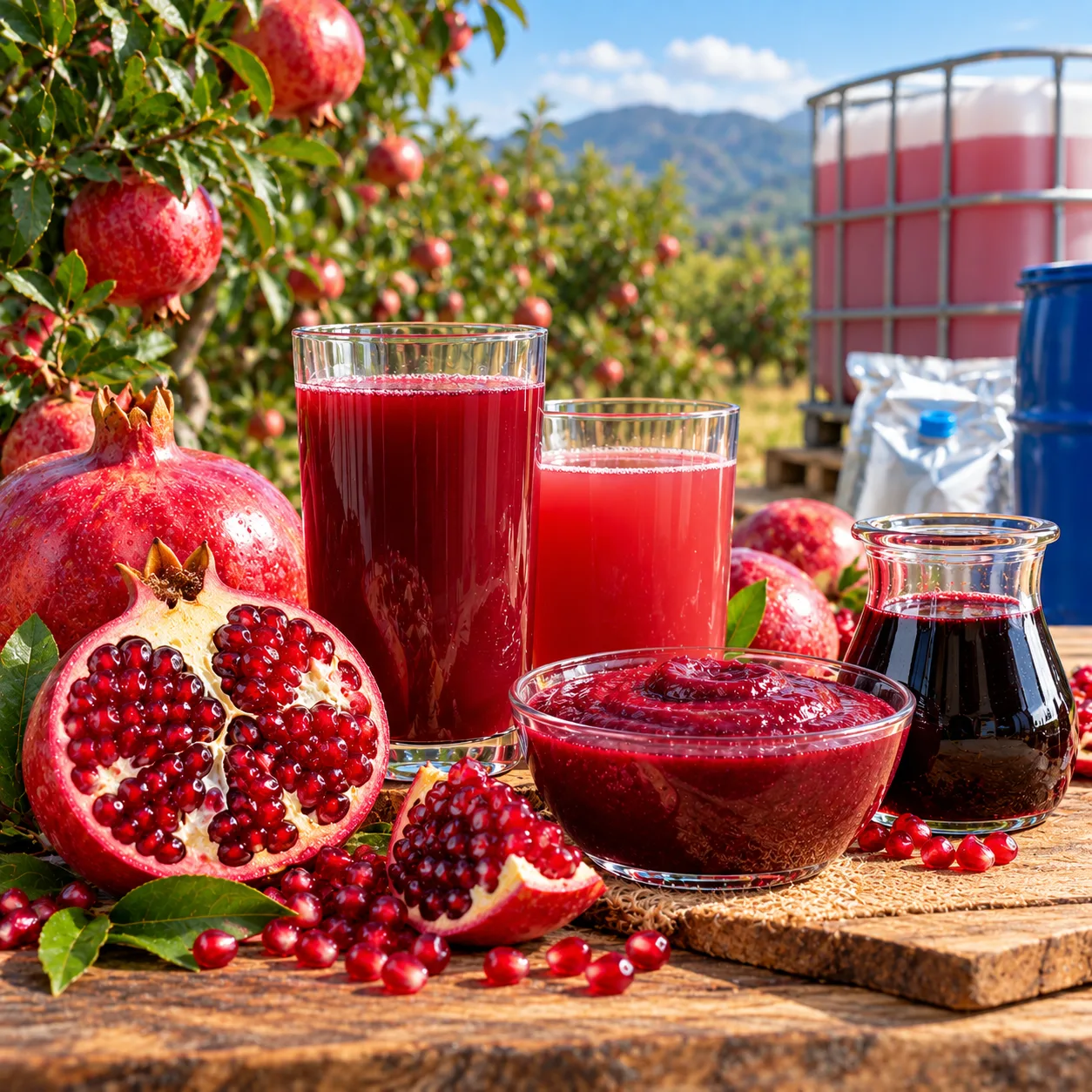
Cultivar affects acidity, aril color, aroma and finished juice profile.
Wonderful
Wonderful is an important commercial pomegranate cultivar, particularly in North American production. Mature fruit is large with deep-red arils, high juice content and a distinctly tart-sweet flavor.
Its strong color and recognizable pomegranate character make it relevant for premium beverage and ingredient programs.
Hicaz / Hicaznar
Hicaz is an important processing variety in Türkiye, recognized for red skin, dark-red arils and a pronounced sour-sweet profile.
It is widely associated with industrial pomegranate juice and concentrate production where strong color and acidity are desirable.
Other Commercial Cultivars
Bhagwa and numerous regional cultivars are also used commercially. Some are sweeter and less acidic, while others provide stronger color or more pronounced tannic character.
For applications sensitive to flavor and color, cultivar or accepted varietal blend can be specified in the purchasing brief.
Pomegranate composition changes with cultivar, maturity and origin. Two NFC juices with similar Brix can differ significantly in acidity, ruby color, aroma and astringency.
Brix, acidity, color and astringency define commercial performance.
Industrial pomegranate NFC specifications commonly control soluble solids, pH, titratable acidity, clear or cloudy appearance, color, sensory profile and microbiological quality.
Typical Purchasing Parameters
- Direct soluble solids measured as °Brix
- pH and titratable acidity
- Declared acidity basis, commonly citric acid
- Clear or cloudy juice style
- Turbidity / suspended-solids requirement
- Ruby-red color and browning tolerance
- Characteristic pomegranate flavor and aroma
- Astringency and bitterness acceptance criteria
Published Commercial Examples
One current clear/cloudy NFC program specifies 13–16 °Brix, 1.35–1.75% acidity and pH 3.00–3.20, with aseptic filling in approximately 210–215 kg drums.
Other commercial NFC programs include approximately 14–18 °Brix, acidity around 1–2% and pH 3–4, while another frozen product specifies 14–16 °Brix and pH 3.1–3.9.
These are published commercial examples, not universal pomegranate limits. Use the current supplier specification and lot-specific Certificate of Analysis for purchasing and production acceptance.
Pressing conditions can materially change flavor and astringency.
Aril-Focused Extraction
Processing systems that primarily extract juice from the arils can produce a cleaner fruit profile with less contribution from rind and internal membrane tissue.
This can be desirable where a smoother, less tannic pomegranate flavor is required.
Whole-Fruit Pressing
More aggressive whole-fruit pressing can extract additional compounds from peel and internal membranes.
This may increase color and structural intensity but can also contribute greater bitterness or astringency, making the extraction method a relevant specification point.
Astringency is not described adequately by Brix and pH alone. Representative sensory approval is especially valuable when changing cultivar, origin or extraction method.
Select the physical format around appearance and mouthfeel.
Clear Pomegranate NFC
Clarified juice has most suspended fruit material and haze-forming solids removed, resulting in a cleaner visual appearance and lower sediment.
It is useful in transparent drinks, sparkling beverages, fermentation, syrups and culinary products where visible cloud is undesirable.
Cloudy Pomegranate NFC
Cloudy juice retains more naturally suspended fruit material and can provide greater body and direct-fruit character.
It is particularly relevant for smoothies, premium juices and fruit-forward beverages where natural turbidity is acceptable.
Clarification can affect more than appearance. It can also influence phenolic composition, color and aromatic profile, so clear and cloudy NFC should be qualified independently.
Ruby color is valuable but sensitive to processing conditions.
Anthocyanin Color
Red and purple pomegranate juice color is strongly associated with natural anthocyanin pigments.
Cultivar and extraction determine the starting shade and intensity before thermal processing and storage.
Heat Treatment
Pasteurization and more severe heating can alter anthocyanins, aroma compounds and overall color quality.
Color-critical applications should therefore be evaluated after the actual production heat cycle.
Oxygen & Storage
Oxygen, temperature and storage duration can contribute to gradual color loss, browning and aroma change.
Low-oxygen handling and supplier-recommended storage conditions are important for premium red-fruit formulations.
Where pomegranate NFC juice is used commercially.
Premium Juice & Juice Drinks
Pomegranate NFC can serve as the main juice component in premium beverages or provide intense fruit identity in multi-juice drinks.
Its combination of acidity, sweetness and natural astringency creates a profile that remains recognizable even in blends.
Fruit & Juice Blends
Pomegranate combines well with apple, white and red grape, cranberry, cherry, blueberry, raspberry, orange and other fruit juices.
Sweeter juices are often useful for balancing its naturally tart and tannic character.
Sparkling Beverages
Clear NFC is well suited to sparkling juice, fruit sodas, spritz-style beverages and carbonated premium drinks.
Color and acid balance should be tested through carbonation, filling and shelf life.
Smoothies & Functional Beverages
Cloudy pomegranate NFC provides tart fruit intensity and ruby-red color in smoothies, shots and fruit-forward specialty beverages.
Its strong sensory profile can help balance botanical and other concentrated flavor systems.
Beer, Cider & Hard Seltzer
Pomegranate NFC can provide fermentable sugars, acidity, red color and fruit character in beer, cider and hard-seltzer formulations.
Fermentation and addition timing can materially affect retained fruit aroma and final dryness.
Wine, Mead & Kombucha
Applications include fruit wine, mead, kombucha and other fermented beverages requiring real pomegranate juice.
Incoming Brix, acidity and pH should be included when establishing fermentation targets.
Cocktails & Mocktails
Pomegranate NFC is suitable for cocktail mixers, mocktail bases, spritzes, punches and foodservice beverage programs.
Citrus, ginger, mint, berries and warm spices pair effectively with its sweet-tart character.
Yogurt & Dairy Products
Pomegranate can be incorporated into drinking yogurt, cultured dairy drinks, fruit preparations and dairy desserts.
Its relatively low pH and natural tannic compounds should be evaluated carefully in protein-containing systems.
Plant-Based Beverages
Pomegranate provides strong color and fruit identity in oat, almond, coconut and other plant-based beverages or yogurt alternatives.
Protein stability and color should be checked after heat treatment and throughout the expected shelf life.
Ice Cream, Sorbet & Frozen Desserts
Pomegranate NFC can provide ruby color and tart fruit flavor in sorbet, ice cream, gelato, frozen yogurt, ice pops and granita.
Juice Brix and acidity should be included when balancing sweetness and freezing characteristics.
Jams, Jellies & Confectionery
Applications include jellies, gummies, fruit chews, confectionery fillings and multi-fruit preserve systems.
NFC contributes real juice character, while concentrate may be preferred where higher fruit solids are required with less water.
Sauces, Dressings & Glazes
Pomegranate juice works particularly well in salad dressings, marinades, reductions, glazes and sweet-savory sauces.
Its acidity and tannic fruit character complement roasted meats, grains, vegetables, herbs and Middle Eastern-style flavor systems.
Select the format according to fruit character, solids and logistics.
Pomegranate NFC Juice
NFC remains near natural single strength and avoids the normal evaporation-and-reconstitution step.
It is appropriate where directly expressed juice or not-from-concentrate positioning is part of the finished-product brief.
Pomegranate Juice Concentrate
Commercial pomegranate concentrate is commonly supplied around 65 °Brix, with some programs extending toward approximately 68–72 °Brix.
Concentrate delivers substantially more soluble solids per pound and significantly improves freight efficiency compared with NFC.
Reconstituted pomegranate concentrate can be suitable for many formulations but is not equivalent to NFC. Define the required ingredient format before comparing commercial offers.
Frozen, chilled and aseptic programs support different supply chains.
Frozen Drums
Current commercial programs include pasteurized frozen NFC in approximately 180 kg lined steel drums.
Frozen programs typically require continuous storage around -18°C and controlled thawing before use.
200 kg Aseptic Drums
Chilled 100% pomegranate NFC is commercially available in approximately 200 kg aseptic bags inside mild-steel drums.
Another current 200 kg program specifies approximately 10.6 °Brix and refrigerated storage around 0–6°C.
210–215 kg Aseptic Drums
Clear and cloudy NFC programs are also supplied in approximately 210–215 kg aseptic drums.
Larger tank or tanker programs may be possible for established industrial volumes depending on origin and processor.
Storage requirements are product-specific. Frozen, chilled and aseptic pomegranate NFC products can have materially different shelf-life conditions. Follow the exact supplier specification for storage, opening and handling.
Specify cultivar, extraction style and clarity before comparing offers.
Technical Requirements
- Preferred cultivar or accepted varietal blend
- True directly expressed NFC juice
- Clear or cloudy physical format
- Aril-focused or other extraction requirement if relevant
- Target Brix and acceptable crop variation
- pH and titratable acidity
- Color and browning specification
- Astringency and sensory acceptance criteria
Commercial Requirements
- Conventional or certified organic grade
- Preferred country or region of origin
- Trial quantity and forecast annual volume
- Frozen, chilled or aseptic preference
- Drum or larger-bulk receiving capability
- Delivery destination in the United States
- Required delivery window
- Certification and documentation requirements
Pomegranate offers should not be compared on Brix alone. Cultivar, acid level, extraction method, clarity, color and astringency can materially change finished-product performance even at similar soluble-solids levels.
Documents commonly reviewed during supplier approval.
Technical Documentation
- Current product specification
- Lot-specific Certificate of Analysis
- Complete ingredient declaration
- Clear / cloudy or turbidity specification
- Microbiological specification
- Storage and shelf-life instructions
- Packaging and handling specification
Certification & Supply Documents
- Organic certificate when applicable
- Food-safety certification information
- Kosher or Halal documentation when requested
- GMO status where required
- Country-of-origin information
- Traceability and lot identification
- Commercial quotation and delivery terms
Explore formulation and sourcing considerations.
Pomegranate NFC juice sourcing questions
What is pomegranate NFC juice?
NFC means not from concentrate. Pomegranate NFC is directly expressed juice from ripe Punica granatum fruit and is supplied without first concentrating and later reconstituting the juice.
What is the typical Brix?
Published commercial NFC specifications commonly fall around 12–18 °Brix, with many products in the 13–16 °Brix range. Cultivar, maturity and growing conditions can produce natural variation.
What are typical pH and acidity values?
Commercial NFC examples generally fall around pH 3.0–4.0 and approximately 0.5–2.0% titratable acidity. Confirm the exact range and acidity basis on the current supplier specification.
What is the difference between Wonderful and Hicaz pomegranates?
Wonderful is an important commercial cultivar with large fruit, deep-red arils, high juice content and tart flavor. Hicaz is an important Turkish processing cultivar with dark-red arils and a pronounced sweet-sour profile.
What is the difference between clear and cloudy NFC?
Clear juice has most suspended solids and haze removed by clarification and filtration. Cloudy NFC retains more fine fruit material and therefore provides greater body and natural turbidity.
Why can pomegranate juice taste astringent?
Pomegranate naturally contains tannin-type compounds. More contact with rind or internal membranes during pressing can increase bitterness and astringency, so extraction method can materially affect sensory quality.
What is bulk pomegranate NFC used for?
Major applications include premium juice, juice blends, sparkling beverages, smoothies, functional beverages, beer, cider, wine, kombucha, cocktails, yogurt, plant-based beverages, frozen desserts, confectionery, sauces, dressings and glazes.
How does NFC differ from pomegranate concentrate?
NFC remains near natural single strength. Commercial pomegranate concentrate is commonly around 65 °Brix and has much of its natural water removed, providing substantially greater freight and storage efficiency.
Is organic pomegranate NFC available?
Yes. Certified organic pomegranate NFC is commercially available from selected processors. Request current certification covering the exact product, processor and origin being quoted.
How is commercial pomegranate NFC packaged?
Published formats include approximately 180 kg frozen drums, 200 kg chilled aseptic drums and 210–215 kg aseptic drums. Larger bulk systems may also be available depending on supplier.