Tart Sour Cherry NFC Juice
Single-strength sour cherry juice with pronounced natural acidity, bright-to-deep red color and characteristic tart cherry flavor for beverages, fermentation, dairy, frozen desserts, sauces and foodservice applications.
High natural acidity and distinctive red cherry character at single strength.
Tart or sour cherry (Prunus cerasus) is a different commercial species from sweet cherry (Prunus avium). Sour cherries are generally smaller, more acidic and especially well suited to juice, baking, preserves, fermentation and other processed-food applications.
NFC sour cherry juice is pressed from sound, mature fruit and supplied without the evaporation-and-reconstitution step used for concentrate. Depending on the processor, commercial juice may be offered as clear or naturally cloudy NFC.
- Botanical species: Prunus cerasus
- Pronounced sweet-tart to sharply tart flavor
- Bright red to deep ruby-red appearance depending on cultivar
- Commercial NFC commonly around 12–18 °Brix
- Clear and cloudy processing styles are available
- Conventional and organic sourcing programs may be available
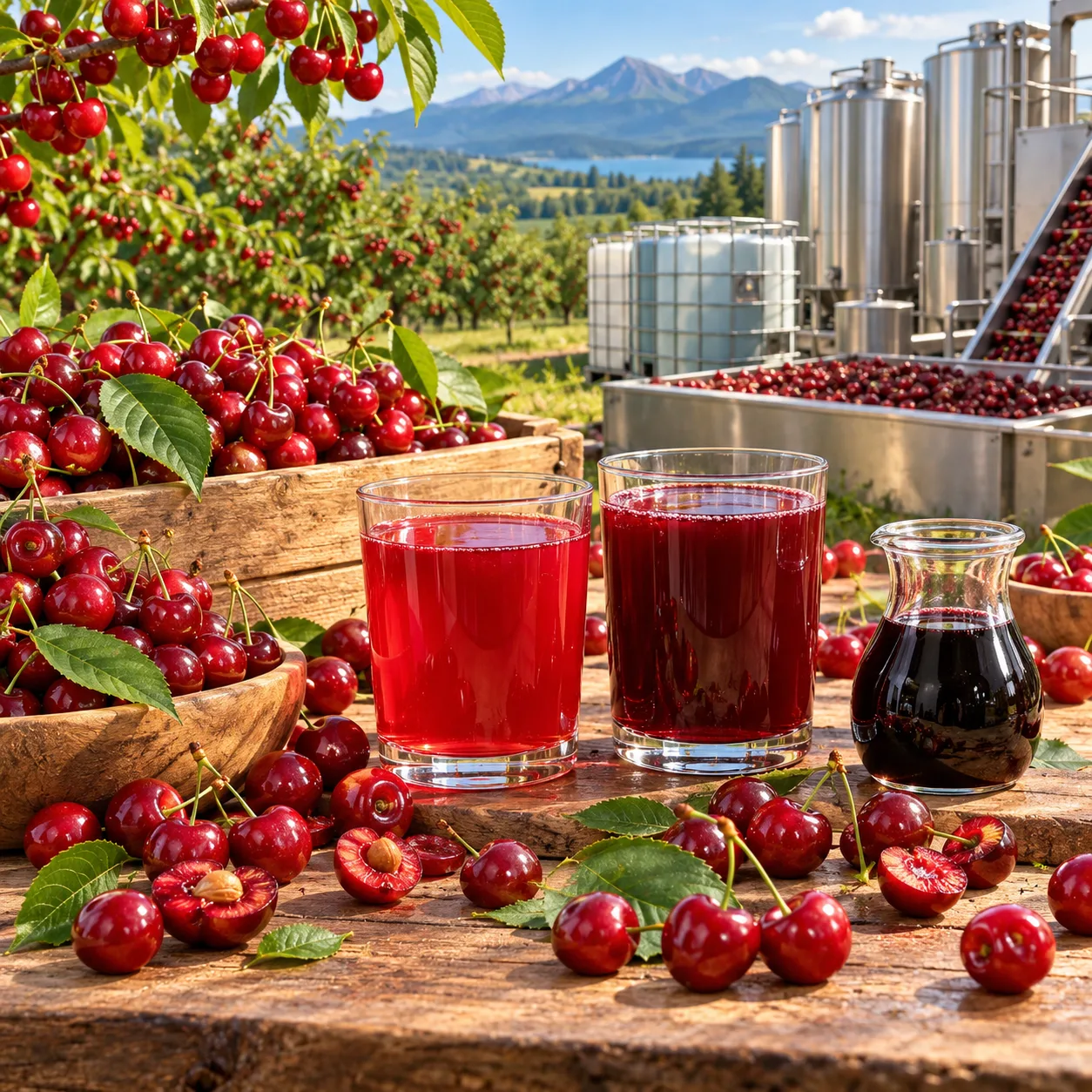
Cultivar influences red color, sweetness and acid intensity.
Montmorency Tart Cherry
Montmorency is the dominant tart-cherry cultivar in U.S. commercial production and is especially important to the processing industry. It is known for bright red skin, characteristic tartness and the familiar red color associated with many U.S. cherry products.
Montmorency NFC is particularly relevant where a recognizable American tart-cherry profile is required.
Balaton & Dark Sour Cherries
Balaton and other darker Morello-type sour cherries can have dark-red flesh and juice together with a somewhat different sugar-acid balance.
These cultivars can be useful in beverages, fermentation and culinary applications where deeper ruby color and a richer sour-cherry character are preferred.
“Tart cherry” and “sour cherry” describe a fruit category rather than one fixed cultivar. Specify Montmorency or another required cultivar when color, geographic positioning or sensory profile matters.
Acidity is a defining analytical and sensory characteristic.
Commercial sour-cherry NFC juice is commonly purchased against Brix, titratable acidity, pH, color, clarity or cloud, flavor and microbiological specifications.
Analytical & Sensory Parameters
- Direct soluble solids measured as °Brix
- pH and titratable acidity
- Acidity basis, commonly expressed as citric acid
- Clear or cloudy juice style
- Red color and browning limits
- Characteristic fresh sour-cherry aroma
- No fermented, scorched or objectionable flavor
Published Commercial Examples
Current commercial clear and cloudy sour-cherry NFC programs include approximately 12–17 °Brix, acidity around 0.9–2.0% and pH around 2.6–3.8.
Another NFC program lists approximately 14–18 °Brix, 1.10–1.25% acidity and pH 3.0–3.9 in aseptic drums.
These ranges are supplier examples, not universal limits. Crop, cultivar and processor can materially change the sugar-acid balance; use the current specification and lot-specific COA for purchasing.
FDA uses 14 °Brix for red sour cherry juice.
Regulatory Reference
U.S. FDA regulations use 14.0 °Brix as the minimum single-strength reference for red sour cherry juice when calculating juice percentage from concentrate.
Directly expressed NFC juice remains 100% juice even when its natural crop Brix differs from that reference.
Natural Crop Variation
Commercial NFC specifications frequently span approximately 12–18 °Brix. Fruit maturity, cultivar, weather and growing origin all influence natural soluble solids.
The regulatory reference should therefore not be treated as a mandatory fixed Brix for every direct-pressed NFC lot.
Select juice style around appearance and finished-product texture.
Clear Sour Cherry NFC
Clear NFC is clarified to remove most suspended fruit solids, providing a cleaner appearance with low sediment.
It can be particularly useful in transparent beverages, sparkling drinks, fermented products, syrups and culinary systems where visible cloud is undesirable.
Cloudy Sour Cherry NFC
Cloudy NFC retains more naturally suspended fruit material and can provide greater body, opacity and direct-fruit character.
Cloud stability and sedimentation should be reviewed when the juice is used in shelf-stable or long-hold beverage systems.
Where tart sour cherry NFC juice is used commercially.
100% Juice & Juice Drinks
Tart cherry NFC can be bottled as single-fruit juice or incorporated into juice beverages where a strong sour-cherry identity is desired.
Because natural acidity is high, consumer beverage products may use blending or sweetening strategies according to the desired taste profile.
Juice & Fruit Blends
Sour cherry blends effectively with apple, grape, pear, pomegranate, cranberry, berry and other fruit juices.
Milder juices can soften acidity while tart cherry contributes red color and a distinctive fruit profile.
Functional & Specialty Beverages
Tart cherry is widely used as a recognizable fruit component in premium, functional-positioned and fruit-forward beverages.
Formulators should define the desired juice percentage, sweetness and acid balance rather than relying on flavor alone.
Smoothies
Cloudy NFC can provide bright tartness and cherry character in smoothies and thicker fruit beverages.
Banana, apple, berry and stone-fruit ingredients can be used to modify the sweetness and body of the finished drink.
Hard Cider & Beer
Sour cherry juice is well suited to fruit cider, cherry beer, sour beer and other fermented beverage systems.
Its acidity and red color can materially influence both sensory profile and fermentation balance.
Wine, Mead & Kombucha
Applications include fruit wine, mead, kombucha and mixed fermentation products requiring authentic sour-cherry sugars, acids and color.
Brix, acidity and addition timing should be defined around the intended fermentation process.
Yogurt & Dairy Beverages
Tart cherry NFC can be used in drinking yogurt, cultured dairy drinks and fruit preparations where a bright cherry flavor is desired.
Its relatively high acidity should be considered when adding it to protein-containing systems.
Plant-Based Beverages
Sour cherry can provide color and tart fruit character in oat, almond, coconut and other plant-based beverage concepts.
Protein stability, color and pH should be evaluated after the complete heat and storage process.
Sorbet & Frozen Desserts
Tart cherry juice can be used in sorbet, ice pops, frozen yogurt, granita-style products and fruit-forward ice cream applications.
Juice Brix and acidity should be included in total-solids, sweetness and freezing-point calculations.
Sauces, Dressings & Glazes
Sour cherry works in salad dressings, savory sauces, reductions, glazes and marinades where fruit acidity can complement roasted, smoky or savory flavors.
It pairs especially well with balsamic-style acidity, herbs, spices and rich protein dishes.
Fruit Vinegar
NFC sour cherry juice can serve as a fruit substrate for vinegar and other controlled fermentation processes.
Natural sugar and acidity should be measured on the incoming lot when establishing the fermentation program.
Foodservice & Culinary
Foodservice applications include beverages, cocktail and mocktail bases, sauces, reductions, dessert preparations and seasonal menus.
Bulk NFC eliminates the need to pit and press fresh cherries at the point of use.
Choose the format around processing, water balance and logistics.
Tart Cherry NFC Juice
NFC is supplied near natural single-strength composition without first removing water through concentration.
It is particularly appropriate when the finished-product brief specifically calls for not-from-concentrate juice or direct fruit juice.
Tart Cherry Juice Concentrate
Sour cherry concentrate is commercially supplied around 65–68 °Brix, with substantially more water removed than NFC.
Concentrate provides far greater freight and storage efficiency and is useful when the manufacturer intends to control final dilution or add concentrated fruit solids.
Reconstituted tart cherry concentrate is commercially useful but should not be represented as NFC. Define the required format before requesting quotations or approving labeling.
Aseptic and frozen bulk programs support industrial production.
Aseptic Drums
Current sour-cherry NFC programs include aseptic bags inside industrial drums at approximately 210–215 kg net.
Both clear and cloudy juice can be supplied according to processor capability and customer specification.
Frozen Drums
U.S. single-strength red tart cherry juice is commercially supplied in approximately 46-gallon frozen drums weighing about 437 lb gross.
Frozen handling can be appropriate where customers have suitable cold-storage and controlled-thawing capability.
Tankers & Larger Bulk
Larger frozen, refrigerated or aseptic bulk systems may be available for established high-volume programs, including tanker supply from selected processors.
Availability depends on origin, season, process and contracted volume.
Storage conditions are product-specific. Published commercial NFC programs include frozen and refrigerated handling as well as aseptic packaging. Always follow the exact supplier's unopened shelf-life, temperature and post-opening instructions.
Specify cultivar, clarity and acid profile before comparing offers.
Technical Requirements
- Montmorency or other required cultivar
- True NFC / single-strength format
- Clear or cloudy processing style
- Brix and acceptable crop variation
- pH and titratable acidity
- Color and sensory specification
- Microbiological acceptance limits
- Additive and preservative requirements
Commercial Requirements
- Conventional or certified organic grade
- U.S. or other required country of origin
- Trial quantity and forecast annual volume
- Drum, tanker or other bulk preference
- Frozen, refrigerated or aseptic receiving capability
- Delivery destination in the United States
- Required delivery window
- Certification and documentation requirements
Tart-cherry crops can vary meaningfully in natural Brix, acidity and color. Compare offers against an agreed specification rather than selecting only on price per pound.
Documents commonly reviewed during supplier approval.
Technical Documentation
- Current product specification
- Lot-specific Certificate of Analysis
- Cultivar declaration where required
- Microbiological specification
- Complete ingredient declaration
- Storage and shelf-life information
- Packaging and handling instructions
Certification & Supply Documents
- Organic certificate when applicable
- Food-safety certification information
- Kosher or Halal documentation when requested
- GMO status where required
- Country-of-origin information
- Traceability and lot identification
- Commercial quotation and delivery terms
Explore formulation and sourcing considerations.
Salad Dressings
Using Juice Ingredients in Salad Dressings: Formulation Guide
Juice IngredientsPlant-Based Beverages
Plant-Based Beverages with Juice Ingredients: Sourcing & Process Considerations
Juice IngredientsFruit Vinegar
Using Juice Ingredients in Fruit Vinegar: Formulation Guide
Tart sour cherry NFC sourcing questions
What is tart sour cherry NFC juice?
NFC means not from concentrate. Tart sour cherry NFC is pressed directly from Prunus cerasus fruit and supplied near natural single strength without first concentrating and then reconstituting the juice.
What is the typical Brix?
Published commercial NFC products commonly fall around 12–18 °Brix depending on cultivar, crop and processor. FDA uses 14.0 °Brix as the minimum single-strength reference for red sour cherry juice.
What are typical pH and acidity values?
Published sour-cherry NFC specifications commonly show approximately pH 2.6–3.9 and acidity around 0.9–2.0%, typically expressed as citric acid.
What is the difference between Montmorency and darker sour cherries?
Montmorency is the dominant U.S. processing tart cherry and is associated with bright red color and pronounced tartness. Balaton and other dark sour-cherry types can provide deeper mahogany-red color and a different sugar-acid balance.
What is the difference between clear and cloudy NFC?
Clear juice has most suspended solids removed through clarification and filtration. Cloudy NFC retains more fine fruit solids and natural turbidity, providing additional body and fruit identity.
What is bulk tart cherry NFC juice used for?
Major applications include 100% juice, juice blends, functional beverages, smoothies, cider, beer, wine, mead, kombucha, yogurt, plant-based drinks, frozen desserts, sauces, salad dressings, fruit vinegar and foodservice preparations.
How does NFC differ from tart cherry concentrate?
NFC remains near natural single strength. Tart cherry concentrate has substantial water removed and is commonly supplied around 65–68 °Brix, providing much greater freight and storage efficiency.
Is organic tart sour cherry NFC available?
Yes. Certified organic sour-cherry NFC is commercially available from selected processors. Request current certification for the exact cultivar, origin and product being quoted.
How is commercial sour cherry NFC packaged?
Published programs include approximately 210–215 kg aseptic drums. U.S. frozen single-strength red tart cherry juice is also commercially supplied in approximately 46-gallon drums.
What information should I provide for a quote?
Specify tart sour cherry NFC, preferred cultivar if applicable, clear or cloudy style, conventional or organic grade, approximate volume, packaging, destination and delivery timing, together with requirements for Brix, pH, acidity, color, microbiology, storage, origin and certification.