Orange Puree
Smooth orange puree for beverages, dairy, bakery, confectionery, frozen desserts, sauces and prepared foods, with conventional, organic, frozen, aseptic and whole-orange options subject to availability.
Natural citrus acidity, fruit body and aromatic orange character.
Sweet orange (Citrus sinensis) is one of the world's principal citrus fruits. Important processing varieties include Valencia, Navel, Navelina and other regional cultivars selected for juice yield, sugar-acid balance, aroma and color.
Orange puree retains suspended fruit solids and pulp, giving it more body and natural cloud than clarified orange juice. Whole-orange or comminuted grades may additionally include controlled portions of peel, increasing citrus-oil aroma, fiber and peel character.
- Botanical species: Citrus sinensis
- Bright orange to yellow-orange appearance
- Sweet-tart citrus flavor dominated by citric acidity
- Natural pulp and suspended fruit solids
- Standard and whole-orange puree styles may be available
- Conventional and certified organic supply programs may be available
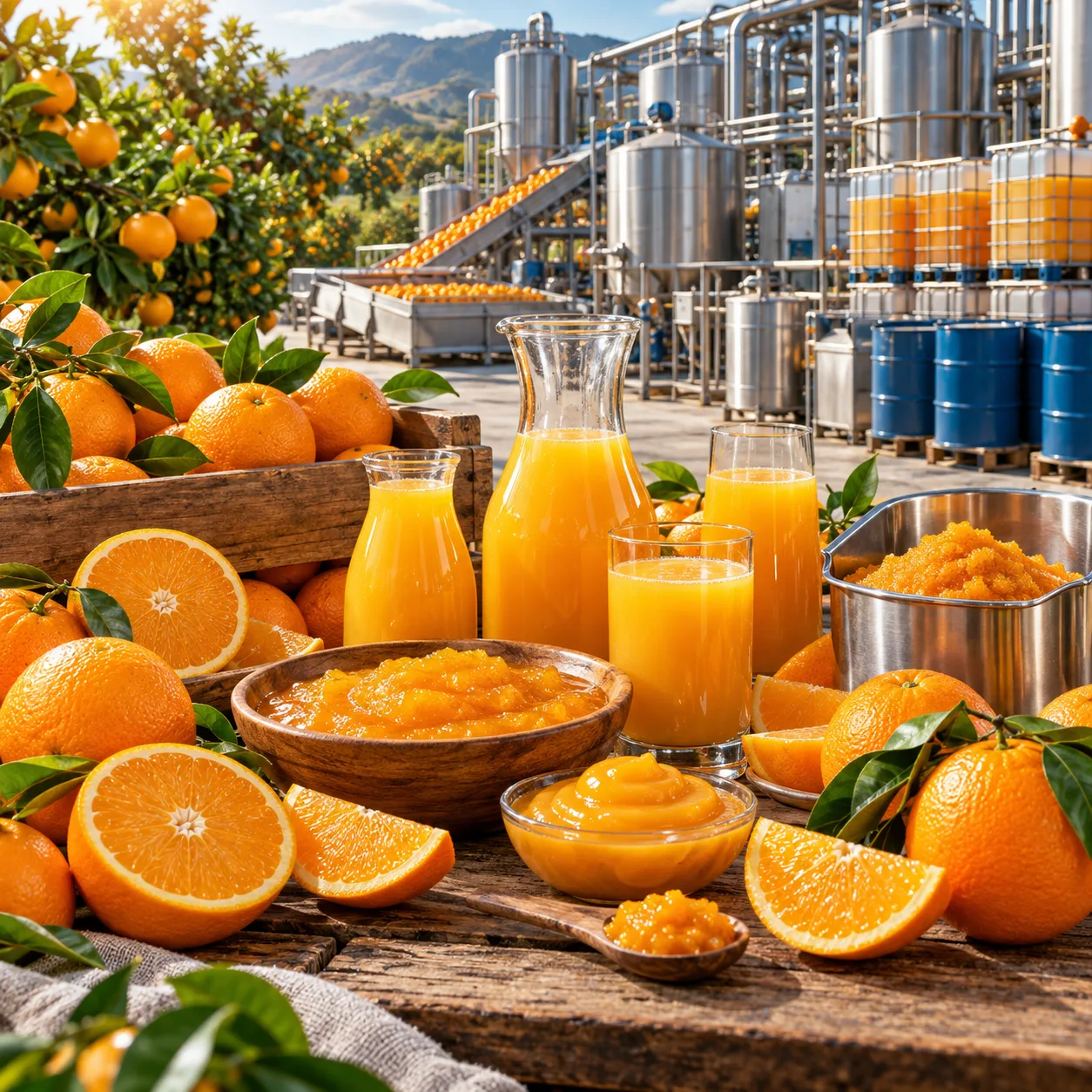
Variety and peel contribution shape sweetness, acidity and aroma.
Valencia & Processing Oranges
Valencia oranges are widely associated with juice processing because of their balanced sweetness, acidity, juice yield and recognizable orange aroma.
Other commercial cultivars can produce somewhat different color, soluble solids and flavor, so variety or crop origin may matter where a consistent sensory profile is required.
Navel & Other Sweet Oranges
Navel and related sweet-orange types can contribute a bright, fresh citrus profile and may be used alone or in varietal blends depending on processor and harvest timing.
Natural sugar-acid balance changes through the season, making specification tolerances important for industrial purchasing.
Orange crop, cultivar, maturity and growing origin can all influence Brix, acidity, aroma and color. Representative samples and current lot data are useful where sensory consistency is commercially important.
Key parameters used in industrial orange puree purchasing.
Orange puree is commonly controlled by Brix, pH, titratable acidity, consistency, pulp content, color, flavor and microbiological limits. Whole-orange styles may additionally require controls for peel-derived flavor and oil.
Physical & Chemical Parameters
- Soluble solids measured as °Brix
- pH and titratable acidity as citric acid
- Viscosity or consistometer/Bostwick flow
- Pulp or suspended-solids level
- Bright orange color with limited browning
- Characteristic orange aroma and flavor
- Peel-oil or bitterness control for whole-fruit styles
Published Commercial Examples
One current organic whole-orange puree specification lists 9 °Brix minimum, pH 3.0–4.2, acidity of approximately 0.30–1.0% as citric acid and consistency of about 2–11 cm/30 seconds.
Another frozen orange puree program specifies 8 °Brix minimum, pH not above 4.0 and acidity not above approximately 1.3%.
These values are published commercial examples rather than universal specifications. Use the current supplier specification and lot-specific Certificate of Analysis for purchasing and production acceptance.
Standard puree and whole-orange puree deliver different flavor profiles.
Juice & Pulp Puree
Standard orange puree generally emphasizes the juice, pulp and interior fruit material, providing natural cloud and body with comparatively limited peel character.
It is well suited to smoothies, dairy preparations, beverages, frozen desserts and fruit systems where a clean sweet-orange profile is preferred.
Whole-Orange / Comminuted Puree
Whole-orange processing can incorporate exocarp, endocarp, pulp and juice into the puree, increasing natural citrus oil, fiber and peel-derived aromatic complexity.
The stronger zest-like character can be valuable in bakery, sauces and beverage applications, but bitterness should be checked carefully during formulation.
Balance pulp, acidity and peel character around the application.
Pulp & Cloud
Suspended orange solids add natural cloud and mouthfeel but can influence sedimentation, pumping and filling.
Define pulp level according to whether the final product should look smooth, cloudy or visibly pulpy.
Peel Oil & Bitterness
Peel-derived oil provides powerful fresh-orange aroma, while excessive peel or albedo contribution can introduce bitterness.
Whole-orange products should therefore be evaluated at the actual intended use rate.
Heat & Aroma
Citrus aroma can change with prolonged thermal treatment. Evaluate the puree after the actual pasteurization, baking, retort or cooking cycle used for the finished product.
Where orange puree is used commercially.
Smoothies & Beverage Bases
Orange puree adds fruit body, citrus flavor and natural cloud to smoothies, juice drinks, fruit beverages and blended beverage bases.
It pairs well with mango, pineapple, peach, strawberry, passion fruit, carrot and other fruit or vegetable ingredients.
Functional & Specialty Beverages
Whole-orange and pulp-rich purees can be useful in cloudy specialty beverages where visible fruit character and stronger peel aroma are desirable.
Sediment and citrus-oil intensity should be evaluated through the expected shelf life.
Yogurt & Dairy Products
Orange puree can be used in drinking yogurt, spoonable yogurt, dairy desserts and fruit preparations.
Its acidity requires careful addition to dairy proteins, particularly in heat-treated systems.
Plant-Based Products
Applications include oat, coconut and other plant-based beverages, yogurt alternatives and chilled desserts.
Orange pairs particularly well with vanilla, coconut, mango and tropical fruit flavors.
Bakery & Pastry
Orange puree can provide citrus flavor in cakes, muffins, pastries, cheesecakes, tart fillings, glazes and dessert layers.
Whole-orange grades can provide a stronger zest-like profile where peel character is desirable.
Confectionery
Orange puree can be used in gummies, fruit chews, jellies, confectionery centers and chocolate-compatible citrus fillings.
Incoming acidity and moisture should be included in gelling and solids calculations.
Ice Cream, Sorbet & Frozen Desserts
Orange puree can provide fruit flavor and natural citrus color in sorbet, ice cream, gelato, frozen yogurt, ice pops and frozen beverages.
Fruit sugars, acids and pulp solids should be included when balancing sweetness and freezing behavior.
Sauces, Dressings & Glazes
Orange puree works in sweet and savory sauces, salad dressings, marinades, glazes and dipping sauces.
Whole-orange styles can be especially effective where both juice acidity and peel aroma are required.
Toddler Foods & Fruit Blends
Fine-textured orange puree can be incorporated into selected toddler fruit blends and snack preparations together with milder fruits such as apple, pear, banana or mango.
Programs intended for young children may require tighter pesticide-residue, microbiological and traceability specifications.
Brewing & Fermented Beverages
Orange puree is used in beer, kombucha, cider-style drinks, wine-based beverages and other fermented products requiring citrus flavor and fruit solids.
Fermentation can alter sweetness and fresh-orange aroma, so addition timing should be tested at pilot scale.
Formats for product development through industrial production.
Pails & Smaller Packs
Published frozen whole-orange puree programs include approximately 40 lb / 18 kg pails for development, foodservice and smaller production runs.
Industrial Drums
Bulk orange puree is commercially supplied in lined drums. Published examples include approximately 400 lb / 181 kg drums and frozen programs around 190 kg per drum.
Aseptic & Larger Bulk
Aseptic bag-in-box, aseptic drums, bins, totes and tanker programs may be available depending on the processor, puree style and contracted annual volume.
Storage is supplier-specific. Published frozen orange-puree programs commonly require storage at approximately -18°C, while validated aseptic products can have different unopened storage requirements. Always follow the exact supplier specification.
Define puree style and peel contribution before comparing offers.
Technical Requirements
- Standard pulp puree or whole-orange style
- Target Brix and tolerance
- pH and titratable acidity
- Pulp and insoluble-solids requirement
- Viscosity or consistency range
- Peel-oil and bitterness expectations
- Color and sensory requirements
- Microbiological acceptance criteria
Commercial Requirements
- Conventional or certified organic grade
- Preferred variety or origin if required
- Trial quantity and forecast annual volume
- Pail, bag-in-box, drum or tote preference
- Frozen, chilled or aseptic receiving capability
- Delivery destination in the United States
- Required shipment schedule
- Certification and documentation requirements
Compare ingredient definitions carefully. Standard orange puree, orange pulp cells and whole-orange comminuted puree can have different pulp levels, oil content, bitterness, consistency and finished-product use rates even when all are sold as orange ingredients.
Documents commonly reviewed during supplier approval.
Technical Documentation
- Current product specification
- Lot-specific Certificate of Analysis
- Complete ingredient declaration
- Pulp and peel-oil information where applicable
- Microbiological specification
- Storage and shelf-life information
- Packaging and handling specification
Certification & Supply Documents
- Organic certificate when applicable
- Food-safety certification information
- Toddler-food documentation where required
- Kosher or Halal documentation when requested
- Country-of-origin information
- Traceability and lot identification
- Commercial quotation and delivery terms
See how orange puree can perform in finished products.
Orange puree sourcing questions
What is commercial orange puree?
Commercial orange puree contains orange juice together with suspended fruit solids and pulp. Depending on processing style, whole-orange grades may also contain controlled peel-derived material and natural citrus oil.
What is the typical Brix of orange puree?
Published natural orange-puree specifications include approximately 8–9 °Brix minimum. Exact soluble solids vary with cultivar, maturity, crop and processing style.
What are typical pH and acidity values?
One published whole-orange puree specification lists pH 3.0–4.2 and approximately 0.30–1.0% acidity as citric acid. Other frozen programs specify pH up to about 4.0 and acidity up to approximately 1.3%.
What is the difference between standard and whole-orange puree?
Standard puree generally emphasizes juice and pulp. Whole-orange puree incorporates more peel-derived material, giving stronger citrus-oil aroma, additional fiber and potentially more bitterness.
What is bulk orange puree used for?
Major applications include smoothies, beverages, yogurt, plant-based products, bakery, confectionery, frozen desserts, sauces, dressings, toddler foods, brewing and foodservice products.
Why is peel-oil content important?
Natural peel oil contributes powerful fresh-orange aroma. Whole-orange puree can therefore deliver stronger citrus character, but too much peel or albedo can increase bitterness.
Is organic orange puree available?
Yes. Certified organic whole-orange and other orange-puree programs are commercially available from selected processors. Request current certification covering the exact product quoted.
How is commercial orange puree packaged?
Published commercial formats include approximately 40 lb pails, 400 lb drums and industrial frozen drums around 190 kg. Aseptic bag-in-box, drums and larger bulk systems may also be available.
What information should I provide for a quote?
Specify standard or whole-orange puree, conventional or organic grade, approximate volume, packaging preference, destination and delivery timing, together with requirements for Brix, pH, acidity, pulp, consistency, peel oil, color, microbiology, origin and certification.