Papaya Puree
Smooth tropical papaya puree for beverages, dairy, baby food, bakery, confectionery, frozen desserts and fruit preparations, with red, yellow, conventional, organic and aseptic options subject to current availability.
Mild tropical sweetness with soft fruit body and orange-yellow color.
Papaya (Carica papaya) is a tropical fruit with soft, aromatic flesh surrounding a central cavity filled with dark seeds. Depending on cultivar, ripe flesh ranges from yellow and golden-orange to deeper orange-red.
Commercial papaya puree is produced from mature fruit that is inspected, washed, peeled or trimmed as required, deseeded, pulped, refined and thermally processed. The finished puree retains natural fruit solids, giving it more body than clarified papaya juice.
- Botanical species: Carica papaya
- Yellow, orange or orange-red ripe fruit flesh
- Mild sweet tropical flavor and characteristic papaya aroma
- Red and yellow papaya puree programs are commercially available
- Single-strength and concentrated puree formats are available
- Conventional and certified organic grades may be available
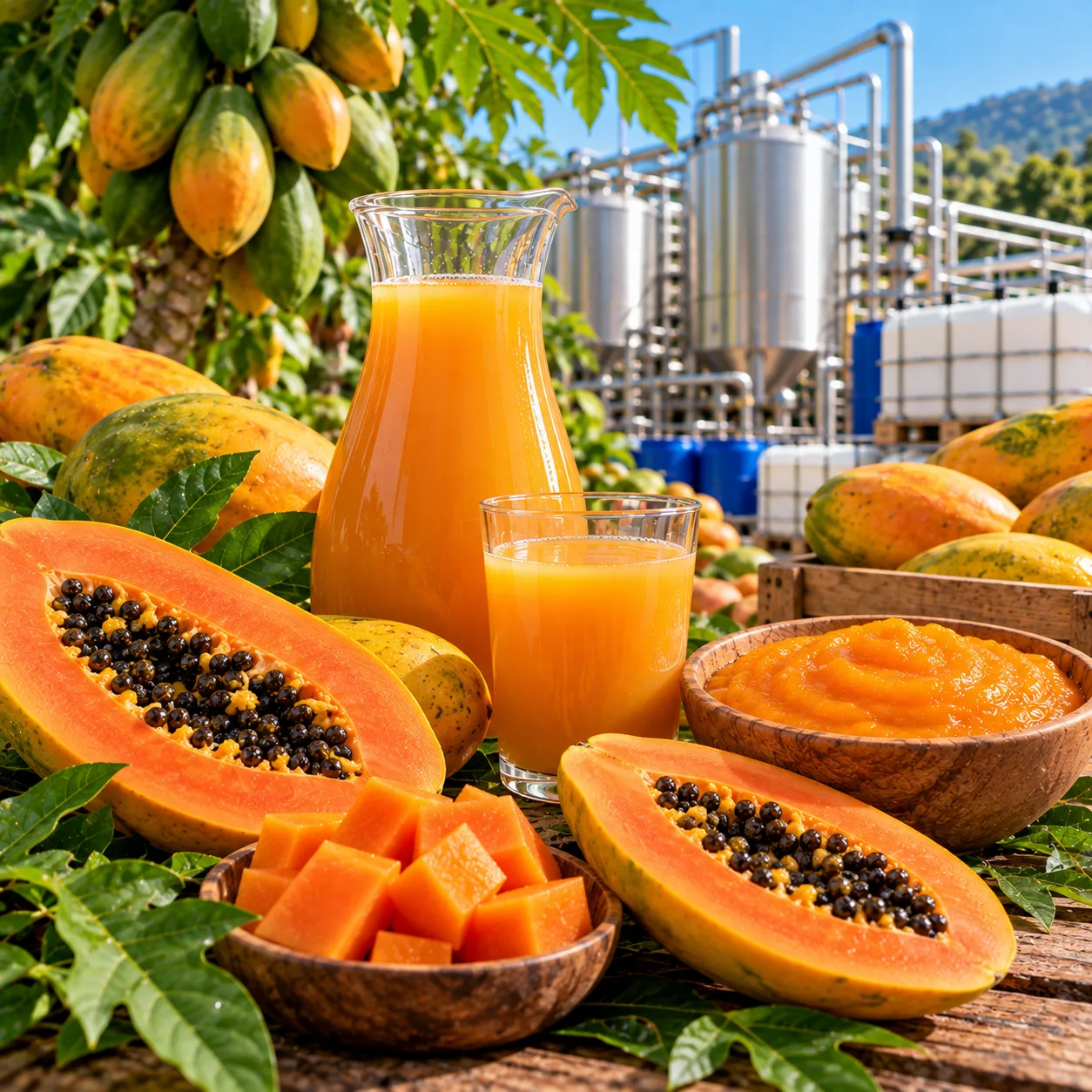
Variety and ripeness determine color, sweetness and aroma.
Red Papaya
Red-fleshed papaya typically produces an orange-red to brick-red puree with a fuller visual impact and characteristic ripe tropical flavor.
Published commercial red papaya products commonly start around 9 °Brix, although natural crop values and supplier specifications vary.
Yellow Papaya
Yellow papaya generally produces a yellow to yellow-orange puree with a mild, clean tropical profile.
Current commercial yellow papaya specifications include products around 8–11 °Brix, depending on cultivar, maturity and processor.
Papaya variety should be specified when finished-product color or sensory identity matters. Red and yellow papaya purees should not automatically be treated as visually interchangeable.
Key parameters used in industrial papaya puree purchasing.
Commercial specifications commonly control Brix, pH, titratable acidity, Bostwick consistency, color, flavor, specks and microbiology. Exact ranges depend on papaya variety and processor.
Physical & Chemical Parameters
- Refractometric soluble solids expressed as °Brix
- pH and titratable acidity as citric acid
- Bostwick consistency at controlled temperature
- Yellow, orange or orange-red color specification
- Characteristic ripe-papaya aroma and flavor
- Brown- and black-speck limits
- Homogeneous texture free from seed and peel fragments
Published Commercial Examples
Current single-strength specifications include approximately 7–11 °Brix, pH 4.0–4.5 and acidity around 0.30–0.40% as citric acid.
Other red and yellow papaya programs list approximately 8–10 °Brix, pH 3.75–4.0, acidity around 0.40–0.60% and Bostwick consistency near 8–12 cm/30 seconds.
These are published commercial examples, not universal specifications. The current supplier specification and lot-specific Certificate of Analysis should control purchasing and production acceptance.
Single-strength and concentrated papaya serve different formulations.
Single-Strength Papaya Puree
Single-strength puree retains the natural water and fruit-solids balance of processed ripe papaya and provides a smooth, moderately viscous tropical fruit base.
Published commercial products generally range around 7–11 °Brix, with some specifications extending toward 12 °Brix.
Papaya Puree Concentrate
Papaya puree concentrate has part of its natural water removed while retaining fruit pulp and soluble solids.
Commercial yellow papaya concentrate is available at approximately 25 °Brix minimum, providing higher fruit solids and improved freight efficiency where additional process water is not desired.
Texture and ripeness are important for repeatable industrial use.
Bostwick Consistency
Bostwick testing is commonly used to control puree flow behavior. Published papaya specifications include approximately 8–15 cm in 30 seconds, with broader ranges depending on product style.
Refining & Screening
Proper refining removes seeds, peel particles and coarse material while retaining a homogeneous fruit texture suitable for beverages, dairy products, baby food and fillings.
Ripeness
Under-ripe fruit can provide weaker aroma and firmer texture, while fully mature fruit develops the softer texture, sweetness and tropical flavor expected in commercial puree.
Where papaya puree is used commercially.
Nectars & Fruit Beverages
Papaya puree is used in tropical nectars, juice drinks, multi-fruit beverages and beverage bases where its smooth body and mild tropical flavor are desirable.
Mango, pineapple, guava, passion fruit, orange and banana are natural blending partners.
Smoothies
Papaya's soft texture makes puree particularly suitable for smoothies and thicker fruit beverages, where it contributes natural body without an overly aggressive flavor.
Its mild profile can also support stronger tropical or berry fruits.
Yogurt & Dairy Products
Applications include spoonable yogurt, drinking yogurt, fruit preparations, dairy desserts and cultured beverages.
The puree's pH and acidity should be considered together with the dairy system and final heat treatment.
Plant-Based Foods & Beverages
Papaya can be incorporated into coconut, oat and other plant-based beverages, yogurt alternatives and chilled desserts.
Its tropical profile pairs especially well with coconut, mango and pineapple.
Baby & Toddler Food
Fine-screened papaya puree can be used in fruit blends, pouches and toddler foods, frequently together with banana, apple, pear or mango.
Baby-food programs may require tighter pesticide-residue, microbiological, contaminant and traceability requirements.
Ice Cream, Sorbet & Frozen Desserts
Papaya puree can provide tropical flavor and natural orange-yellow color in ice cream, gelato, sorbet, frozen yogurt and ice pops.
Fruit sugars and puree solids should be included in freezing-point and total-solids calculations.
Bakery & Snack Fillings
Applications include pastries, cakes, snack fillings, fruit bars, layered desserts and baked products requiring smooth tropical fruit character.
Concentrated puree can be useful where stronger fruit solids are desired without introducing as much water.
Confectionery
Papaya puree can be incorporated into gummies, fruit chews, jellies, confectionery centers and fruit-based snack systems.
Brix, acidity and moisture should be balanced with the gelling and cooking process.
Fruit Preparations & Toppings
Papaya puree can be used in tropical fruit preparations, dessert toppings, sauces, compotes and mixed-fruit systems.
Its relatively mild flavor makes it useful as part of multi-fruit preparations without overwhelming more aromatic ingredients.
Sauces, Chutneys & Culinary Products
Papaya puree can be used in sweet-savory sauces, chutneys, glazes, marinades and tropical culinary preparations.
It pairs well with chili, lime, ginger, tamarind, curry spices and other tropical flavor systems.
Aseptic formats support efficient industrial distribution.
Smaller Commercial Packs
Papaya pulp and puree can be supplied in smaller cans or containers for foodservice, trial production and lower-volume manufacturing.
Published commercial programs include approximately 3.1 kg cans.
Aseptic Drums
A common industrial format is a pre-sterilized aseptic bag inside a steel drum. Current commercial red and yellow papaya programs include approximately 215–220 kg net weight per drum.
Concentrated Puree
Commercial papaya concentrate can also be packed aseptically in industrial drums. Published 25 °Brix yellow papaya concentrate programs include drums around 225 kg net.
Shelf life and storage conditions are product-specific. Some validated aseptic papaya purees are supplied for ambient unopened storage, while frozen formats require cold-chain handling. Follow the exact supplier specification rather than assuming one storage condition for all products.
Specify color type and concentration before comparing offers.
Technical Requirements
- Red, yellow or specified papaya variety
- Single-strength or concentrated puree
- Target Brix and tolerance
- pH and titratable acidity
- Bostwick consistency
- Color and sensory requirements
- Speck and foreign-material limits
- Microbiological acceptance criteria
Commercial Requirements
- Conventional or certified organic grade
- Required country or region of origin
- Trial quantity and annual-volume forecast
- Can, bag-in-box, drum or other pack preference
- Aseptic or frozen receiving capability
- Delivery destination in the United States
- Required shipment timing
- Certification and documentation requirements
Compare papaya offers on equivalent variety, Brix, color and process. Red puree, yellow puree and 25 °Brix concentrate can have materially different appearance, fruit-solids contribution and finished-product dosage.
Documents commonly reviewed during supplier approval.
Technical Documentation
- Current product specification
- Lot-specific Certificate of Analysis
- Papaya type or variety declaration
- Microbiological specification
- Complete ingredient statement
- Storage and shelf-life information
- Packaging and handling specification
Certification & Supply Documents
- Organic certificate when applicable
- Food-safety certification information
- Baby-food documentation where required
- Kosher or Halal documentation when requested
- GMO status where required
- Country-of-origin and traceability information
- Commercial quotation and delivery terms
See how papaya puree can perform in finished products.
Papaya puree sourcing questions
What is commercial papaya puree?
Commercial papaya puree is made from ripe papaya fruit that is inspected, washed, deseeded, pulped, refined and thermally processed. It retains natural fruit pulp and provides a smooth tropical fruit base.
What is the typical Brix of papaya puree?
Published commercial single-strength products commonly fall around 7–11 °Brix, with some papaya pulp specifications extending toward approximately 12 °Brix depending on variety and crop.
What are typical pH and acidity values?
Published commercial examples generally fall around pH 3.75–4.5 and approximately 0.30–0.60% titratable acidity as citric acid. The current supplier specification should be used for purchasing.
What is the difference between red and yellow papaya puree?
Red papaya puree generally provides deeper orange-red color, while yellow papaya produces yellow to yellow-orange puree. Sweetness, aroma and texture can also vary according to cultivar and maturity.
What is papaya puree concentrate?
Papaya puree concentrate has part of its natural water removed while retaining pulp and fruit solids. Commercial yellow papaya concentrate is available around 25 °Brix minimum.
What is bulk papaya puree used for?
Major applications include nectars, smoothies, juice drinks, yogurt, plant-based products, baby food, bakery and snack fillings, gummies, fruit preparations, ice cream, sorbet, sauces and chutneys.
Why is Bostwick consistency important?
Bostwick testing measures puree flow under defined conditions. It helps control pumping, mixing, filling and finished-product texture. Published papaya specifications commonly include ranges around 8–15 cm/30 seconds.
Is organic papaya puree available?
Certified organic papaya puree may be available from selected processors. Request current certification and confirm the papaya type, origin and exact specification being offered.
How is commercial papaya puree packaged?
Aseptic puree is commonly packed in pre-sterilized bags inside steel drums at approximately 215–220 kg net. Smaller cans and other commercial formats may also be available.
What information should I provide for a quote?
Specify red or yellow papaya, single-strength or concentrated puree, conventional or organic grade, approximate volume, packaging, destination and delivery timing, together with requirements for Brix, pH, acidity, Bostwick consistency, color, microbiology, origin and certification.