Quince Juice Concentrate
Bulk quince juice concentrate for commercial food and beverage manufacturing, providing concentrated fruit solids, pronounced natural acidity and the distinctive floral, apple-pear-like aroma associated with ripe quince.
A highly aromatic pome fruit with distinctive tartness.
Quince (Cydonia oblonga) is a pome fruit related to apples and pears. Mature fruit is typically yellow, firm and intensely aromatic, with floral, citrus-like and apple-pear notes that become particularly expressive during processing.
Fresh quince is considerably firmer and more astringent than most dessert fruits and is therefore commonly processed rather than eaten raw. Its acidity, aroma and natural pectin have traditionally made it valuable in preserves, jellies, fruit pastes and cooked fruit products.
Quince juice concentrate is produced by pressing prepared ripe fruit, followed by clarification or depectinization where required and evaporation under controlled conditions. Removing water produces a high-solids ingredient that is efficient for industrial transport, storage and formulation.
- Distinctive floral and aromatic quince profile
- Pronounced natural tartness and moderate astringency
- Pale amber to golden-brown concentrate appearance
- Commercial juice concentrate commonly around 65–70° Brix
- Clarified and cloudy juice formats may be available
- Conventional and organic supply depends on crop and processor
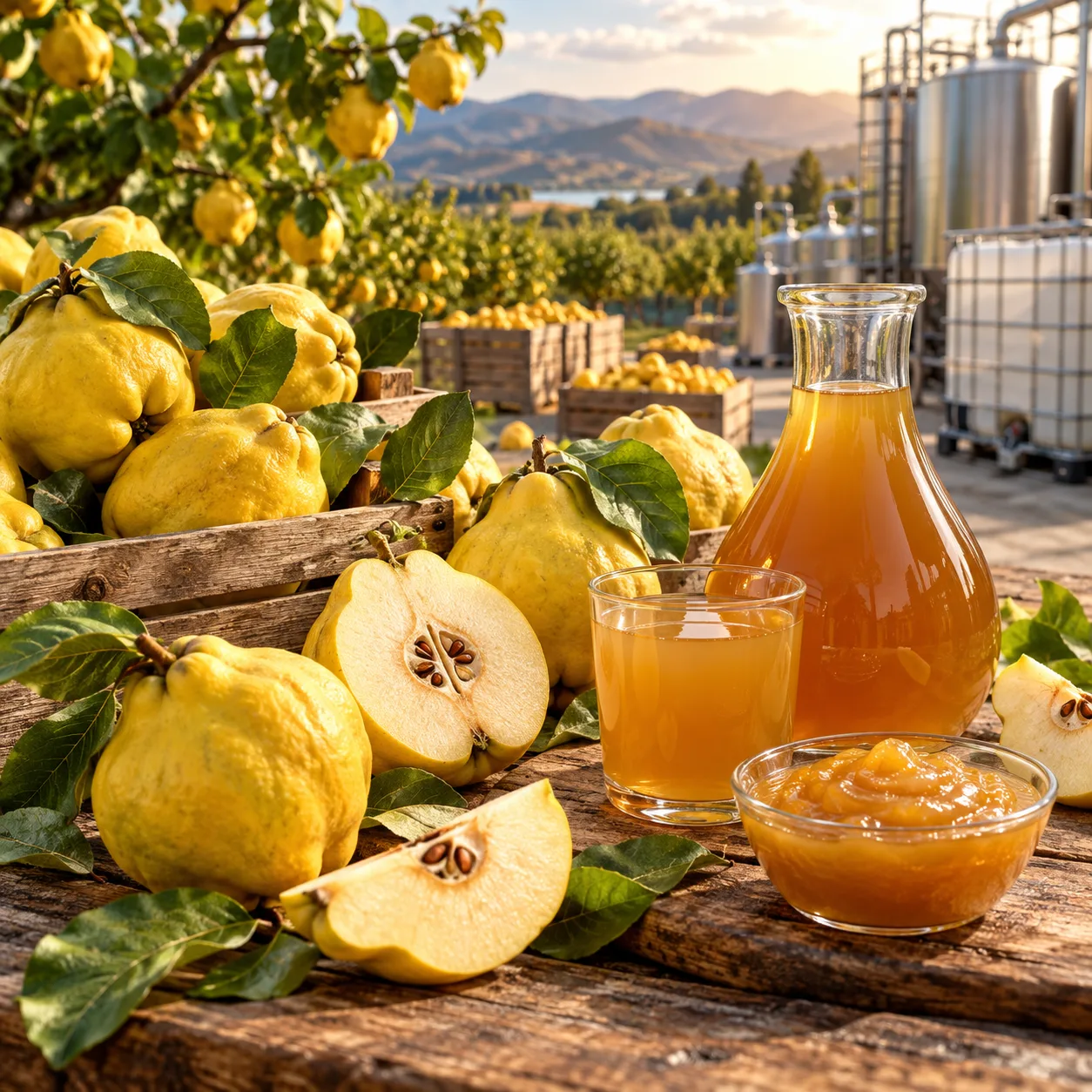
Typical commercial specifications to review.
Quince concentrate is commercially available at different solids levels, with approximately 65–70° Brix common for industrial juice concentrate. Exact values depend on processor, origin, crop and the required clarified or cloudy format.
Soluble Solids / °Brix
Commercial concentrate is commonly supplied around 65–70° Brix. Higher solids improve transport efficiency and allow manufacturers to control reconstitution water separately.
pH
Supplier specifications commonly fall roughly between pH 2.4 and 3.9. The actual value should be confirmed because it influences flavor balance and finished-product processing.
Titratable Acidity
Concentrated quince juice commonly has substantial natural acidity. Commercial specifications may fall around approximately 1.9–3.5% expressed as citric acid, depending on crop and supplier.
Clarity & Turbidity
Clarified concentrate is suitable for clear beverages, syrups and fermented products. Cloudier grades retain more suspended fruit material and may provide additional body or visual fruit character.
Color
Typical concentrate ranges from light amber to deeper golden-brown. Excessive browning can indicate processing or storage differences, so color limits may be useful where appearance is commercially important.
Flavor & Aroma
The ingredient should retain recognizable quince aroma and tart fruit character without undesirable fermentation, oxidation or excessive heat-damage notes.
Specification note: Typical values are useful for initial sourcing, but commercial purchasing should always use the supplier's current specification and lot-specific certificate of analysis.
Quince contributes aroma and acidity more than simple sweetness.
Distinctive Aroma
Quince has a complex floral fruit aroma that can make relatively modest inclusion levels noticeable. It is useful for creating differentiated fruit blends rather than simply adding generic sweetness.
Natural Tartness
Quince provides substantial natural acidity and works particularly well where manufacturers want a sharp fruit note balanced with sugar, apple, pear, berries or other sweeter ingredients.
Astringency
Quince can contribute mild astringency depending on fruit maturity and processing. This can add complexity in beverages and fermented products but should be controlled in delicate dairy or confectionery systems.
Fruit Pairing
Quince pairs effectively with apple, pear, peach, apricot, pomegranate, grape, cherry, citrus, ginger, cinnamon and floral flavors, making it useful in both traditional and premium formulations.
Major uses for quince juice concentrate.
Juices & Fruit Beverages
Quince concentrate can be used in juice drinks, nectars, mixed-fruit beverages, lemonades, cordials and premium fruit blends. Its aromatic profile adds complexity to apple, pear, grape and citrus-based systems.
Jams, Jellies & Preserves
Quince has a long association with preserves and fruit pastes. Concentrate can reinforce flavor and acidity in jams, jellies, marmalade-style products, compotes and mixed-fruit preparations.
Bakery & Fillings
Applications include pie fillings, pastry centers, cakes, cereal bars, glazes and fruit preparations where quince provides aromatic fruit character and balances sweeter components.
Confectionery
Gummies, fruit jellies, chews, hard candies and filled confectionery can use quince concentrate for fruit-derived acidity and a more distinctive flavor than common apple or grape bases.
Dairy & Plant-Based Products
Yogurt preparations, cultured dairy products and plant-based desserts can incorporate quince alone or in fruit blends. Its acidity should be considered carefully in protein-containing formulations.
Syrups & Dessert Sauces
Quince concentrate can be used in beverage syrups, fruit sauces, dessert toppings and foodservice preparations where concentrated floral-fruit flavor and tartness are desired.
Chutneys & Savory Sauces
Quince works well with spices, ginger, chili and savory ingredients in chutneys, glazes and specialty sauces, particularly where sweet, tart and aromatic components need to be balanced.
Frozen Desserts
Sorbet, ice cream, frozen yogurt and fruit bars can use quince concentrate for aromatic flavor and acidity. Sugar contribution and total solids should be balanced for the desired freezing point and texture.
Cider, Wine & Fermentation
Quince concentrate can contribute fermentable sugars, acidity and aroma to cider, fruit wine, mead, beer and other fermented beverages, either before fermentation or as a post-fermentation flavor component.
Foodservice & Beverage Bases
Commercial drink bases, cocktail and mocktail mixes, dessert preparations and concentrated fruit systems can use quince to create distinctive seasonal or premium flavor profiles.
Manage concentration, aroma and browning.
Reconstitution
High-Brix concentrate can be diluted toward single-strength juice or used directly at lower dosage. Reconstitution should be calculated from actual concentrate Brix and the target finished solids.
Heat Exposure
Extended heating can reduce delicate quince aroma and increase cooked notes. Addition point and thermal load should be considered where fresh aromatic character is important.
Oxidation & Browning
Quince juice can be susceptible to oxidative browning. Controlled processing, closed handling and suitable finished-product packaging can help maintain the desired appearance and flavor.
Commercial formats for industrial production.
Aseptic Drums
Aseptic bags inside steel drums are widely used for industrial quince concentrate. Commercial drum formats around 265–275 kg net are available from some processors.
Frozen Supply
Frozen concentrate is also commercially available. Some processor specifications call for storage around -18°C to preserve product quality over extended periods.
Large-Volume Containers
Larger systems such as approximately 1,000 kg bulk containers may be available for high-volume manufacturing programs. Plant unloading and storage capability should be confirmed before ordering.
Storage note: Commercial specifications differ. Some suppliers specify frozen storage at approximately -18°C, while aseptic products may have different handling requirements. Always follow the individual supplier's stated storage temperature and shelf life.
Quince is a specialized crop, so plan sourcing around season and origin.
Quince concentrate is less commoditized than apple or grape concentrate. Origin, crop size, processing capacity and organic availability can therefore have a greater effect on MOQ, lead time and pricing.
Crop & Origin
Quince production is concentrated in selected growing regions. Commercial processors may manufacture concentrate during the autumn harvest and supply from inventory during the rest of the year.
Turkey as a Major Source
Turkey is an important commercial quince-producing country, with industrial juice and puree processors offering conventional and organic quince ingredients for international food and beverage manufacturing.
Organic Availability
Organic quince concentrate may be available from selected processors but can be more limited than conventional material. Confirm certification, available crop quantity and annual-volume capability early.
MOQ & Lead Time
Minimum orders depend on whether product is stocked domestically, imported in drums or produced against crop supply. Provide both immediate quantity and forecast annual demand when requesting offers.
Specify the requirement before comparing offers.
- Required °Brix and acceptable tolerance
- pH and titratable acidity
- Clarified or cloudy format
- Color and browning limits where important
- Characteristic quince flavor and aroma
- Turbidity or insoluble-solids requirement
- Microbiological specification
- Conventional or organic certification
- Country of origin and processor
- Packaging format and net weight
- Frozen, refrigerated or aseptic storage requirement
- Initial quantity and estimated annual volume
- Delivery destination and requested timing
- Current specification and certificate of analysis
Quince concentration, acidity, color and aroma can vary by crop and processor. Compare suppliers against the same technical requirement and validate the selected concentrate in the actual finished-product formulation before full-scale production.
Explore quince concentrate in commercial formulations.
Drinking Yogurt
Formulation considerations for concentrated fruit ingredients in drinking yogurt and cultured dairy systems.
Juice ConcentratesGummies & Chews
Sourcing and process considerations for fruit concentrates used in gummies, chews and confectionery.
Juice ConcentratesFruit Bars
Using concentrated fruit ingredients in fruit bars, fillings and related snack applications.
Questions quince concentrate buyers often ask
What is bulk quince juice concentrate used for?
Major applications include juice drinks, cordials, syrups, jams, jellies, preserves, bakery fillings, confectionery, yogurt preparations, frozen desserts, sauces, chutneys, cider and other fermented beverages.
What Brix is commercial quince juice concentrate?
Commercial quince juice concentrate is commonly supplied at approximately 65–70° Brix. Some processors specify approximately 70 ±1° Brix, while others offer 65 ±1° Brix. Confirm the exact product specification before formulation.
What is the typical pH of quince concentrate?
Commercial quince concentrate specifications commonly fall roughly between pH 2.4 and 3.9. Natural variation occurs with variety, crop, origin and processing method.
Why does quince taste more tart and astringent than apple or pear?
Quince naturally combines relatively strong organic acidity with phenolic compounds that can contribute astringency. Processing and sweetening reduce the harshness while retaining the fruit's distinctive floral aroma.
What is the difference between quince juice concentrate and quince puree concentrate?
Juice concentrate contains comparatively little pulp and can reach about 65–70° Brix. Puree concentrate retains substantially more fruit tissue and body and is commonly produced at lower concentrations such as approximately 30–32° Brix.
Is organic quince juice concentrate available?
Organic quince concentrate may be available depending on crop, origin and processor. Request current organic certification and confirm the available Brix, packaging, quantity and delivery timing.
How is bulk quince concentrate packaged?
Commercial formats include aseptic or non-aseptic bags in steel drums and larger bulk containers. Industrial drum weights around 265–275 kg and approximately 1,000 kg bulk formats are available from some processors.
What information should I provide for a quote?
Provide the required Brix, acidity, clarified or cloudy format, conventional or organic status, approximate initial and annual volume, packaging preference, storage capability, destination and requested delivery timing.