Red Grape Juice Concentrate
Bulk red grape juice concentrate for commercial food and beverage manufacturing, providing concentrated grape flavor, natural fruit sugars, acidity and red-to-purple color in a high-solids format. Conventional and organic options are subject to current crop and supplier availability.
Concentrated grape solids, sweetness, acidity and color.
Red grapes include numerous cultivars within Vitis vinifera and other commercial grape groups. Their flavor can range from mild and vinous to strongly aromatic, while skin color can vary from red to deep purple. Concord-type grapes provide a particularly distinctive aroma and are often specified separately from conventional red grape concentrate.
Grapes naturally contain glucose and fructose, organic acids and characteristic aroma compounds. Red and purple varieties also contain anthocyanin pigments concentrated mainly in the skins, giving suitable juice concentrates their characteristic reddish-purple color.
Red grape juice concentrate is produced by extracting juice from ripe grapes, clarifying or screening as required and removing a substantial portion of the natural water. The resulting high-solids liquid is efficient to transport and can be diluted, blended or used directly as a formulation ingredient.
- Natural grape sugars and concentrated soluble solids
- Characteristic red-grape flavor and aroma
- Red-to-purple natural color depending on variety
- Commercial red grape concentrate commonly around 65° Brix
- Concord concentrate commonly supplied around 68° Brix
- Conventional and organic options may be available
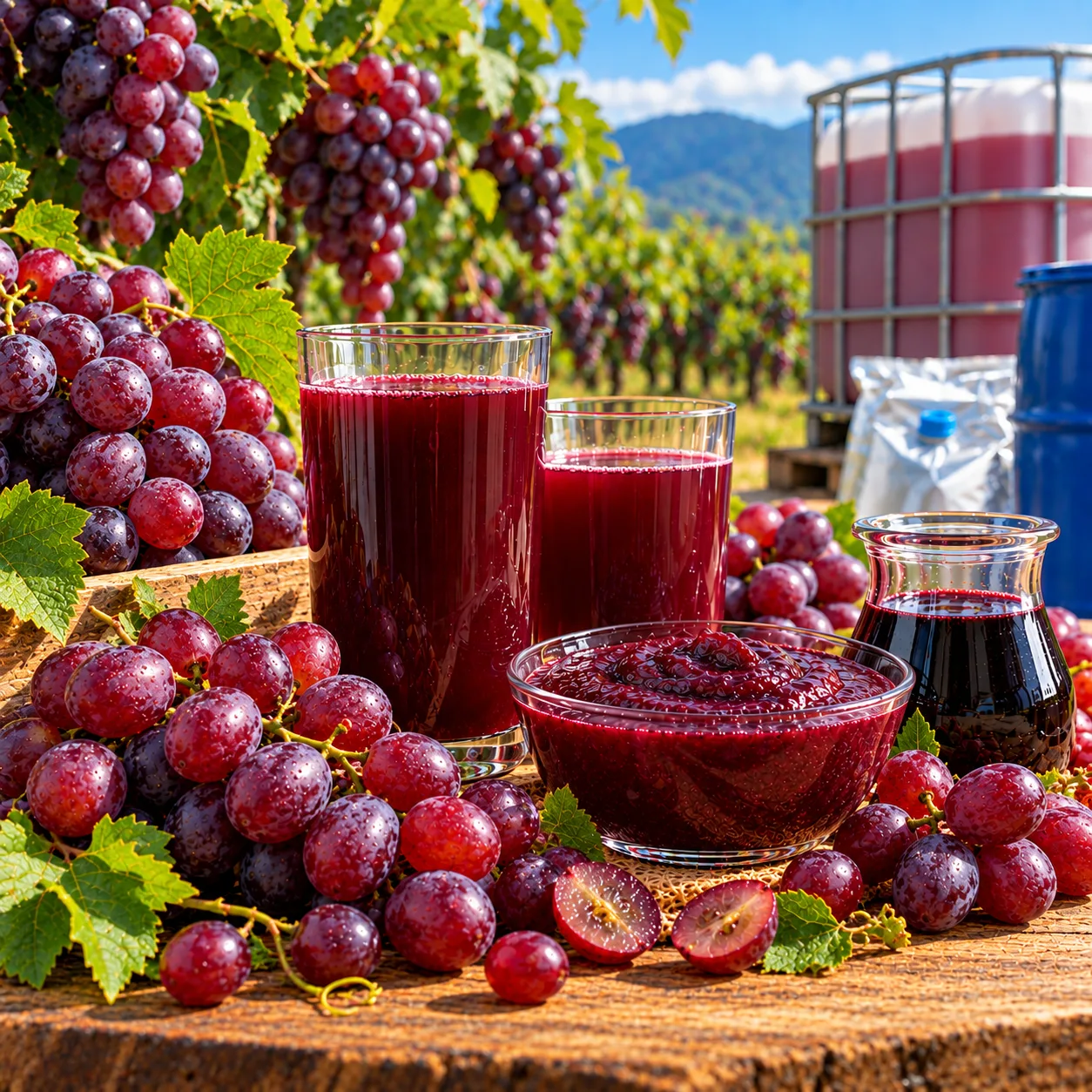
Typical specifications to review.
Commercial red grape concentrate is frequently supplied around 65° Brix, while Concord grape concentrate is commonly produced around 68° Brix. The exact specification depends on grape variety, crop, origin and processor.
Soluble Solids / °Brix
Typical industrial red grape concentrate is approximately 65 ±1° Brix, while Concord products are often approximately 68 ±1° Brix. Brix directly affects formulation yield, sweetness contribution and dilution calculations.
pH
pH varies with grape variety and crop. Conventional red grape concentrates may be around the mid-3 range, while some strongly acidic grape varieties can run lower. Confirm the actual supplier specification for each product.
Titratable Acidity
Acidity is commonly expressed as tartaric acid for grape products. It influences flavor balance, fermentation behavior and the amount of additional acid adjustment required in the finished formulation.
Color
Red grape concentrate can range from deep red to reddish-purple or dark purple. Color intensity varies significantly with cultivar, skin pigment extraction and processing conditions.
Clarity & Turbidity
Many industrial concentrates are clarified for smooth beverage and fermentation applications. Turbidity or insoluble-solids limits should be defined where product clarity or sediment control is important.
Microbiological Quality
Commercial specifications generally establish limits for total plate count, yeast and mold together with other buyer-required criteria appropriate to the intended manufacturing process.
Specification note: Red grape and Concord grape concentrates are not necessarily interchangeable. Brix, acidity, color, aroma and reconstitution behavior can differ substantially by grape type and processor.
Grape type can materially change finished-product performance.
Conventional Red Grape
Conventional red grape concentrate can provide natural sweetness, moderate acidity and red-purple color with a relatively versatile grape profile. It can be used alone or blended with apple, berry, cherry and other fruit concentrates.
Concord-Type Grape
Concord grape has a much more recognizable aromatic grape profile and typically deeper purple coloration. It is often selected for traditional grape juice, grape jelly, confectionery and strongly grape-flavored products.
Sweetness & Solids
High-Brix grape concentrate contributes significant naturally occurring glucose and fructose. Formulators should include these solids when calculating added sugar, syrup, total Brix and nutritional composition.
Color Stability
Natural anthocyanin pigments are sensitive to formulation pH, oxygen, heat and storage conditions. Color should therefore be evaluated through the actual manufacturing process and intended shelf life.
Major uses for red grape juice concentrate.
Juice & Juice Drinks
Red grape concentrate is widely used in 100% juice, juice drinks, nectars and mixed-fruit beverages. It provides grape solids, sweetness, acidity and natural color while allowing manufacturers to reconstitute to the required finished Brix.
Smoothies & Functional Beverages
Concentrate can provide fruit solids and grape character in smoothies, wellness drinks, beverage shots and other functional products. It blends particularly well with berries, pomegranate, cherry, apple and citrus.
Wine & Fermentation
Red grape concentrate can provide fermentable sugars, grape flavor, solids and color in wine, fruit wine and other fermented beverage production. The required grape variety and acidity should be selected according to the intended fermentation profile.
Brewing, Cider & Hard Beverages
Specialty beer, cider, mead, hard seltzer and fermented beverage systems can use grape concentrate before or after fermentation for fermentable sugars, sweetness, color or finished grape character.
Confectionery
Gummies, fruit jellies, chews, hard candy and filled confectionery use red grape concentrate for recognizable grape flavor, natural sugars, acidity and color. Concord-type concentrate is especially useful where a classic grape profile is desired.
Jams, Jellies & Fruit Preparations
Concentrate is used in grape jelly, jams, spreads and industrial fruit preparations to increase grape solids, flavor and color while allowing water and sweetener levels to be controlled separately.
Bakery & Fillings
Applications include bakery fillings, cereal bars, pastry centers, cakes, glazes and fruit preparations. Heat stability, color and moisture contribution should be tested under the intended baking process.
Dairy & Plant-Based Products
Yogurt preparations, dairy desserts and plant-based products can use grape concentrate as part of fruit blends. Acidity and natural pigment stability should be checked in protein-containing formulations.
Syrups, Sauces & Glazes
Red grape concentrate can provide sweetness, color and fruit depth in beverage syrups, dessert sauces, culinary glazes, marinades and sweet-savory sauces.
Frozen Desserts
Sorbet, ice pops, frozen yogurt and other frozen desserts can use grape concentrate for flavor, color and soluble solids. Its sugar contribution should be considered when balancing freezing point and texture.
Protect grape color and flavor through production.
Heat Exposure
Excessive heat can shift fresh grape character toward cooked or caramelized notes. Thermal load and addition point should be evaluated when grape aroma is important to the finished product.
Oxidation
Oxygen exposure can affect both flavor and natural red-purple pigments. Closed transfer, appropriate processing conditions and suitable finished-product packaging can improve stability.
Crystallization
High-solids grape concentrate can develop natural sugar or tartrate crystals under some storage conditions. Supplier handling instructions should be followed when warming or agitating concentrate before use.
Commercial formats for industrial use.
Aseptic Drums
Aseptic bags inside steel drums are widely used for bulk grape concentrate. Commercial drum weights can vary by processor, with approximately 260–275 kg net formats common in international supply.
Frozen Drums
Some red grape concentrates are supplied frozen to support long-term quality and inventory stability. Cold-chain freight and freezer capacity should be included in total sourcing cost.
Pails, IBCs & Bulk
Pails, IBCs and larger bulk systems may be available for development, foodservice or high-volume industrial programs. Availability depends on processor capability and order quantity.
Storage note: Storage requirements vary substantially. Some aseptic grape concentrates can be stored under controlled ambient or refrigerated conditions, while other products are specified for frozen storage. Follow the individual supplier specification rather than assuming one universal condition.
Compare grape type, solids and color—not price alone.
Red grape concentrate is available from multiple producing regions and grape varieties. Two concentrates at similar Brix can differ noticeably in acidity, color intensity, aroma and finished-product performance, so commercial qualification should include both analytical and sensory review.
Variety & Origin
Identify whether the project requires conventional red grape, Concord or another defined grape type. Origin and cultivar can influence sweetness, tartaric acidity, color and sensory intensity.
Crop & Supply
Grape processing follows annual harvest cycles. Crop volume, fruit quality and processing demand can influence inventory and pricing, making forward planning useful for high-volume programs.
Organic Availability
Organic red grape and organic Concord concentrates may be available from selected processors. Confirm the certification, grape type, origin, current inventory and annual-volume capability before approval.
Delivered Cost
Compare Brix, usable fruit solids, color strength, pack size, storage requirement and freight as well as price per pound. Different concentration levels or handling requirements can materially change total formulation cost.
Specify the requirement before comparing offers.
- Required grape type or variety
- Target °Brix and acceptable tolerance
- pH and titratable acidity
- Color specification or color intensity
- Clarity, turbidity or insoluble-solids limits
- Characteristic flavor and aroma profile
- Microbiological requirements
- Conventional or organic certification
- Country of origin and processor
- Packaging format and net weight
- Ambient, refrigerated or frozen storage requirement
- Initial quantity and estimated annual volume
- Delivery destination and requested timing
- Current specification and certificate of analysis
Product characteristics, origin, packaging and storage can vary significantly between red grape and Concord concentrate programs. Compare commercial offers against the same technical requirement and validate the ingredient in the intended formulation before full-scale production.
Explore red grape concentrate in commercial formulations.
Fruit Leather
Sourcing and formulation considerations for concentrated fruit ingredients used in fruit snacks and fruit leather.
Juice ConcentratesMocktails
Using concentrated fruit ingredients in mocktails, beverage bases and premium non-alcoholic formulations.
Juice ConcentratesSmoothies
Sourcing and processing considerations for juice concentrates in commercial smoothie systems.
Questions red grape concentrate buyers often ask
What is bulk red grape juice concentrate used for?
Major applications include juice, juice drinks, smoothies, functional beverages, wine and fermented beverages, jams, grape jelly, confectionery, bakery fillings, dairy preparations, syrups, sauces and frozen desserts.
What Brix is commercial red grape juice concentrate?
Conventional commercial red grape concentrate is commonly supplied around 65 ±1° Brix. Concord grape juice concentrate is often around 68 ±1° Brix. Confirm the exact product type and supplier specification before formulation.
What is the difference between red grape and Concord grape concentrate?
Red grape concentrate can be produced from a range of red grape cultivars and may provide a relatively versatile grape profile. Concord concentrate has a particularly distinctive aromatic character and typically deep reddish-purple color, making it common in traditional grape juice, jelly and strongly grape-flavored products.
What gives red grape concentrate its color?
Red and purple grape skins contain naturally occurring anthocyanin pigments. Variety, extraction, concentration, formulation pH, heat exposure and storage conditions can all affect the color seen in the finished product.
Is organic red grape juice concentrate available?
Organic red grape and organic Concord concentrate may be available depending on crop, origin and processor. Request current certification and confirm grape type, packaging, commercial volume and lead time.
How is bulk red grape concentrate packaged?
Commercial formats can include aseptic bags in steel drums, frozen drums, pails, IBCs and larger bulk systems. Industrial drum formats of approximately 260–275 kg net are commonly available from some processors.
Does red grape concentrate always require frozen storage?
No. Storage depends on the processing and packaging system. Some concentrates are specifically supplied frozen, while certain aseptic products can be held under refrigerated or controlled ambient conditions. Always follow the individual supplier specification.
What information should I provide for a quote?
Provide the required grape type, target Brix, acidity and color requirements, conventional or organic status, initial and annual volume, preferred packaging, storage capability, destination and requested delivery timing.