Spinach Puree
Spinach puree for commercial food and beverage manufacturing, providing recognizable leafy-green flavor, vegetable solids, smooth texture and natural green color for savory, prepared-food and vegetable-forward formulations.
A versatile leafy-green base for industrial food production.
Spinach (Spinacia oleracea) is a leafy green vegetable cultivated for its tender leaves and characteristic mild vegetal flavor. Commercial spinach varieties can differ in leaf structure, color intensity, solids, growing season and processing performance.
Spinach puree is generally produced from selected leaves that are thoroughly washed to remove soil and field material, then blanched or heat treated, comminuted and screened to obtain a relatively uniform consistency. The finished puree may subsequently be pasteurized or sterilized and supplied aseptically or frozen.
Unlike fruit purees, spinach contributes little natural sweetness and is primarily selected for vegetable flavor, green color, moisture and suspended plant solids. It can therefore function as both a principal ingredient in savory products and a supporting green component in blended formulations.
- Characteristic fresh to cooked spinach flavor profile
- Green to dark-green appearance depending on variety and process
- Smooth vegetable body with suspended leaf solids
- Suitable for savory foods and vegetable-forward beverages
- Conventional and certified-organic programs may be available
- Aseptic and frozen supply formats depend on supplier capabilities
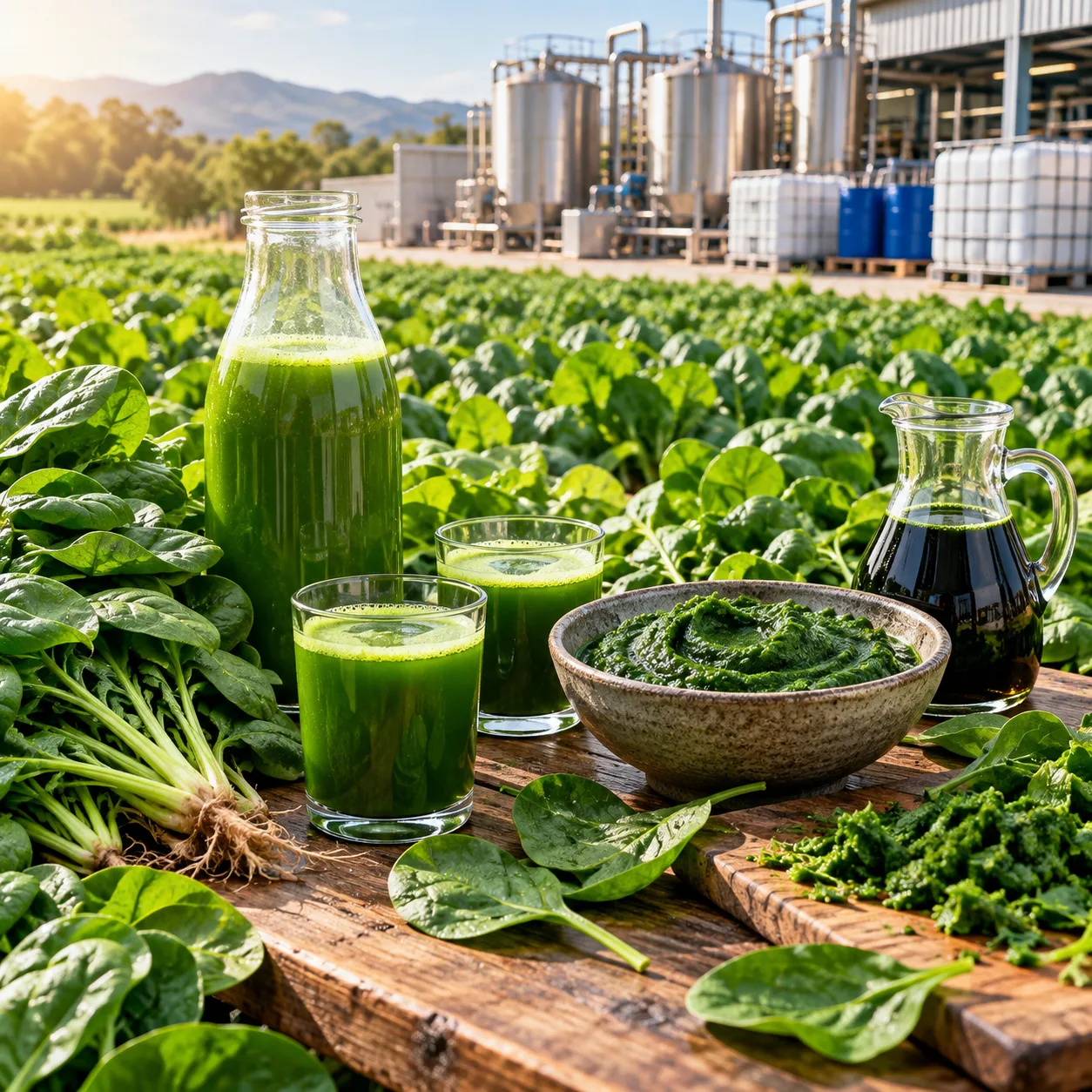
Key parameters for industrial qualification.
Spinach puree specifications vary according to variety, crop maturity, blanching conditions, screen size and processing method. The following parameters are commonly evaluated when qualifying commercial material.
Soluble Solids / °Brix
Single-strength spinach puree is naturally low in soluble solids compared with fruit purees. Commercial specifications may commonly fall around 3–7 °Brix, although crop, variety and processing can produce different values.
pH & Acidity
Spinach is a relatively low-acid vegetable. Commercial puree specifications may fall approximately around pH 5.0–7.0, making pH particularly important when evaluating thermal processing, acidification and finished-product safety.
Consistency / Bostwick
Bostwick consistency is useful for evaluating puree flow and processability. Commercial specifications may define a controlled range so manufacturers can predict pumping, mixing, dosing and filling behavior.
Screen & Particle Size
Milling and screening determine the size of remaining leaf particles. Finer finishing produces smoother puree for beverages and sauces, while other applications may tolerate more visible vegetable material.
Color & Sensory Profile
Typical puree ranges from medium to dark green with characteristic spinach flavor and aroma. Buyers may specify freedom from scorched, fermented, oxidized or other objectionable sensory notes.
Microbiological Criteria
Commercial specifications establish appropriate limits for total microbial count, yeast, mold and relevant pathogens. Requirements depend on whether the material is aseptic, frozen or intended for additional thermal processing.
These ranges are commercial reference points rather than universal purchasing specifications. Confirm Brix, pH, acidity, consistency, particle size and microbiological limits against the supplier's current specification and lot-specific certificate of analysis.
Define the complete requirement before comparing suppliers.
Aseptic vs. Frozen
Aseptically processed puree can simplify storage and industrial handling where the validated product allows it, while frozen puree depends on an uninterrupted cold chain. Sensory characteristics and storage instructions should be compared for the specific product offered.
Packaging & Handling
Commercial formats may include bag-in-box systems, pails, aseptic drums, frozen drums and totes. Package size should match production throughput, storage capability and the time required to use the product after opening.
Origin & Crop
Growing conditions, spinach variety, harvest maturity and processing time can influence green color, flavor and solids. Manufacturers requiring tight consistency may define approved origins and incoming sensory tolerances.
Documentation
Product approval may require a technical specification, certificate of analysis, nutritional data, allergen statement, country-of-origin declaration, microbiological information, traceability records and applicable organic or food-safety certificates.
Storage & Shelf Life
Storage depends on processing and pack format. Frozen puree requires controlled frozen storage, while aseptic products may follow different requirements. Always follow supplier-specific temperature and post-opening instructions.
MOQ & Supply Planning
Minimum order quantity, pack configuration, available inventory, manufacturing lead time, seasonal supply position, annual usage and destination should be reviewed together before commercial approval.
Major uses for spinach puree.
Soups & Soup Bases
Spinach puree is well suited to cream soups, vegetable soups and prepared soup bases where it contributes leafy-green flavor, color and vegetable solids without requiring fresh spinach preparation at the manufacturing site.
Sauces & Dips
Applications include spinach sauces, pasta sauces, creamy dips, pesto-style products and vegetable spreads. Puree provides uniform spinach distribution and can be combined with cheese, herbs, garlic or plant-based ingredients.
Pasta, Noodles & Dough Products
Spinach puree can provide recognizable green color and vegetable character to fresh or dried pasta, noodles, dumpling dough, wraps and other dough-based products. Moisture contribution should be considered during formulation.
Ready Meals & Prepared Foods
Puree can be incorporated into casseroles, vegetable sides, meal bowls, fillings and ready-meal sauces where manufacturers need consistent spinach content and reduced raw-leaf preparation.
Baby & Toddler Foods
Smooth spinach puree can be used in vegetable blends and prepared baby-food formulations when the ingredient and finished product meet the applicable quality, contaminant, microbiological and regulatory requirements.
Smoothies & Green Beverages
Spinach puree can contribute vegetable solids and green character to smoothies, blended vegetable drinks and meal beverages, commonly alongside apple, banana, pineapple, cucumber, celery or citrus ingredients.
Dairy & Plant-Based Foods
Applications include savory dairy preparations, cream-cheese-style spreads, plant-based dips and dairy alternatives where spinach is paired with herbs, garlic or other vegetables.
Bakery & Savory Fillings
Spinach puree may be used in savory pastries, breads, flatbreads and filled products. Its moisture, green color and vegetable flavor should be considered when balancing flour, fat, cheese and other filling components.
Vegetable Blends
Spinach combines readily with carrot, pumpkin, broccoli, pea, celery and other vegetable purees in prepared foods, sauces and blended vegetable systems requiring balanced flavor and color.
Foodservice & Industrial Kitchens
Bulk puree can support commissaries and foodservice manufacturers producing soups, sauces, dips, fillings and vegetable preparations while reducing the labor associated with washing, blanching and pureeing fresh spinach.
Plan around low acidity, green color and vegetable solids.
Low-Acid Processing
Natural spinach puree is generally above the pH range of high-acid fruit products. Shelf-stable formulations therefore require a properly designed process based on the complete recipe, package, equilibrium pH and production system.
Color Stability
Spinach's green appearance is associated with chlorophyll pigments, which can change during heating, acidification and storage. Finished-product color should therefore be evaluated under actual process and shelf-life conditions.
Texture & Pumpability
Suspended leaf solids affect flow behavior and can interact with pumps, valves, homogenizers and filling equipment. Screen size and consistency should be matched to the manufacturer's production system.
Flavor Balance
Spinach contributes a recognizable vegetal note that may become dominant at higher inclusion rates. Fruit, dairy, herbs, spices or other vegetables can be used to balance the profile according to the target application.
Build a complete spinach puree inquiry.
Define the puree
Specify single-strength spinach puree, conventional or organic status, required Brix, pH, consistency, particle size, color and microbiological criteria where applicable.
Select the supply format
Indicate whether aseptic or frozen puree is required and identify the preferred bag-in-box, pail, drum, tote or other industrial packaging format.
Provide volume & destination
Include estimated order or annual volume, delivery destination, required timing and whether material is needed for sampling, pilot trials or continuing commercial production.
Compare suppliers against the complete requirement.
Spinach is an agricultural ingredient and natural variation can occur between varieties, crops and origins. Technical specifications, certifications, packaging, availability and commercial terms should be confirmed against the current supplier specification and quotation before purchase.
See how puree ingredients perform in commercial formulations.
Fermentation Bases
Using Fruit Purees in Fermentation Bases: Texture & Flavor Guide
Fruit PureesDistilled Spirits
Distilled Spirits with Fruit Purees: Handling & Sourcing Considerations
Fruit PureesLemonade & Citrus Drinks
Using Fruit Purees in Lemonade & Citrus Drinks: Texture & Flavor Guide
Questions spinach puree buyers often ask
What is bulk spinach puree used for?
Major applications include soups, sauces, dips, pasta and noodles, ready meals, baby food, vegetable blends, green smoothies, savory dairy and plant-based products, bakery items and foodservice preparations.
What Brix is typical for spinach puree?
Single-strength spinach puree is relatively low in soluble solids, and commercial products may commonly fall around 3–7 °Brix. Exact limits vary by variety, crop and processor and should be confirmed on the current specification.
What pH is typical for spinach puree?
Commercial spinach puree specifications may commonly fall around pH 5.0–7.0. Because spinach is relatively low in acidity, pH is an important consideration when selecting processing and preservation systems.
What technical specifications should I request?
Important parameters can include Brix, pH, titratable acidity, Bostwick consistency, screen or particle size, color, sensory profile, microbiological limits, processing method, storage temperature and shelf life.
Is spinach puree a low-acid ingredient?
Natural spinach puree is generally a low-acid vegetable product compared with fruit purees. Shelf-stable products therefore require an appropriate validated thermal process, acidification strategy or other approved preservation system based on the complete formulation.
What is the difference between aseptic and frozen spinach puree?
Aseptic puree is thermally processed and filled under sterile conditions, while frozen puree relies on controlled low-temperature storage. Handling, shelf life and sensory characteristics vary by supplier and product.
Is organic spinach puree available?
Organic spinach puree may be available depending on crop, origin and supplier program. Request current organic certification, product specification and lot-specific documentation before purchase.
What pack sizes are available?
Commercial formats may include bag-in-box systems, pails, aseptic drums, frozen drums, totes and other industrial packaging. Available formats and minimum order quantities depend on supplier capabilities.
What information should I provide for a quote?
Share the required spinach puree format, conventional or organic status, approximate quantity, target Brix, pH, consistency or particle size where relevant, preferred processing and packaging format, delivery destination, required timing and documentation requirements.