Tamarind Paste
Bulk tamarind paste for commercial food and beverage manufacturing, providing concentrated sour-sweet fruit character, natural acidity, body and distinctive brown color for sauces, chutneys, beverages, confectionery and prepared-food applications.
Distinctive sour-sweet fruit pulp with broad food applications.
Tamarind (Tamarindus indica) is a tropical tree that produces elongated brown pods containing seeds surrounded by sticky edible pulp. As the fruit matures, the pulp develops its characteristic brown color and an unusually concentrated combination of sourness, sweetness and complex fruit flavor.
Unlike many conventional fruit purees, tamarind is valued primarily for its intense acid profile and flavor contribution rather than fresh-fruit sweetness alone. Tartaric acid is particularly associated with tamarind's characteristic sharp sourness, while naturally occurring sugars provide a contrasting sweet component.
Commercial tamarind paste is generally produced by separating the edible pulp from shell, seeds and coarse fiber, followed by screening, refining and, depending on the product, thermal processing or concentration. The resulting ingredient can range from a relatively fluid pulp to a dense, highly concentrated paste.
- Characteristic sour-sweet tamarind flavor
- Naturally high organic-acid contribution
- Brown to dark brown natural fruit color
- Seedless and refined industrial formats available
- Paste, pulp and higher-solids concentrate formats may differ significantly
- Conventional and organic options may be available
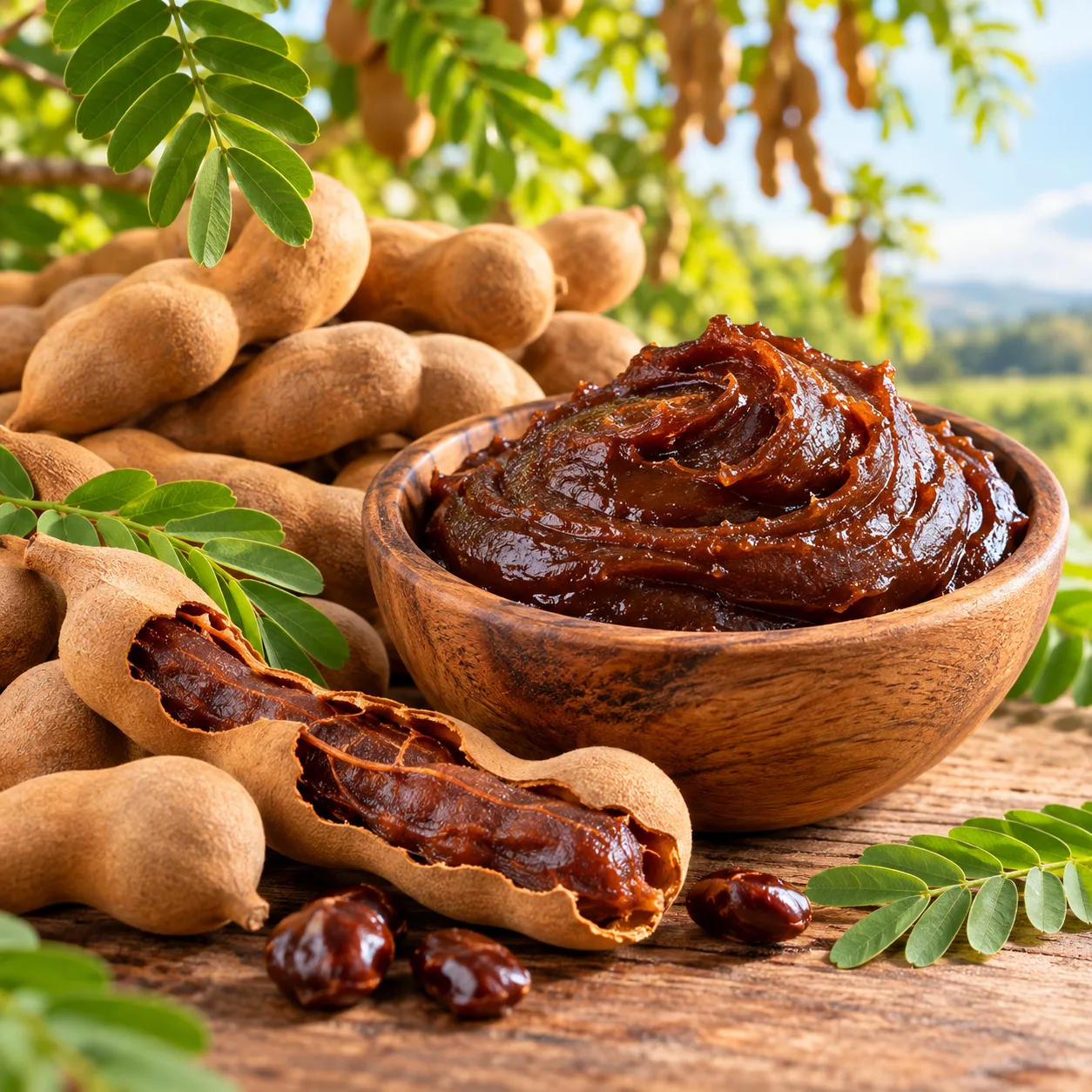
Paste, pulp and concentrate are not always equivalent.
Tamarind products are sold in several commercial forms, and terminology can vary between processors. Buyers should therefore define solids, acidity, consistency and seed or fiber limits rather than purchasing only by the term “tamarind paste.”
Tamarind Pulp
Pulp generally retains more of the fruit's natural moisture and body. It may be suitable for traditional sauces, chutneys, beverages and food preparations where a less concentrated ingredient is acceptable.
Tamarind Paste
Refined paste is typically screened to remove seeds, shell and coarse fiber and provides a convenient pumpable ingredient for industrial formulations. Soluble-solids levels can vary considerably by processor.
Tamarind Concentrate
Higher-solids concentrate provides stronger flavor and acid contribution per unit of weight and can reduce storage and freight volume. Products around 65° Brix are commercially available, although specifications vary.
Key parameters to define before purchase.
Tamarind specifications vary significantly according to whether the product is pulp, standard paste or concentrate. Commercial examples range from approximately 28–30° Brix for some paste formats to 50–55° Brix for concentrated paste and around 65° Brix for higher-solids concentrate.
Soluble Solids / °Brix
Brix indicates soluble-solids concentration and directly affects flavor intensity, yield, viscosity and recipe mass balance. State the required range clearly because “tamarind paste” does not identify one universal Brix.
pH & Acidity
Tamarind is naturally acidic. Concentrated commercial paste can have a pH around 2–3 and substantial titratable acidity, although less-concentrated products can differ. Confirm both pH and acidity for the exact ingredient.
Consistency
Flow or Bostwick-style consistency measurements may be specified for pumpable paste. The target should match plant handling equipment and the desired contribution to sauce, filling or beverage texture.
Seed & Fiber Content
Industrial paste should have defined limits for seeds, shell, coarse fiber and other foreign material. Seedless or highly refined products are generally preferred where smooth texture and reliable pumping are important.
Color & Appearance
Mature tamarind paste is normally brown to dark brown. Commercial specifications may also define homogeneity, speck limits and freedom from foreign material.
Flavor & Aroma
The product should have characteristic ripe tamarind flavor with strong tartness and without fermented, musty, scorched or other undesirable off-notes.
Specification note: Tamarind pulp, paste and concentrate should not be assumed interchangeable. Confirm Brix, pH, titratable acidity, consistency, seed and fiber limits, microbiology and sensory requirements on the actual supplier specification.
Why tamarind performs differently from most fruit purees.
Strong Natural Sourness
Tamarind can provide substantial acid impact without relying entirely on added food acids. Its complex sourness is useful in sauces, chutneys, beverages and seasonings where formulators want a fruit-derived acidic flavor rather than a simple citric-acid profile.
Sweet-Sour Balance
Natural sugars soften the fruit's acidity and create tamarind's recognizable sweet-sour character. Added sugar, syrups or sweeteners can be adjusted according to whether the finished product is intended to be savory, refreshing or confectionery-style.
Body & Mouthfeel
Paste provides more suspended fruit material and body than clarified juice ingredients. In sauces and chutneys it can contribute thickness, while beverage applications may require filtration, dilution or careful suspension control.
Flavor Compatibility
Tamarind pairs effectively with chili, ginger, garlic, cumin, coriander, tomato, mango, date, brown sugar, citrus and numerous spice systems, allowing it to bridge sweet, sour, spicy and savory flavor profiles.
Major uses for bulk tamarind paste.
Chutneys & Dipping Sauces
Tamarind is a core ingredient in many sweet, sour and spicy chutneys. Industrial manufacturers use paste to provide repeatable acidity, fruit solids and characteristic flavor in dipping sauces, table sauces and foodservice preparations.
Cooking Sauces & Curries
Tamarind paste is widely used in curry bases, simmer sauces, stir-fry sauces and regional Asian, Indian, Middle Eastern and Latin-inspired recipes where its acidity balances fat, salt, sweetness and spice.
Condiments & Savory Sauces
Applications include barbecue sauces, steak sauces, brown sauces, hot sauces and specialty condiments. Tamarind can add both acidity and dark fruit complexity without making the product taste distinctly citrus.
Marinades & Glazes
The ingredient is used in meat, poultry, seafood and plant-based marinades as well as sweet-savory glazes. Its acidity and concentrated flavor work particularly well with chili, garlic, ginger and caramelized flavor systems.
Beverages
Tamarind drinks are consumed in many markets, and commercial paste or concentrate can be used in still beverages, agua fresca-style drinks, carbonated beverages, syrups and beverage bases. Dilution, filtration and sweetness should be adjusted to the target profile.
Confectionery
Tamarind's strong sweet-sour character is well suited to gummies, chews, hard candies, pastes and chili-seasoned confectionery. Its natural acidity can reduce the amount of separate acid required, depending on the formula.
Snack Seasonings
Tamarind is used in flavor systems for chips, extruded snacks, coated nuts and savory snack products. Paste may first be incorporated into a sauce or seasoning preparation, while tamarind powder can be preferable for dry applications.
Soups & Broths
Tamarind contributes acidity and depth to sour soups, broths and prepared meal systems. It is particularly valuable where the formulation requires a rounded fruit-derived sour note rather than straightforward vinegar or citrus acidity.
Ready Meals & Prepared Foods
Frozen meals, shelf-stable meals, rice dishes, noodle sauces and prepared protein products can use tamarind paste as a standardized component of regional sauce systems.
Fruit Preparations & Desserts
Tamarind can also be used in fruit preparations, sweet sauces, frozen desserts and fillings where a distinctive tart fruit profile is desired, frequently in combination with sugar, mango, date or tropical fruit flavors.
Plan for viscosity, fiber and high flavor intensity.
Pumping & Mixing
High-solids tamarind paste can be dense and viscous. Confirm pump capability, product temperature and mixing requirements before scaling from laboratory to production volumes.
Screening & Filtration
Beverage and smooth-sauce applications may require tighter seed, fiber and particle specifications. Confirm the supplier's screening process and whether further plant filtration will be necessary.
Dosage Control
Because tamarind can deliver substantial acidity and flavor at relatively low dosage, additions should be controlled carefully. Small formulation changes can noticeably affect sourness, sweetness and finished pH.
Commercial formats for industrial use.
Aseptic Drums
Aseptic bags in drums can provide a practical format for industrial tamarind paste, allowing commercial volumes to be handled with controlled microbiological quality and efficient warehouse storage.
Pails & Bag-in-Box
Smaller formats can be useful for foodservice, pilot production and lower-volume manufacturing. Availability and net weight vary according to processor and region.
Larger Bulk Formats
Larger drums, bins or other bulk systems may be available for substantial manufacturing programs. Plant unloading, pumping capability and product use rate should be considered when selecting package size.
Storage: Storage conditions differ between aseptic, preserved, refrigerated and frozen tamarind products. Follow the individual processor's temperature, unopened shelf-life and after-opening instructions.
Compare concentration and usable yield—not only price.
Tamarind products with very different concentrations may all be sold under terms such as pulp or paste. A lower-priced product with more water can require significantly more material to provide the same solids, acidity and flavor contribution as a higher-solids paste.
Origin & Crop
Tamarind is produced across tropical regions, with significant commercial supply from South and Southeast Asia and other producing countries. Origin can influence fruit character, processing style, seasonality and commercial availability.
Seedless Requirement
Specify whether the requirement is whole pulp, deseeded pulp or fully refined paste. Seed and fiber limits can materially affect manufacturing efficiency and finished-product texture.
Organic Supply
Organic tamarind paste may be available from selected origins and processors. Confirm current certification, product format, concentration and available commercial quantity before approval.
MOQ & Lead Time
Minimum orders differ between domestic stock, imported inventory and production-specific supply. Provide both initial volume and expected annual demand when requesting commercial offers.
Specify the requirement before comparing offers.
- Required tamarind format: pulp, paste or concentrate
- Target °Brix and acceptable tolerance
- pH and titratable acidity
- Consistency or viscosity requirement
- Seed, shell and fiber limits
- Color, appearance and sensory profile
- Microbiological specification
- Conventional or organic certification
- Country of origin and processing location
- Packaging format and net weight
- Storage requirements and shelf life
- Initial quantity and estimated annual volume
- Delivery destination and timing
- Current product specification and certificate of analysis
Product format, concentration, origin, packaging and specifications can vary considerably between suppliers. Commercial offers should therefore be compared against the same technical requirement rather than by product name or price alone.
See how fruit pastes and purees behave in commercial formulations.
Hard Cider
Formulation considerations for fruit ingredients in fermentation and commercial beverage production.
Fruit PureesSports Drinks
Handling and sourcing considerations for fruit ingredients used in commercial beverage systems.
Fruit PureesIce Cream
Using fruit purees and pastes in frozen desserts, with attention to flavor, solids and texture.
Questions tamarind paste buyers often ask
What is bulk tamarind paste used for?
Major applications include chutneys, dipping sauces, cooking sauces, curries, marinades, barbecue and specialty sauces, beverages, confectionery, snack seasonings, soups, ready meals and sweet-sour fruit preparations.
What Brix is tamarind paste?
There is no single universal Brix for tamarind paste. Commercial products may range from approximately 28–30° Brix for some paste formats to 50–55° Brix for more concentrated paste. Tamarind concentrate can be supplied around 65° Brix. Always confirm the exact format and supplier specification.
Why is tamarind so sour?
Tamarind pulp naturally contains substantial organic acidity, with tartaric acid particularly associated with its characteristic sharp sour taste. The fruit also contains natural sugars, creating its recognizable sweet-sour flavor balance.
What is the difference between tamarind pulp, paste and concentrate?
Tamarind pulp generally retains more natural moisture and fruit material. Refined paste is processed into a smoother, more standardized industrial ingredient, while concentrate has higher soluble solids and provides more flavor and acidity per unit of weight. Supplier terminology can vary, so Brix and other specifications should always be confirmed.
Is organic tamarind paste available?
Organic tamarind paste may be available depending on origin, harvest and supplier program. Request current certification and confirm the available format, concentration, packaging and commercial quantity.
How is bulk tamarind paste packaged?
Depending on the processor, industrial formats can include aseptic bags in drums, lined drums, pails, bag-in-box systems and other bulk packaging. Storage requirements vary by processing method.
What information should I provide for a quote?
Provide the required tamarind format, target Brix, acidity or consistency requirements, seed and fiber limits, conventional or organic status, initial and annual volume, packaging preference, destination and required delivery timing.