Tomato Paste
Bulk tomato paste for commercial food manufacturing, available in different concentration and processing formats for sauces, ketchup, soups, prepared foods, condiments and other industrial applications. Conventional and organic options are subject to current crop and supplier availability.
Concentrated processing tomatoes for industrial food production.
Tomato (Solanum lycopersicum) is botanically a fruit but commercially one of the world's most important vegetable-style food ingredients. Tomatoes grown for industrial processing are selected differently from fresh-market varieties, with emphasis on soluble solids, color, yield, firmness, acidity and suitability for mechanical harvesting and concentration.
Tomato paste is produced by washing and sorting ripe tomatoes, crushing and heating the fruit, separating seeds and skins, and concentrating the resulting tomato juice or pulp by evaporation. Removing a large portion of the naturally occurring water creates a dense, stable ingredient with concentrated tomato solids, flavor, color and umami character.
Processing tomatoes naturally contain sugars, organic acids, pectin, minerals and carotenoid pigments. Lycopene is particularly important to the characteristic red color of tomato products, while the balance between sugars and acids contributes to overall flavor quality.
- Concentrated tomato flavor, color and natural soluble solids
- Multiple commercial Brix grades for different manufacturing requirements
- Hot break and cold break processing options
- High-viscosity products available for sauces and ketchup
- Aseptic bulk packaging widely used for industrial supply
- Conventional and organic tomato paste may be available
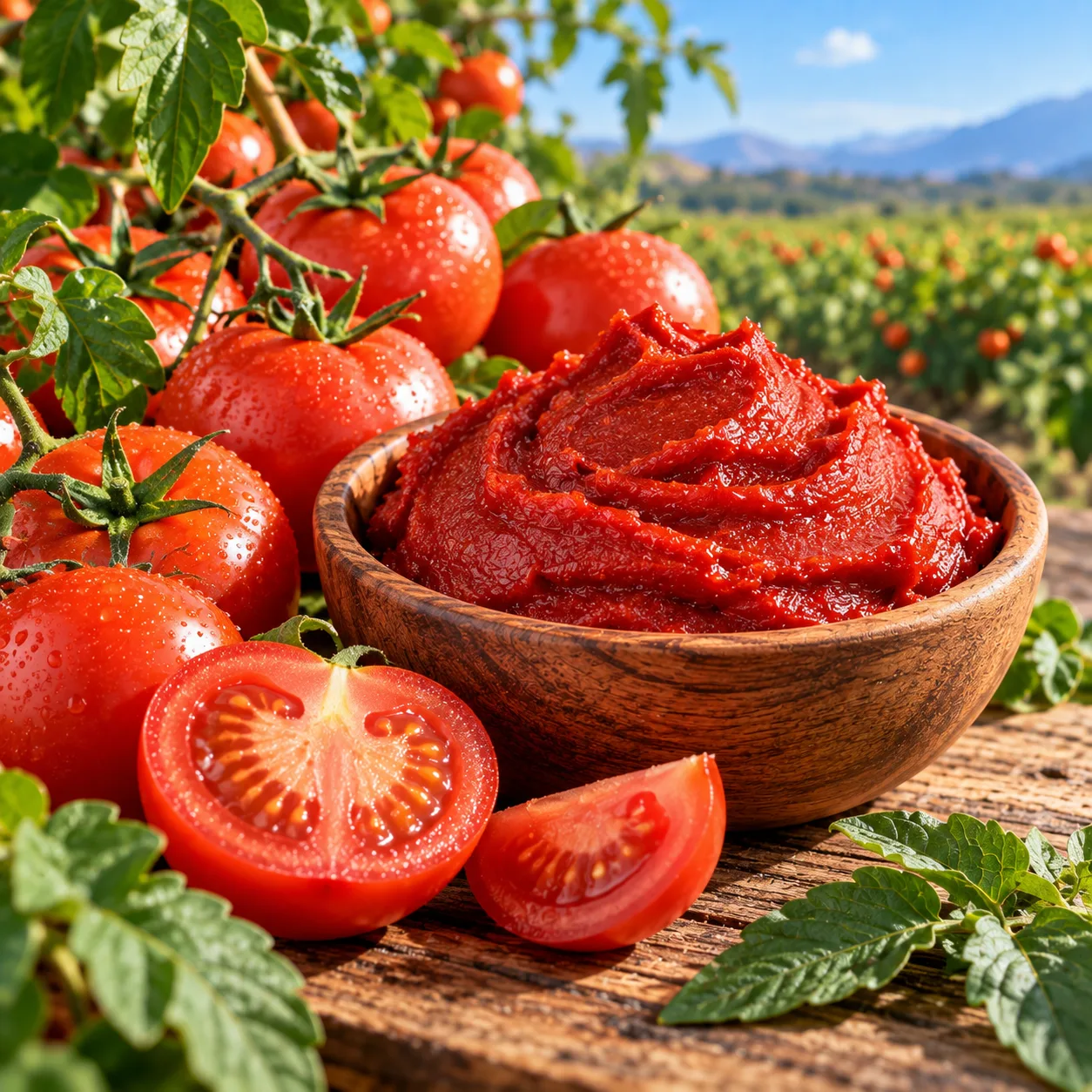
Hot break vs. cold break tomato paste.
Break temperature is one of the most important distinctions in industrial tomato paste because it affects pectin retention, viscosity and the way the paste behaves in the finished food system.
Hot Break Tomato Paste
In hot break processing, crushed tomatoes are rapidly heated at relatively high temperature to deactivate naturally occurring pectinolytic enzymes. This retains more of the tomato's natural pectin structure and generally produces a thicker, more viscous paste.
Hot break paste is particularly useful in ketchup, thick sauces, pizza sauces, prepared foods and other formulations where body, consistency and water-binding performance are important.
Cold Break Tomato Paste
Cold break processing uses a lower break temperature before juice extraction. More pectinolytic activity is retained during the early processing stage, generally resulting in lower viscosity compared with an equivalent hot break paste.
Cold break paste is commonly selected for products where a smoother, more fluid consistency and fresh tomato character are desirable, including some sauces, soups, juice products and reconstituted tomato preparations.
Selection note: Hot break and cold break are not simply quality grades. Each processing method creates different functional properties, so the appropriate type should be selected according to the finished product and required consistency.
Common commercial Brix levels.
Tomato paste is traded according to its concentration of natural tomato soluble solids. Exact terminology and tolerances vary by processor, but several Brix ranges are widely used in international industrial trade.
28–30° Brix
A widely used industrial concentration offered in both hot break and cold break formats. It provides concentrated tomato solids while remaining practical for pumping, dilution and further processing.
30–32° Brix
A slightly higher-solids paste used by manufacturers seeking additional concentration or particular process economics. Availability can depend on supplier and production program.
36–38° Brix
High-concentration tomato paste, commonly associated with cold break production, provides more tomato solids per unit of weight and can offer freight and storage advantages for industrial reprocessing.
When comparing quotations, Brix is important but should not be evaluated by itself. Two products with the same Brix may differ significantly in viscosity, color, acidity, flavor, process type and finished-product performance.
Key parameters industrial buyers should review.
°Brix / Tomato Solids
Brix is one of the primary commercial parameters and indicates soluble-solids concentration. The required range should be specified with an acceptable tolerance for consistent production and formulation yield.
Bostwick Consistency
Bostwick measurement is commonly used to describe the flow and consistency of tomato paste after preparation under defined test conditions. A lower flow value generally indicates a thicker product. Required values should be matched to the intended application.
Color
Bright, stable red color is an important quality characteristic. Industrial specifications may include instrumental color measurements such as L, a and b values or an a/b ratio, in addition to visual evaluation.
pH & Titratable Acidity
Natural tomato acidity influences flavor, processing behavior and finished-product formulation. Both pH and titratable acidity can be included in commercial specifications when consistency is important.
Flavor & Aroma
Good industrial paste should have characteristic ripe tomato flavor without undesirable fermented, scorched or other off-notes. Break process, evaporation conditions, tomato maturity and storage can influence the sensory profile.
Defects & Microbiology
Supplier specifications may establish limits for peel, seeds, dark particles, foreign material, mold-related quality indicators and relevant microbiological parameters. Requirements should match the intended food process and regulatory program.
Specification note: Brix, Bostwick consistency, color, acidity and microbiological values are product-specific. Commercial purchasing decisions should always use the processor's current specification and lot-specific certificate of analysis rather than generic industry values.
Major uses for bulk tomato paste.
Ketchup & Table Sauces
Tomato paste is the principal tomato-solids base in many ketchup formulations. Hot break paste is frequently selected where high viscosity and body are required, with sugar, vinegar, salt, spices and other ingredients added during finished-product manufacture.
Pasta & Cooking Sauces
Industrial pasta sauces, marinara, tomato cooking sauces and recipe bases use paste to provide concentrated tomato flavor, red color, solids and body. It can be combined with diced tomatoes, puree, herbs, vegetables and oils.
Pizza Sauces
Tomato paste is used to adjust tomato solids, viscosity and flavor intensity in pizza sauces and toppings. The required hot break or cold break characteristics depend on the desired spreadability, texture and cooking behavior.
Soups & Broths
Tomato, vegetable, lentil, bean and meat-based soups use tomato paste for color, savory depth, acidity and concentrated tomato character without introducing the water volume associated with single-strength tomato juice.
Ready Meals & Prepared Foods
Frozen meals, shelf-stable meals, rice dishes, pasta products, casseroles and prepared vegetable dishes use tomato paste as a standardized tomato base that can be diluted or incorporated directly into sauces.
Condiments & Specialty Sauces
Applications include barbecue sauce, chili sauce, hot sauce bases, curry sauces, dipping sauces, sandwich spreads and regional condiments where concentrated tomato flavor and body are required.
Meat & Plant-Based Foods
Tomato paste can be used in meat sauces, meatballs, sausages, prepared protein dishes and plant-based foods to contribute color, moisture management, savory flavor and background acidity.
Canned & Retort Foods
Beans, vegetables, legumes, pasta meals and other canned or retorted products use tomato paste to build standardized sauces capable of maintaining tomato character through thermal processing.
Snack Foods & Seasoning Systems
Tomato paste can be processed into sauces and intermediate preparations used for savory snacks, coated products and tomato-flavored fillings. Tomato powder may be preferred where a dry ingredient is required.
Tomato Juice & Beverage Bases
Suitable paste can be reconstituted as part of tomato juice, vegetable juice and savory beverage systems. Brix, viscosity, flavor and color should be selected according to the target reconstituted product.
Choose the paste according to the finished product.
Viscosity & Body
Tomato paste can make a major contribution to sauce consistency. Products such as ketchup and thick cooking sauces often benefit from high-consistency hot break paste, while more fluid products may favor cold break material.
Color Contribution
The paste usually provides most or all of the natural red tomato color in a finished formulation. Tomato variety, maturity, process conditions and storage history can all affect final color performance.
Flavor Concentration
Concentrated paste allows manufacturers to build tomato intensity without introducing excessive water. The dosage should be balanced against salt, sugar, acid, spices, herbs, fats and other flavor components.
Yield & Standardization
Defined Brix allows manufacturers to calculate tomato-solids input and dilution accurately. Higher-concentration paste can provide logistics advantages but may require different handling and reconstitution conditions.
Commercial formats for industrial production.
Aseptic Drums
Aseptic bags inside steel drums are a widely used format for industrial tomato paste. The system protects commercially sterile product until opening and is suitable for international shipment and food-manufacturing operations.
Aseptic Bins & Totes
Large processors may use higher-capacity aseptic bins, totes or similar bulk systems where production volumes justify larger packaging. Compatibility with unloading and pumping equipment should be confirmed before ordering.
Foodservice & Smaller Packs
Depending on the supplier, tomato paste can also be available in bag-in-box, pails, cans or other formats for foodservice, pilot production and smaller industrial requirements.
Tomato paste becomes highly viscous at higher solids, so plant handling should account for pumping, drum emptying, dilution and mixing. Follow the supplier's recommended storage temperature, shelf life and handling instructions.
Compare tomato paste beyond the price per metric ton.
Commercial evaluation should consider Brix, process type, consistency, usable tomato solids, color, crop origin, packaging and delivered logistics. A lower unit price does not necessarily provide the lowest formulation cost if additional paste is required to reach the target solids or viscosity.
Crop & Origin
Tomato paste production is strongly linked to seasonal processing-tomato harvests. Crop conditions can affect color, Brix, yield, availability and pricing, so high-volume buyers often plan requirements around crop and production cycles.
Hot Break / Cold Break Requirement
State the required process type when requesting a quotation. Substituting cold break for hot break, or vice versa, can noticeably change viscosity and finished-product behavior even when Brix is similar.
Organic Supply
Organic tomato paste may be available in selected origins and crop programs. Confirm current certification, production status, available Brix and whether the offered inventory meets the organic requirements of the intended market.
Annual Volume & Lead Time
Large industrial programs should specify initial quantity, expected annual usage and delivery schedule. Domestic inventory may allow shorter lead times, while imported or crop-specific products require additional production and logistics planning.
Specify the requirement before comparing offers.
- Required °Brix and tolerance
- Hot break or cold break process
- Bostwick consistency or other viscosity requirement
- Color specification
- pH and titratable acidity where required
- Microbiological and defect limits
- Conventional or organic certification
- Country of origin and crop year if relevant
- Aseptic drum, bin, tote or other packaging requirement
- Initial order and expected annual volume
- Delivery destination and required timing
- Current specification and certificate of analysis
Product availability, specifications and pricing can change with origin, crop season and inventory. Commercial details should be confirmed against the current supplier specification, certificate of analysis and quotation.
See how ingredient format affects formulation.
Craft Beer
Using fruit and vegetable purees in commercial fermentation and beverage formulation.
Fruit PureesFunctional Beverages
Handling and sourcing considerations for commercial puree-based beverage systems.
Fruit PureesFood Formulation
Practical considerations for texture, solids and industrial ingredient performance.
Questions tomato paste buyers often ask
What is bulk tomato paste used for?
Major commercial applications include ketchup, pasta sauce, pizza sauce, cooking sauces, soups, condiments, ready meals, canned foods, meat and plant-based products, foodservice preparations and tomato or vegetable beverage systems.
What is the difference between hot break and cold break tomato paste?
Hot break processing rapidly heats crushed tomatoes to deactivate pectinolytic enzymes and retain more natural pectin, generally producing greater viscosity and body. Cold break processing uses lower initial temperatures and typically produces a more fluid paste with different sensory and consistency characteristics.
What Brix grades are common for industrial tomato paste?
Common commercial grades include approximately 28–30° Brix, 30–32° Brix and 36–38° Brix. The available concentration and tolerance vary by processor and whether the product is hot break or cold break.
What is Bostwick consistency?
Bostwick consistency is a common industry measurement of how far a prepared tomato product flows under defined conditions over a specified time. It helps buyers compare the functional thickness of paste intended for products such as ketchup, sauces and other prepared foods.
Is organic tomato paste available?
Organic tomato paste may be available depending on crop, origin and supplier program. Request current certification and confirm the specific Brix, break type and packaging available for the organic product.
How is industrial tomato paste packaged?
Aseptic bags inside steel drums are widely used for bulk tomato paste. Larger aseptic bins or totes and smaller foodservice or industrial packs may also be available depending on supplier capabilities and order size.
What information should I provide for a quote?
Provide the required Brix, hot break or cold break type, consistency requirement, conventional or organic status, approximate initial and annual volume, packaging preference, delivery destination and requested timing.